The New Roman Missal
Rev. F. X. Lasance — Benziger Brothers, 1936
“Of the many ways of assisting at Mass, the best way is that in which each person, by saying the words of the Missal more closely, allies and associates himself with the priest who is celebrating. To identify one’s self thus with him is to unite with our divine Lord Himself, Who is there and then acting as the Priest according to the order of Melchisedech. When the faithful thus act with the celebrant, and with the High Priest, Jesus Christ, then, indeed, is it true that they are, as St. Peter says, a holy priesthood to offer up spiritual sacrifices acceptable to God by Jesus Christ. …”
— Bishop Riddell of Northampton, quoted in the Introduction, p. 8
There are, indeed, many excellent Mass-books, but the Mass-book par excellence is the Mass-book of the Church, the Roman Missal. Its regular use is to be recommended for this reason, also, that we are thereby made familiar with and almost imperceptibly led to make devout reflections upon the inspired writings, notably the Psalms, of which it contains so many apt and beautiful citations.
— Rev. F. X. Lasance, Introduction, p. 8
“I declare, to me nothing is so consoling, so piercing, so thrilling, so overcoming, as the Mass, said as it is among us. I could attend Masses forever and not be tired. It is not a mere form of words, it is a great ACTION—the greatest action that can be on earth. It is not the invocation merely, but, if I dare use the word, the evocation of the Eternal. He becomes present on the altar in flesh and blood, before Whom angels bow and devils tremble. …”
— Cardinal Newman, by the mouth of his hero in Loss and Gain; Introduction, p. 16
“It is not an exaggeration to say that the Mass is offered somewhere in the world at every moment of the twenty-four hours of the day. The offering of the Mass travels with the sun, and seems like one continuous and uninterrupted act of worship, which the devout Catholic at any moment by day or by night can join in spirit. When it is midnight in New York Masses are beginning in the churches of Italy. …”
— Dom Eugene Vandeur, The Holy Mass Popularly Explained; Introduction, p. 37
The Ecclesiastical Year
The Divisions of the Ecclesiastical Year
The ecclesiastical year begins on the first Sunday of Advent, that is, on the Sunday next, whether before or after, the feast of St. Andrew the Apostle, November 30.
Following this are the four weeks of Advent and the Christmas festivals, ending with the Epiphany, January 6.
The Sundays that follow are called the first, the second, and so forth, after the Epiphany. They are never more than six in number, and their series is, as a rule, interrupted by the coming of Septuagesima Sunday, which is the ninth before Easter and the first of those on which the liturgy is of a penitential character.
Septuagesima is followed by Sexagesima and Quinquagesima; this last is the Sunday next before Ash Wednesday, on which Lent begins. Lent has six Sundays: the two last of these are, respectively, Passion Sunday and Palm Sunday. The week beginning with Palm Sunday, that in which Our Lord was betrayed and crucified, is known as Holy Week. Easter Sunday, the feast of the Resurrection of Our Lord, upon the date of which the foregoing celebrations depend, is the Sunday next following the full moon first occurring after the twentieth day of the month of March. The earliest possible date for Easter is March 22, and the latest April 25.
The weeks between Easter and Trinity Sunday are known as Paschal Time. Forty days after Easter is the feast of the Ascension of Our Lord, which always falls on a Thursday; and ten days later, that is on the seventh Sunday and fiftieth day after Easter, is the feast of the Descent of the Holy Ghost, called Pentecost or Whit-Sunday. Trinity Sunday is the Sunday next following; on the Thursday after this Holy Church celebrates Corpus Christi, the festival of the Most Holy Sacrament, and after its octave day the feast of the Most Sacred Heart of Jesus, with which her cycle of movable feasts ends.
The remaining Sundays of the year, which cannot number more than twenty-eight nor less than twenty-three, are described as the third, fourth, etc., after Pentecost.
The Movable Feasts Around Which the Ecclesiastical Year Is Arranged.
The Sundays after Epiphany and Pentecost.—Easter may occur as early as March 22, and as late as April 25. This movable feast determines the date of other movable feasts, such as the Ascension, Pentecost, Trinity, and so forth. When Easter is exceedingly early there is not sufficient time between Epiphany and Septuagesima Sunday for the six Sundays, as found in the liturgy, after Epiphany, whereas after Pentecost more than the twenty-four prescribed Sundays will be needed to complete the ecclesiastical year. It may happen, too, when Easter is late that there are not twenty-four Sundays after Pentecost.
p. 1623The Sundays omitted after Epiphany are employed, as far as necessary, to make up the number required after Pentecost, that is, the liturgical parts with some slight changes are transferred. When one Sunday only is required, the sixth Sunday after Epiphany is taken; if two are necessary to fill out the ecclesiastical year, the fifth and sixth Sundays after Epiphany are transferred, or, if necessary, the third, fourth, fifth, and sixth.
Because of the special liturgical features of the twenty-fourth Sunday after Pentecost, this Sunday comes last, though it be the twenty-fifth, twenty-sixth, and so forth. The Sundays transferred as above are placed after the twenty-third Sunday after Pentecost. Septuagesima Sunday can not be earlier than January 18 or later than February 22. There may be as few as twenty-three Sundays after Pentecost, and as many as twenty-eight. When there are only twenty-three Sundays after Pentecost, the twenty-fourth will retain Sunday, while the twenty-third will be observed, rubrics permitting, on the day before (Saturday). The office of one of the Sundays after Epiphany, namely, the third, fourth, fifth, or sixth (there are special rubrics for the second), when it would otherwise be omitted, is said on the Saturday which immediately precedes Septuagesima Sunday.
Besides the above celebrations, there is the calendar of festivals fixed to particular days of the month. This varies according to the country and the diocese. The calendar (see list of contents) shows all festivals that are of obligatory observance throughout the Christian world.
Those festivals that are special to the United States, and certain others kept in various Religious Orders, have been placed in several special Supplements and will be found immediately after the Masses for the Dead (page 1546). To find a certain feast, consult the Alphabetical Index at the back of the book as every Mass and Feast in this missal is given therein. The calendar suffices for general needs to show what Mass is to be said on any particular day, but to ensure accuracy in every detail the directory or Ordo annually published in the locality should be consulted. This is the more necessary because of the overlapping of movable and fixed feasts, which often involves the transfer, or putting off, to another day of the one or the other. As a rule a feast of lesser always yields to one of higher liturgical rank.
Note: The reader is again advised to study the section in the front part of the book entitled, Read Mass with the Priest, which will enable him to use this book readily and appreciate its relation to the character of the Ecclesiastical Year as explained in this portion.
p. 1624Read the whole chapter » — the Sacred Liturgy of each season, and the Sundays, ferias and feasts of the Proper of Time from Advent to the September Ember Days, with their Roman station churches.
Reading Mass with the Priest
Read the full chapter » — Father Lasance’s Introduction to the Missal and the complete Read Mass with the Priest by Rev. William R. Kelly (pp. 8–101): the study plan, the altar, vessels and vestments, when to kneel, stand or sit, and every prayer and ceremony of the Mass, illustrated.
The Mass in Pictures
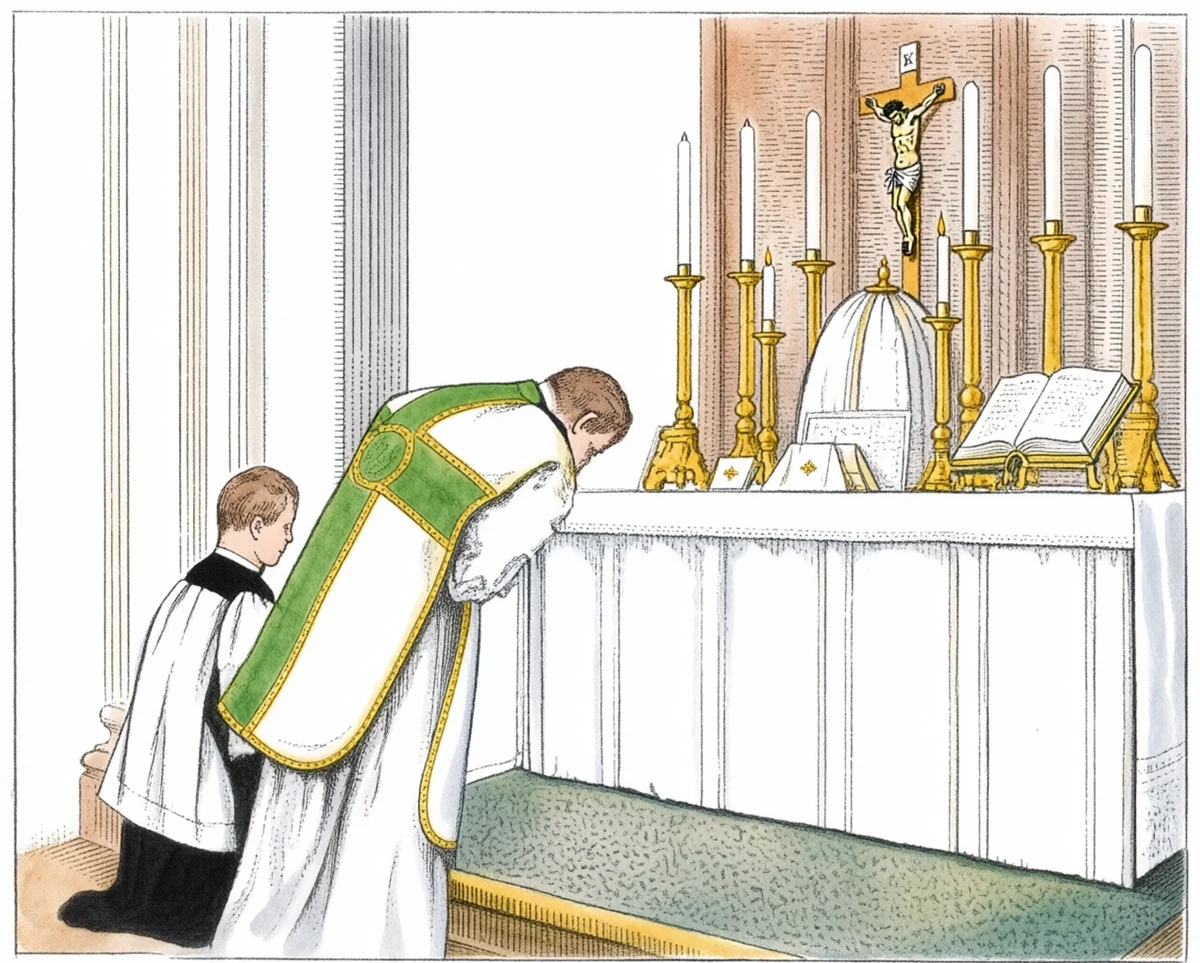 1 The Preparatory Prayers at the Foot of the Altar. The Priest says the “Confiteor.”
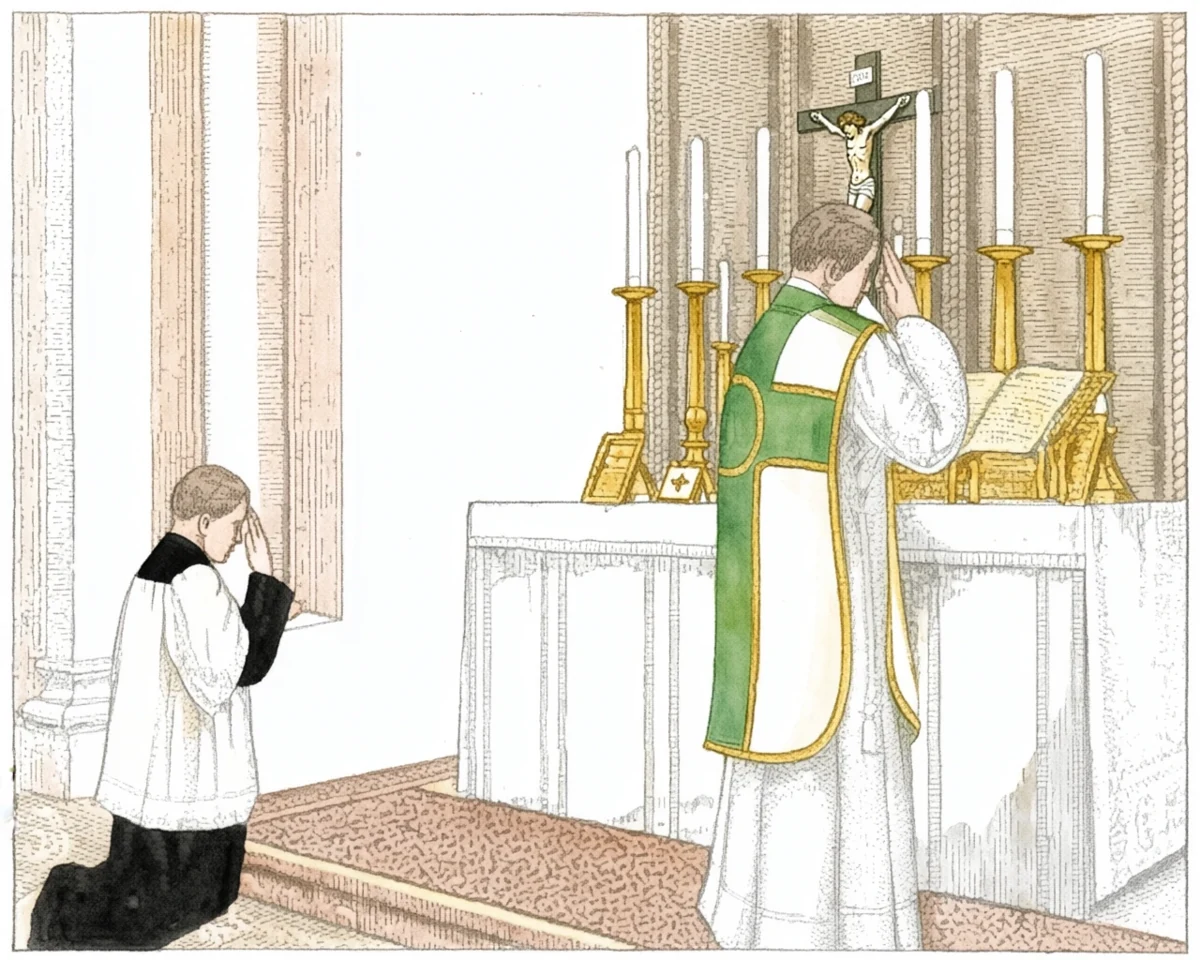 2 The Introit: standing at the Epistle side of the altar, he reads the Introit
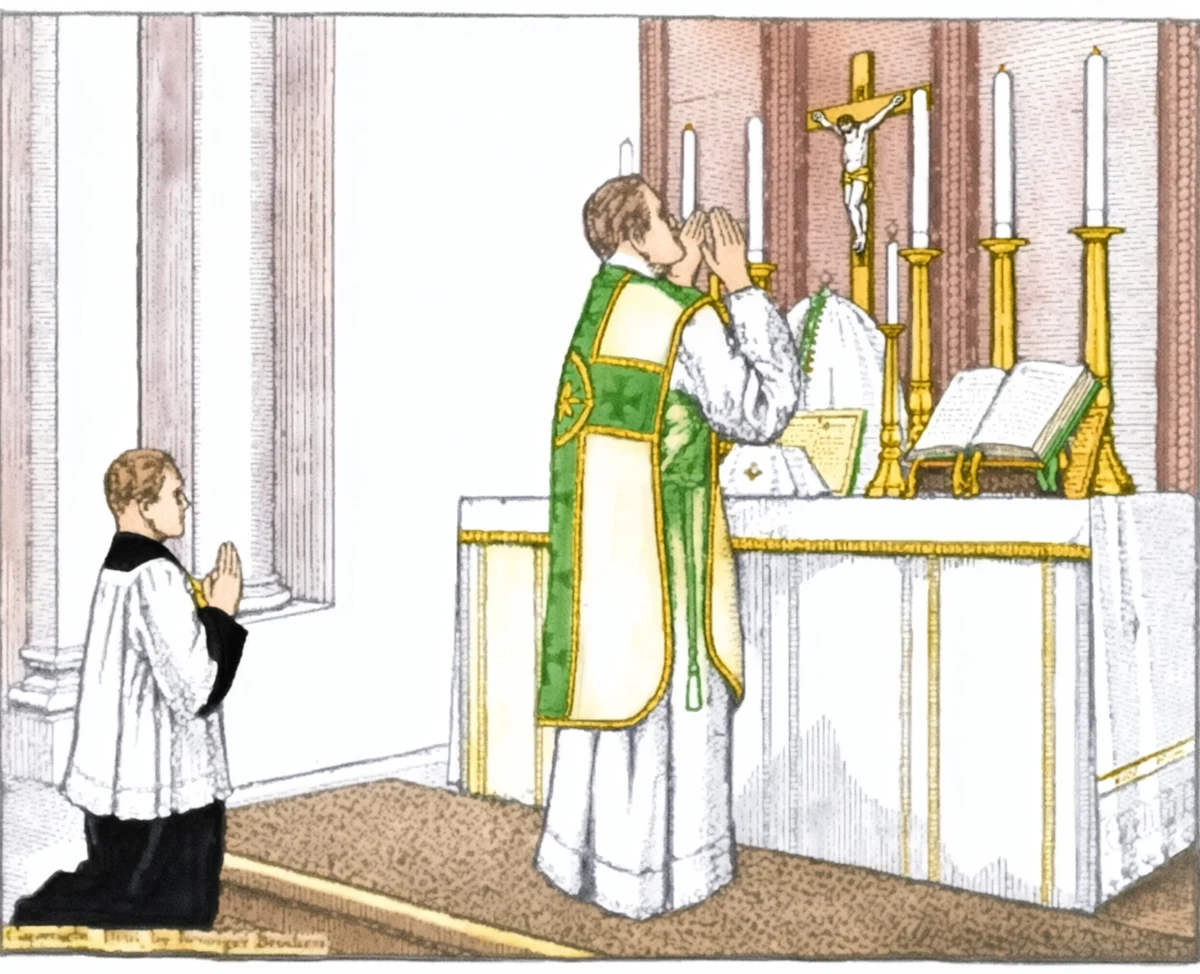 3 The “Gloria in Excelsis”
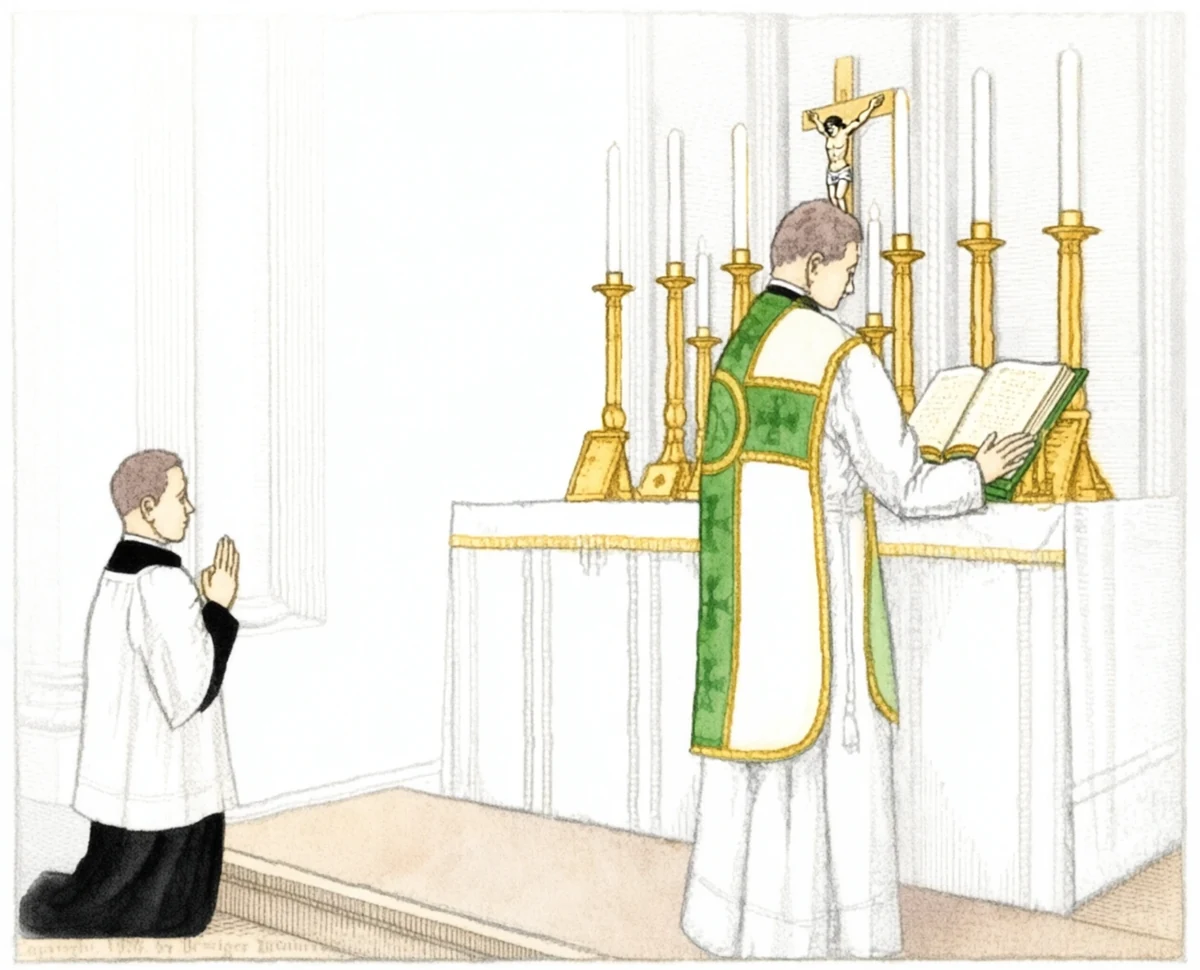 4 The Epistle
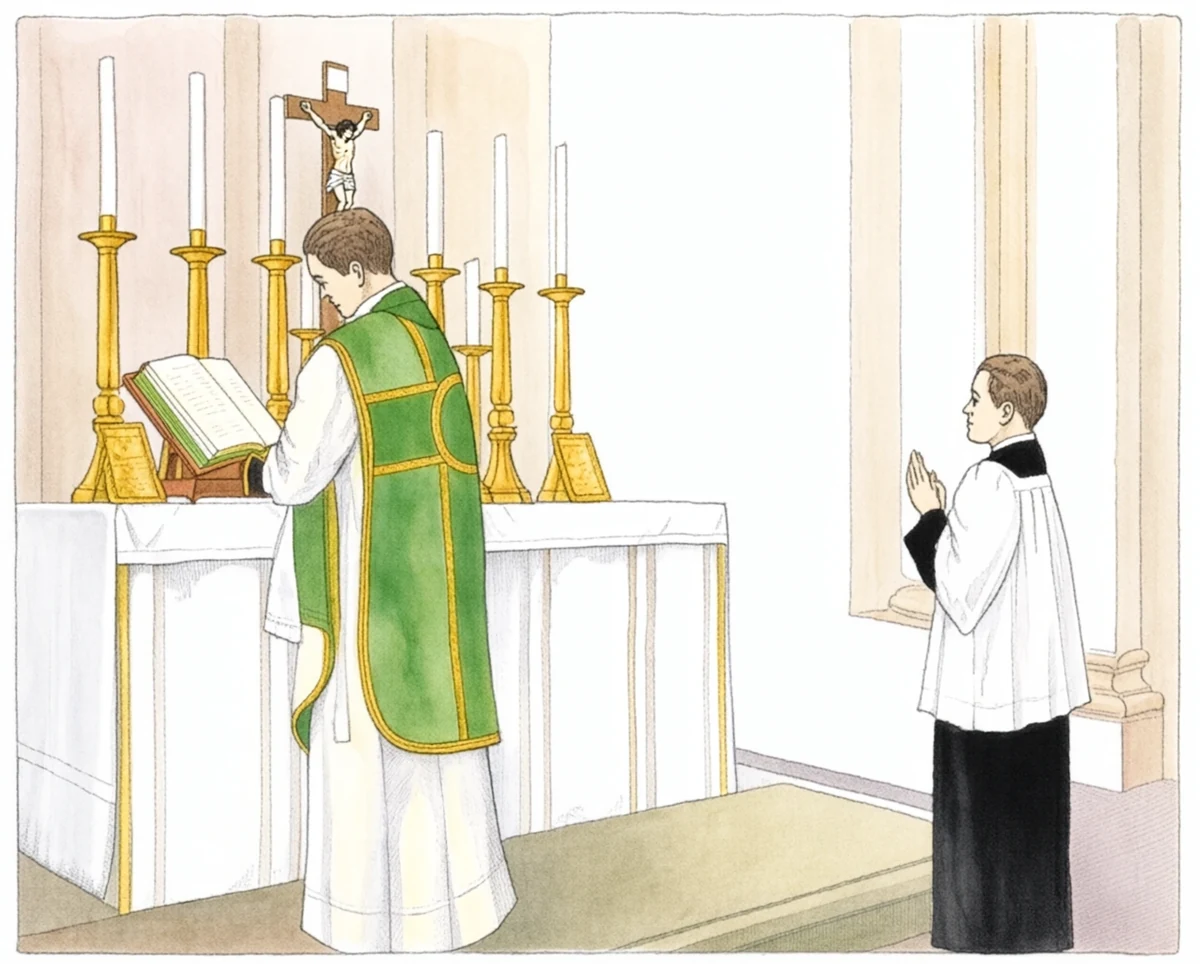 5 The Gospel
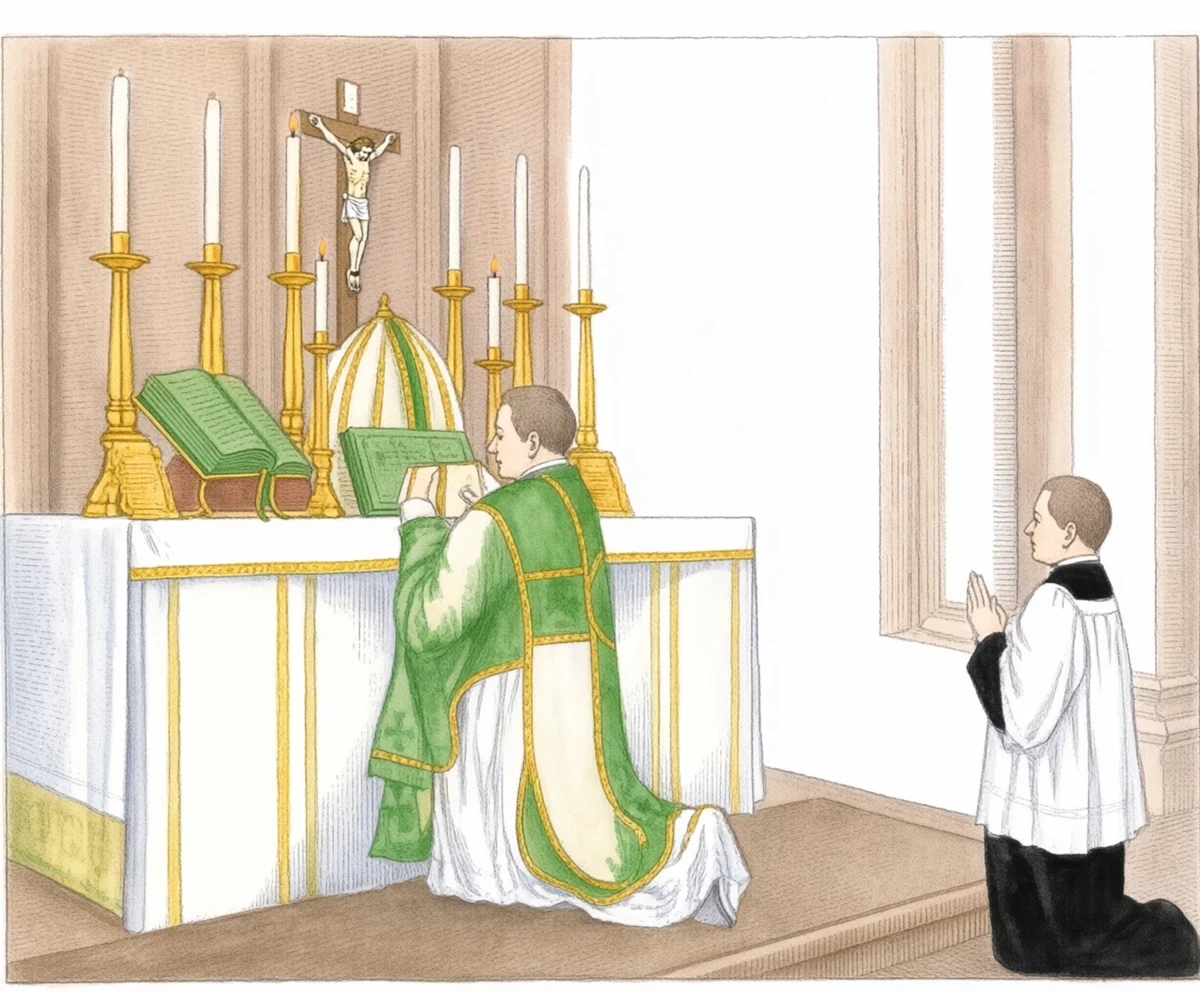 6 The Nicene Creed
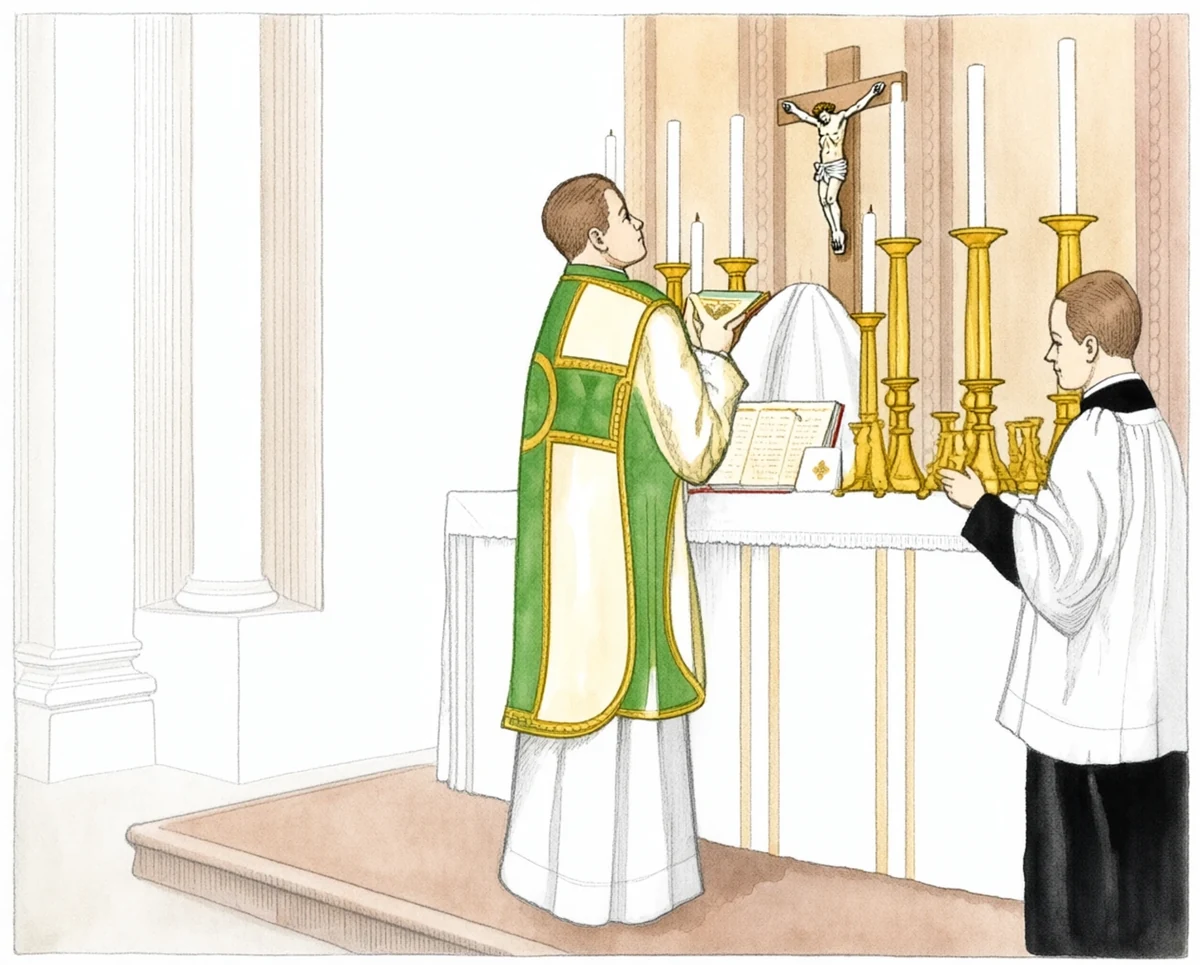 7 Oblation of the Host: the Offertory
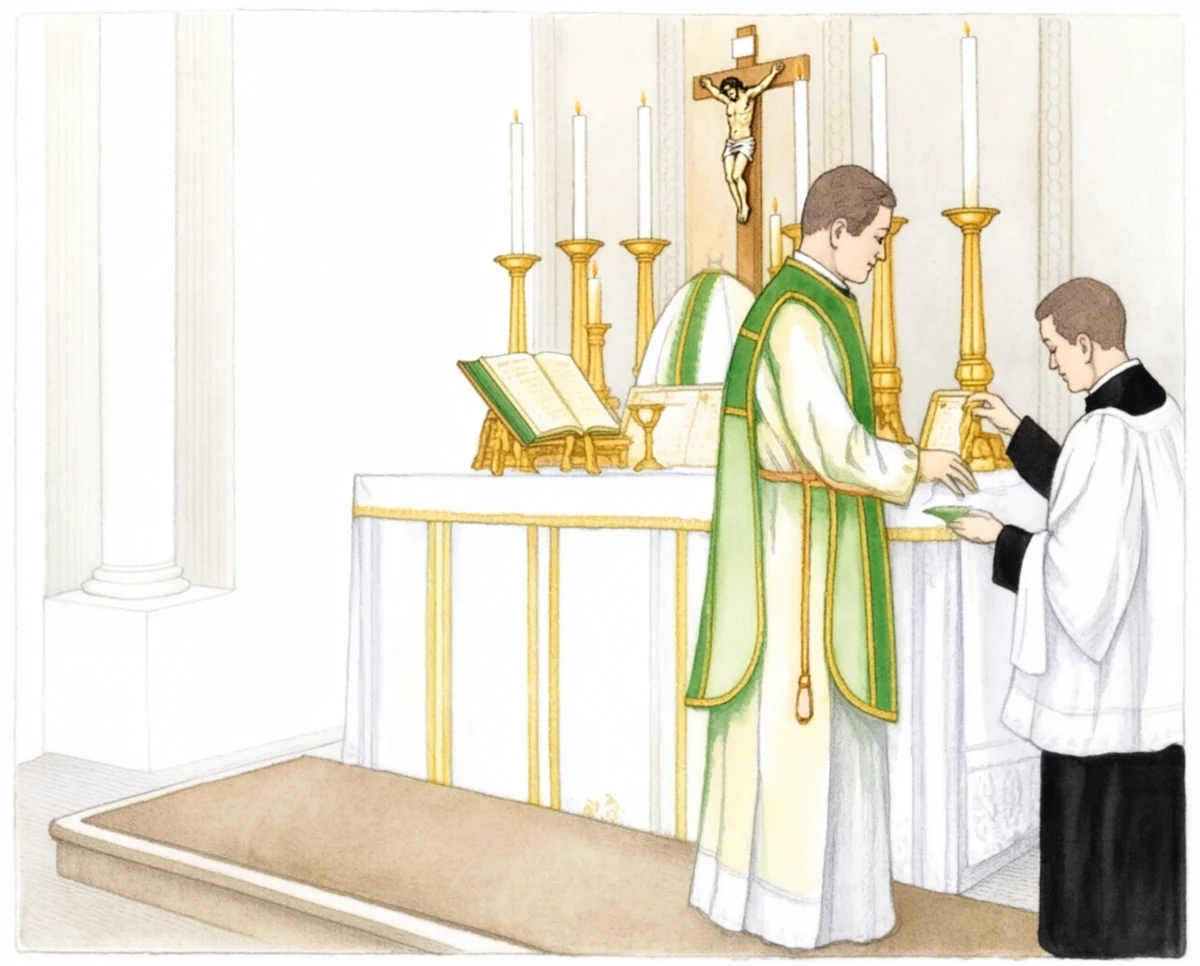 8 The Washing of the Hands: the Lavabo
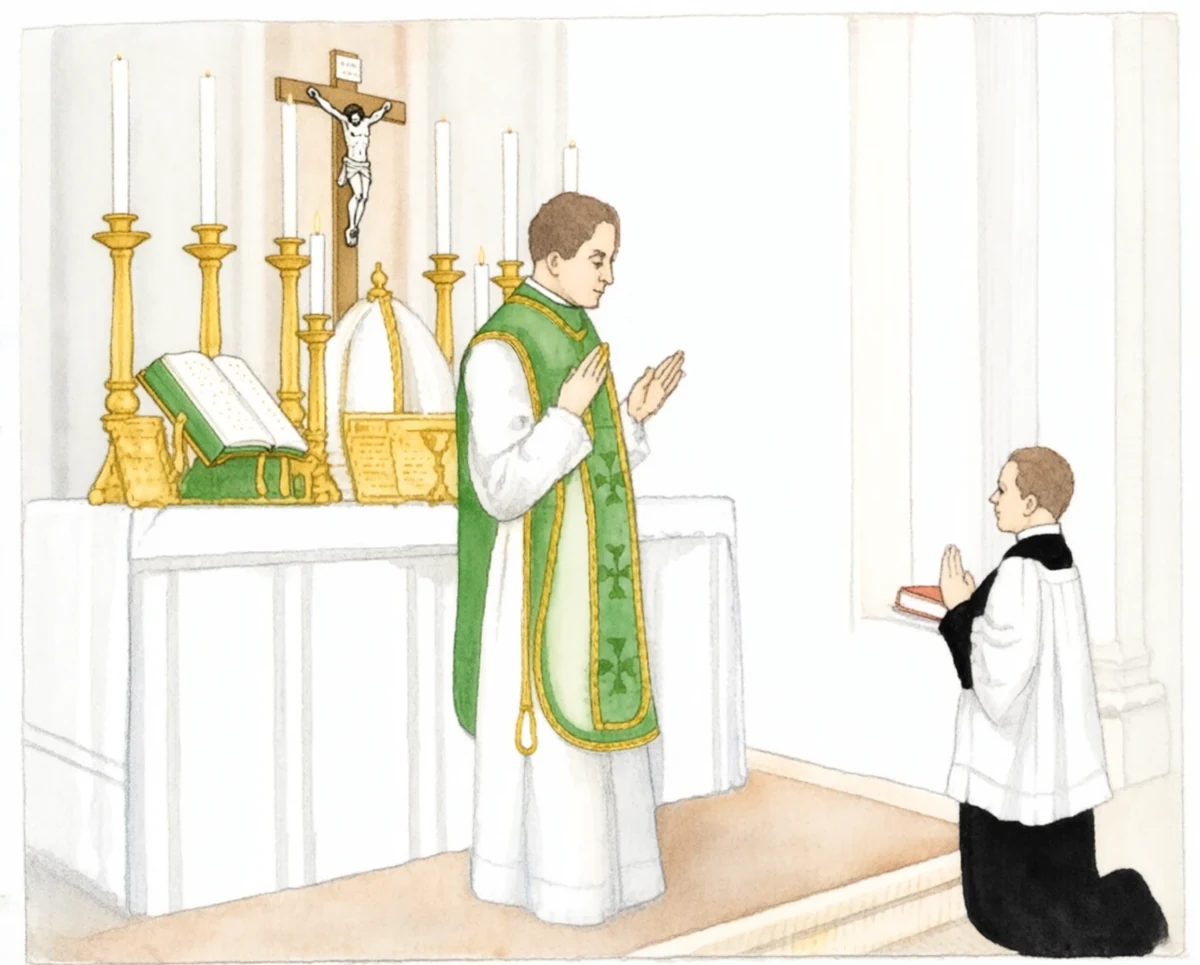 9 The “Orate Fratres”
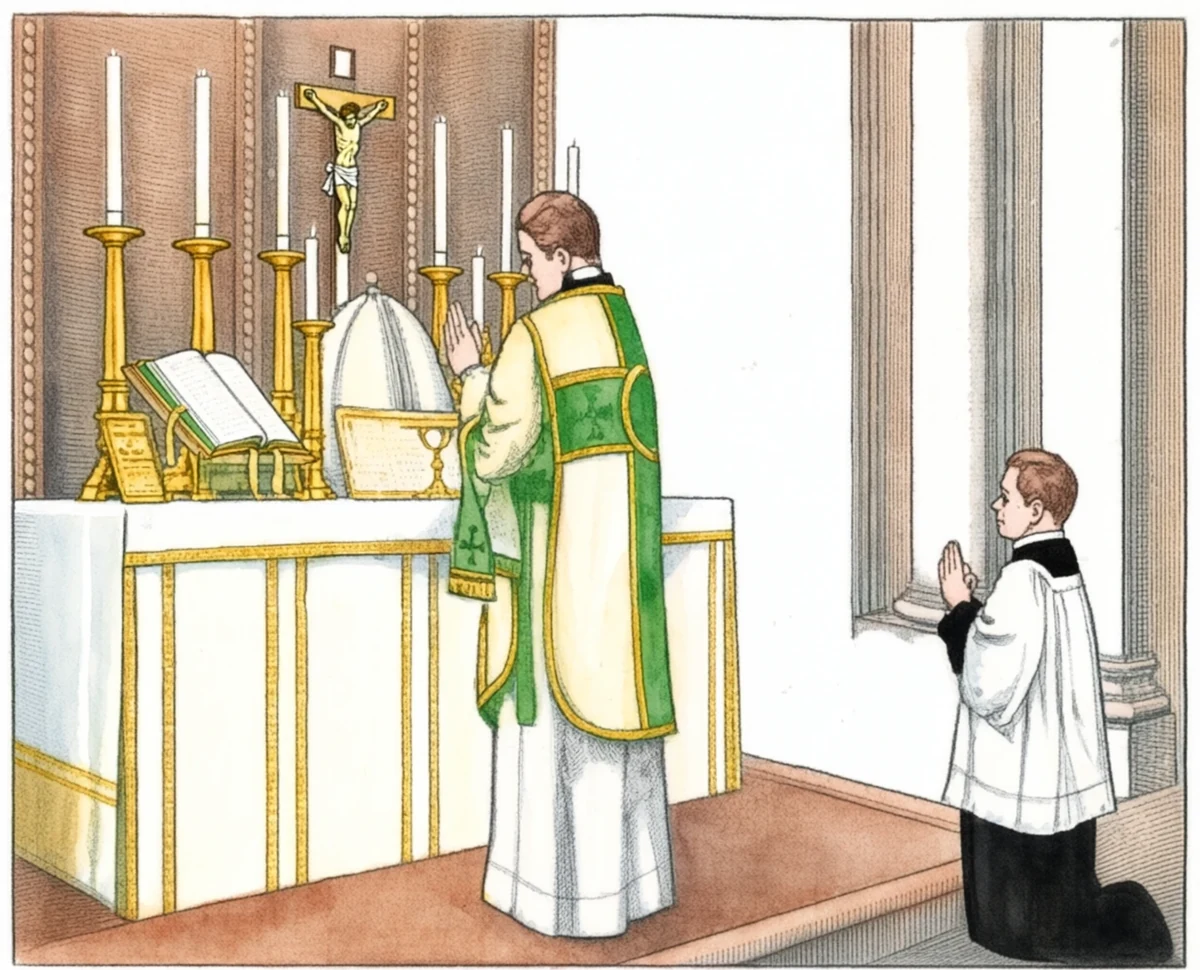 10 The “Preface”
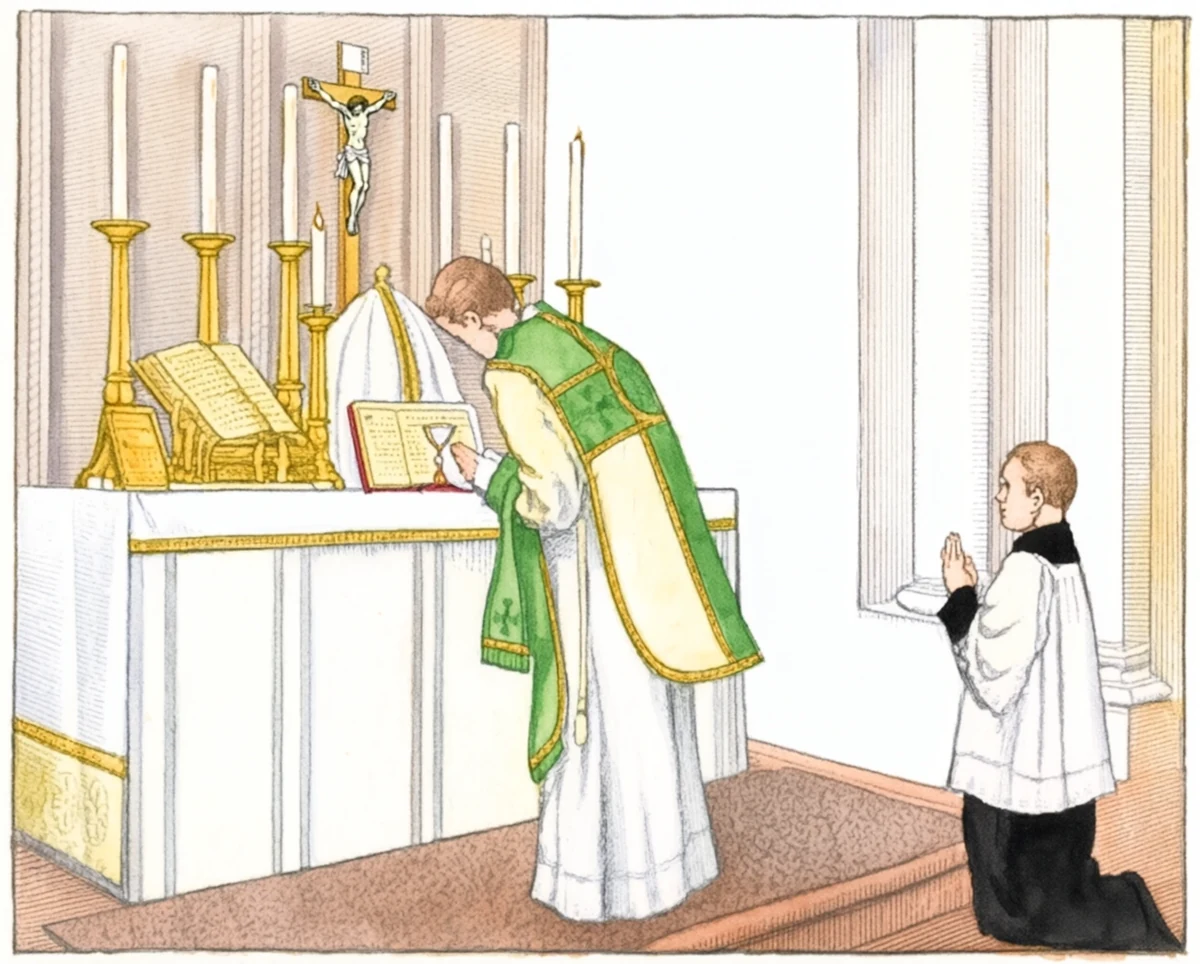 11 The Sanctus
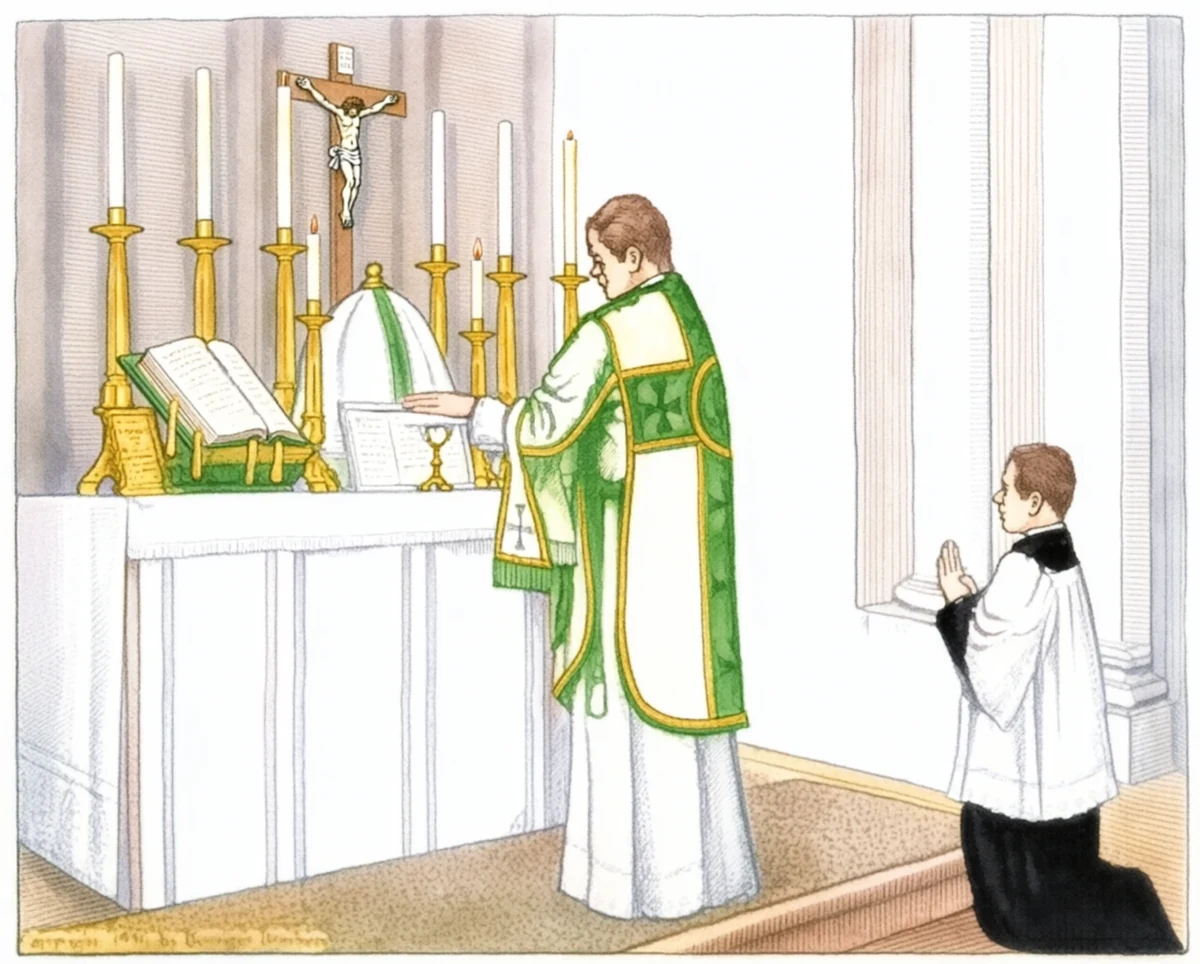 12 The “Hanc Igitur”
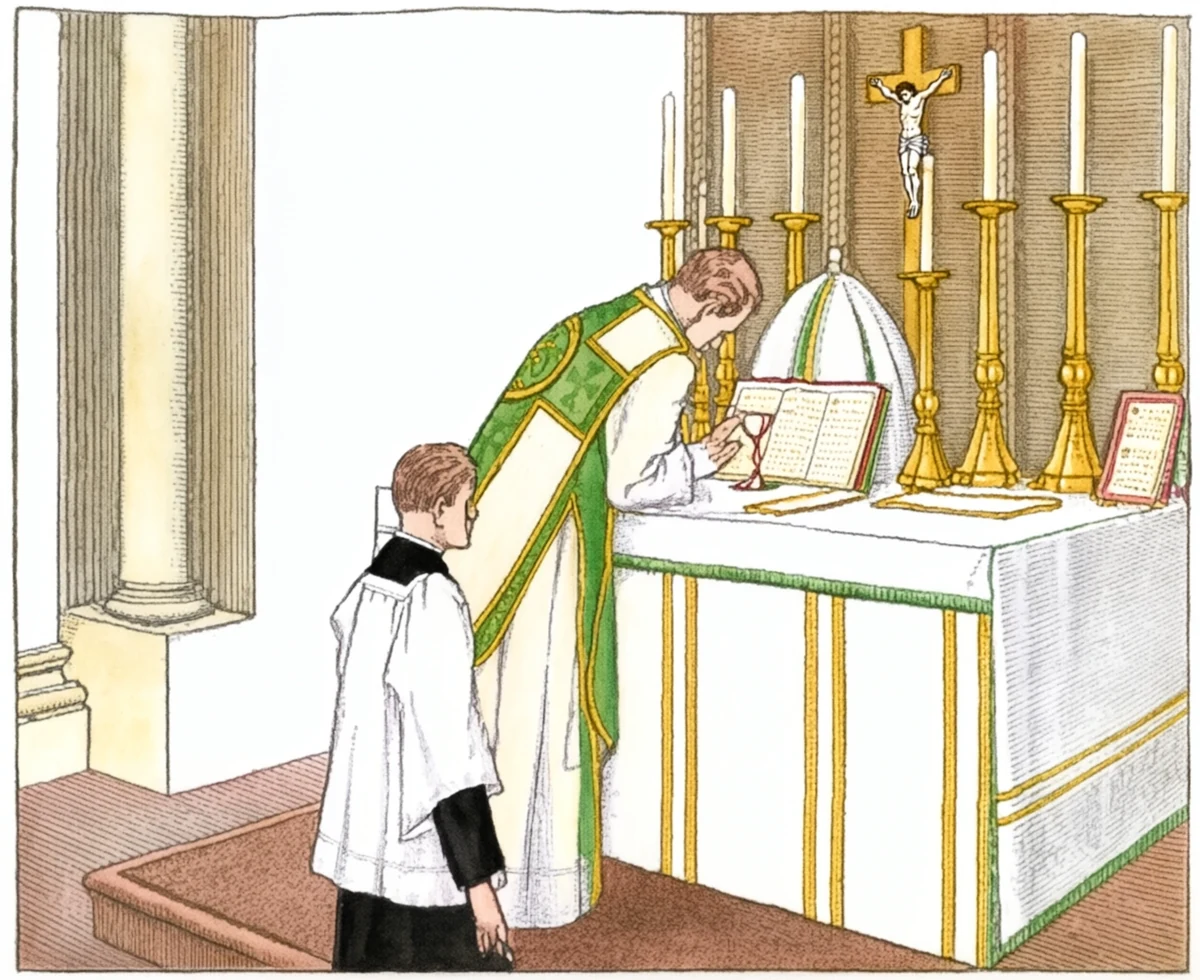 13 The “Consecration of the Host”
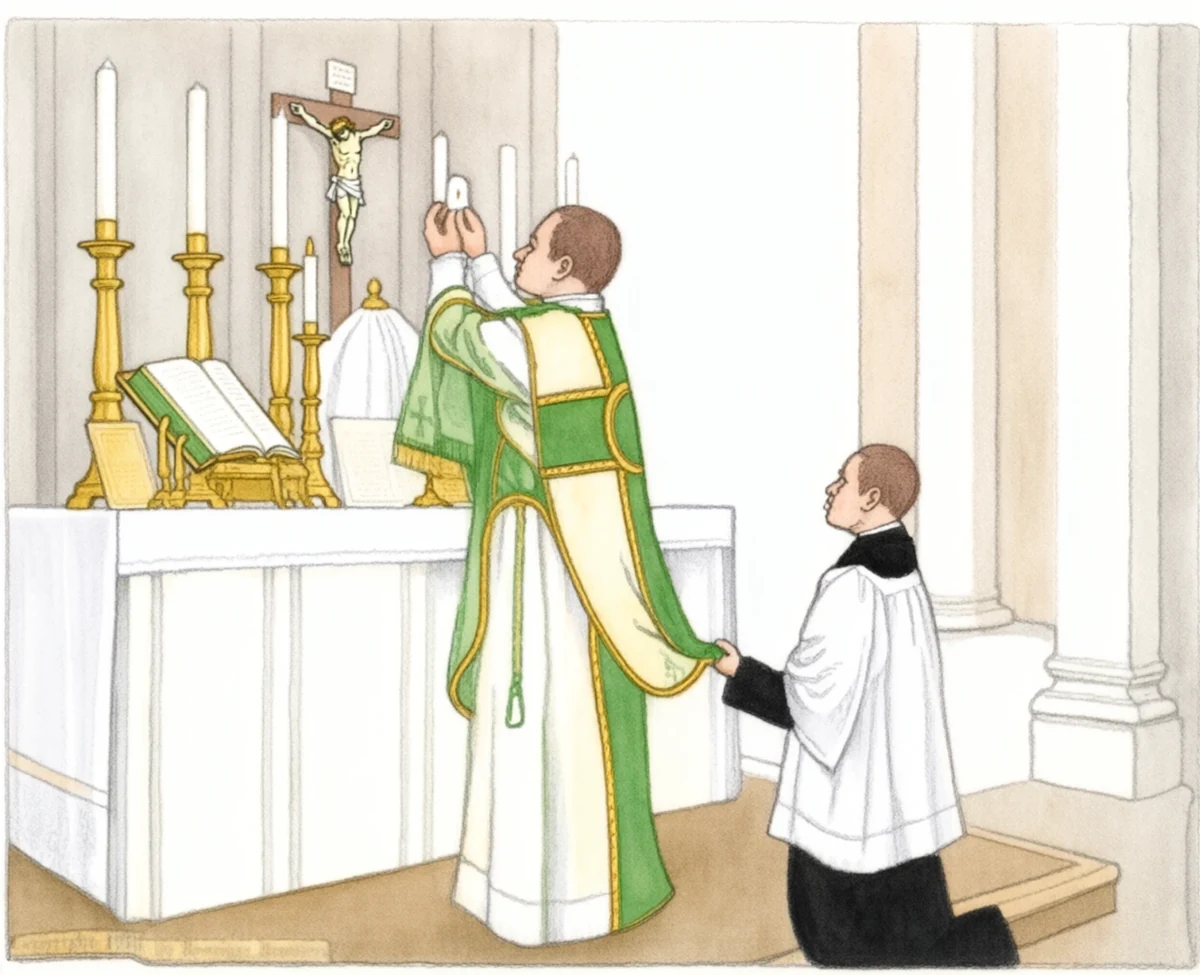 14 The “Elevation of the Host”
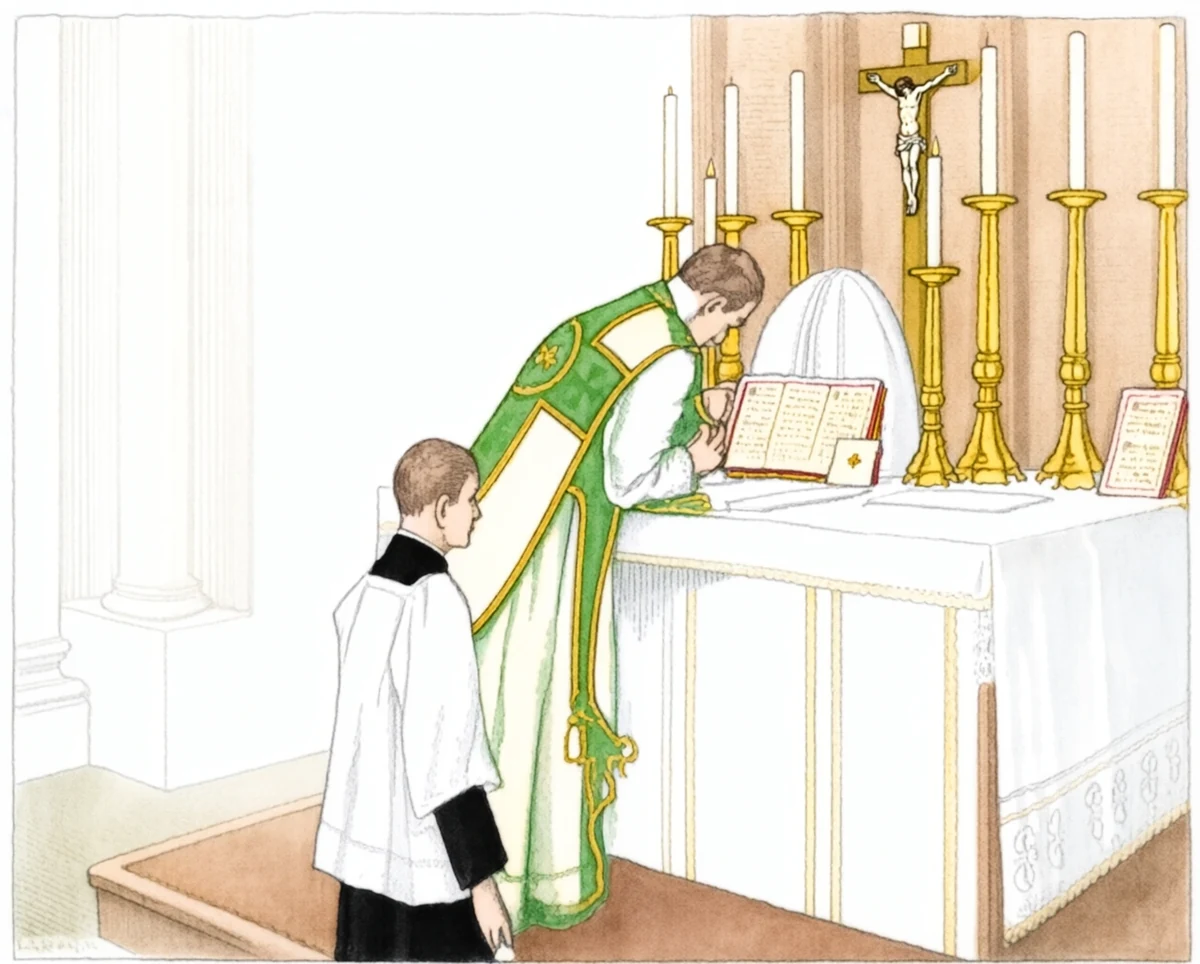 15 The “Consecration of the Wine.” “This is the Chalice of My Blood.”
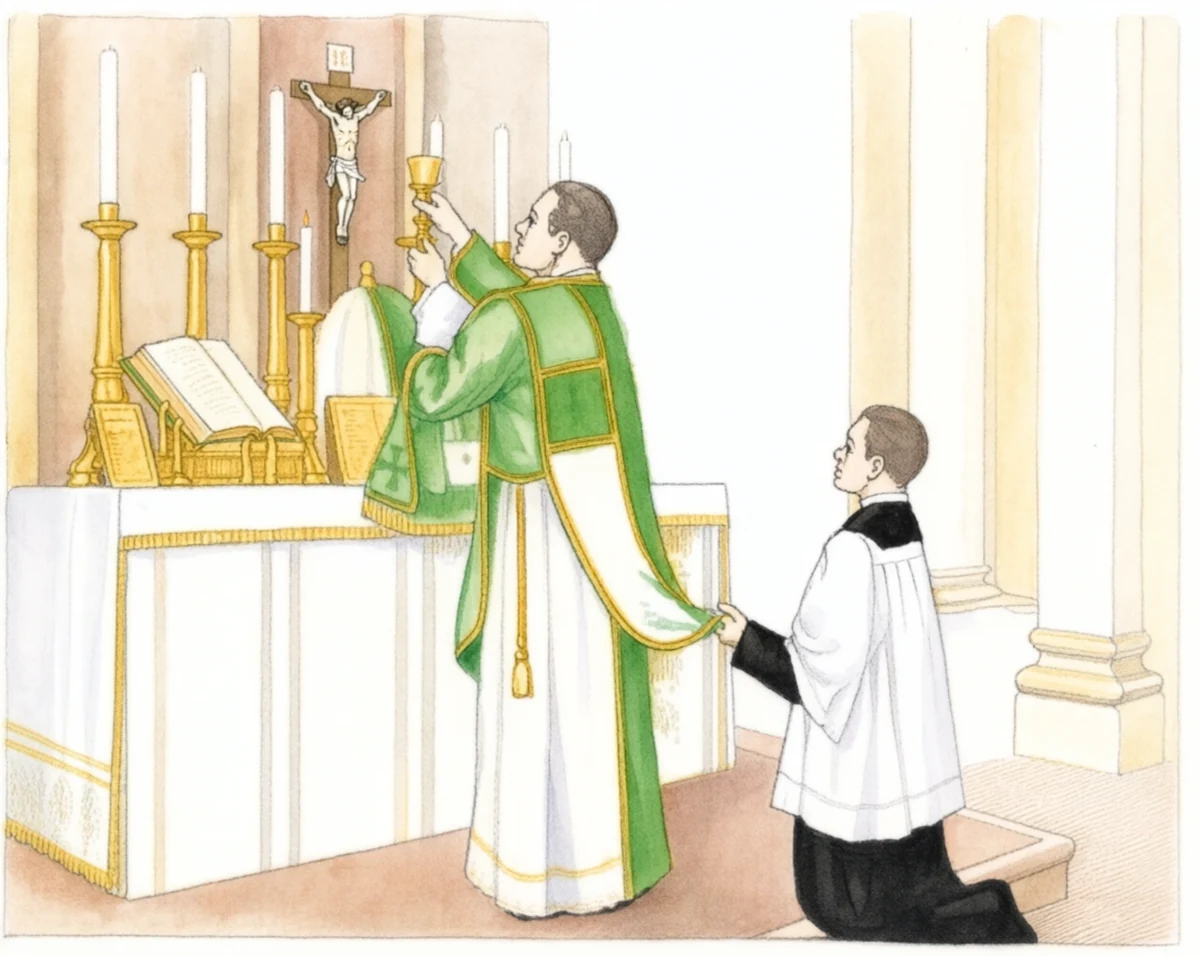 16 The “Elevation of the Chalice”
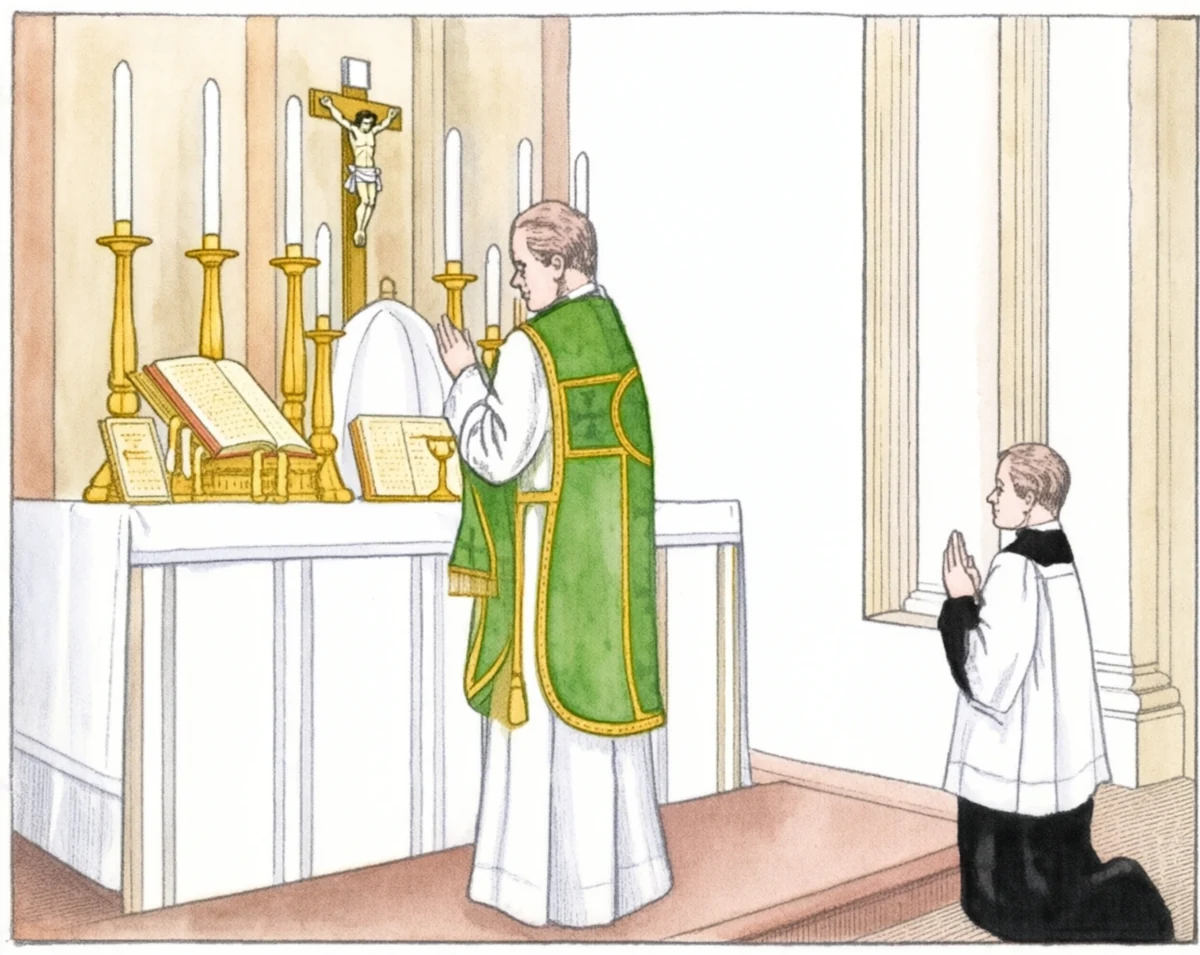 17 The Pater Noster
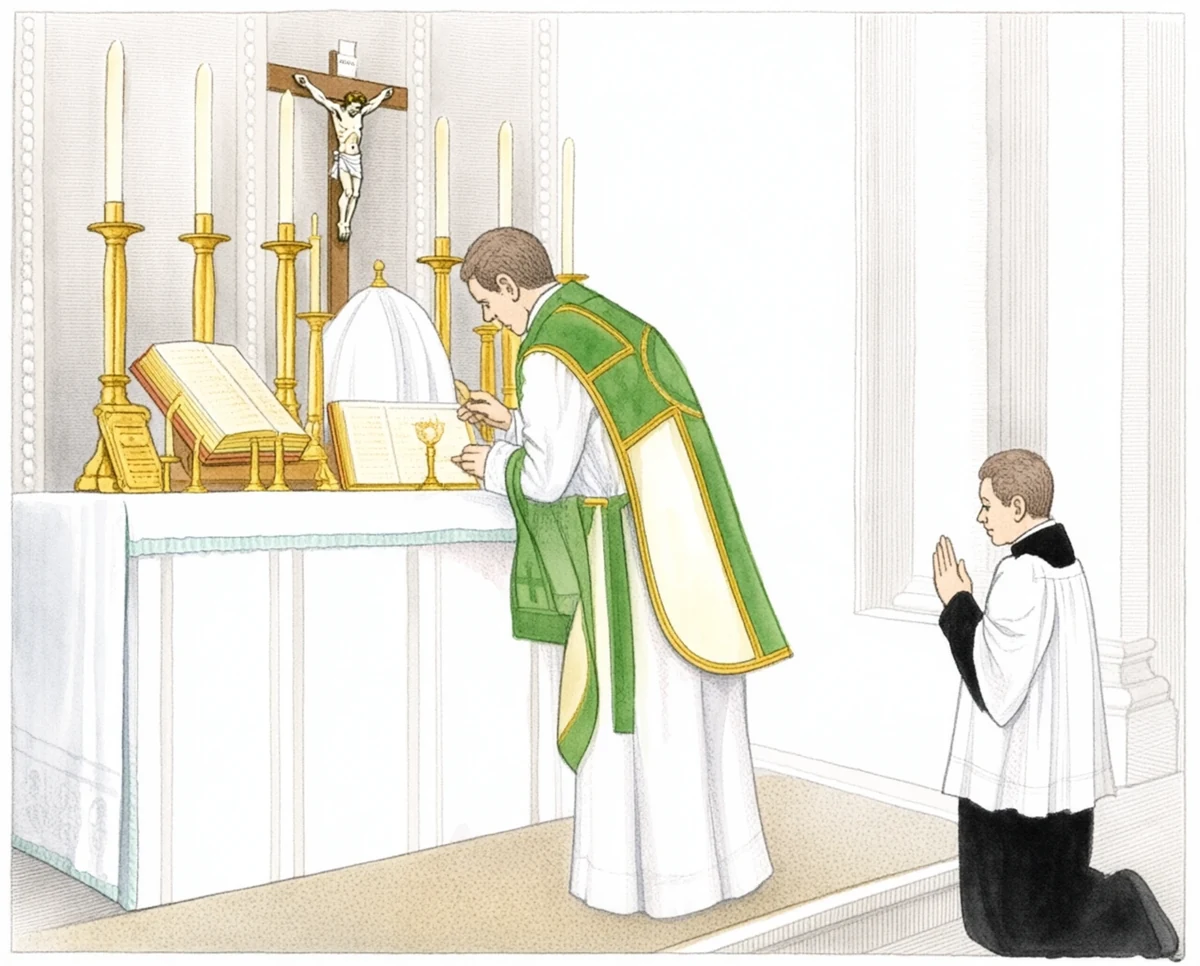 18 The “Priest’s Communion”
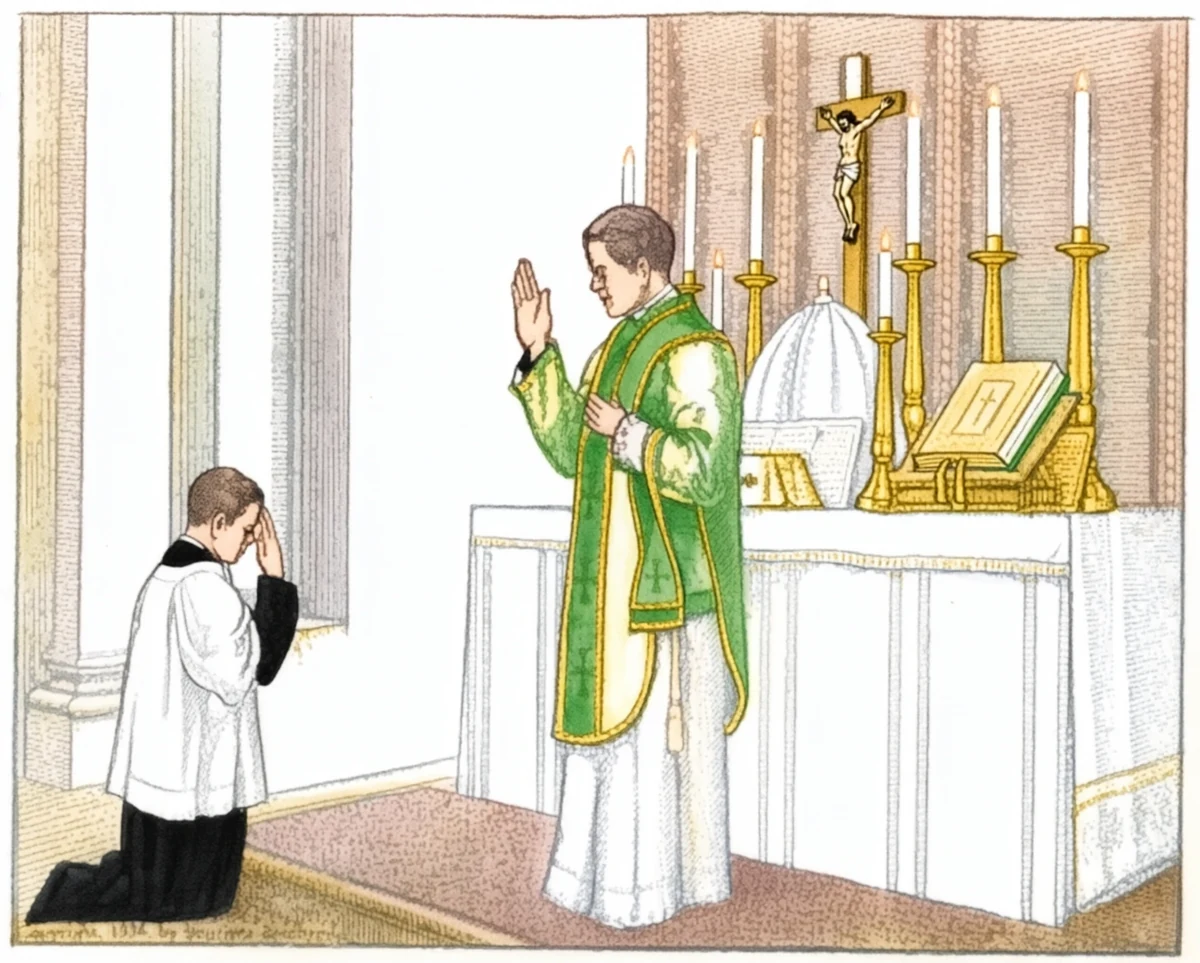 19 The “Blessing”
The Mass consists of two kinds of prayers: the Ordinary, which does not change, and the Proper, which varies according to the feast or season. The Ordinary forms the fixed framework of every Mass; the Proper — Introit, Collect, Epistle, Gradual, Gospel, Offertory, Secret, Communion, and Postcommunion — gives each Mass its distinctive character. The Mass is further divided into two principal parts: the Mass of the Catechumens, devoted to instruction and preparation, and the Mass of the Faithful, the sacrificial and sacramental act itself.
The Altar
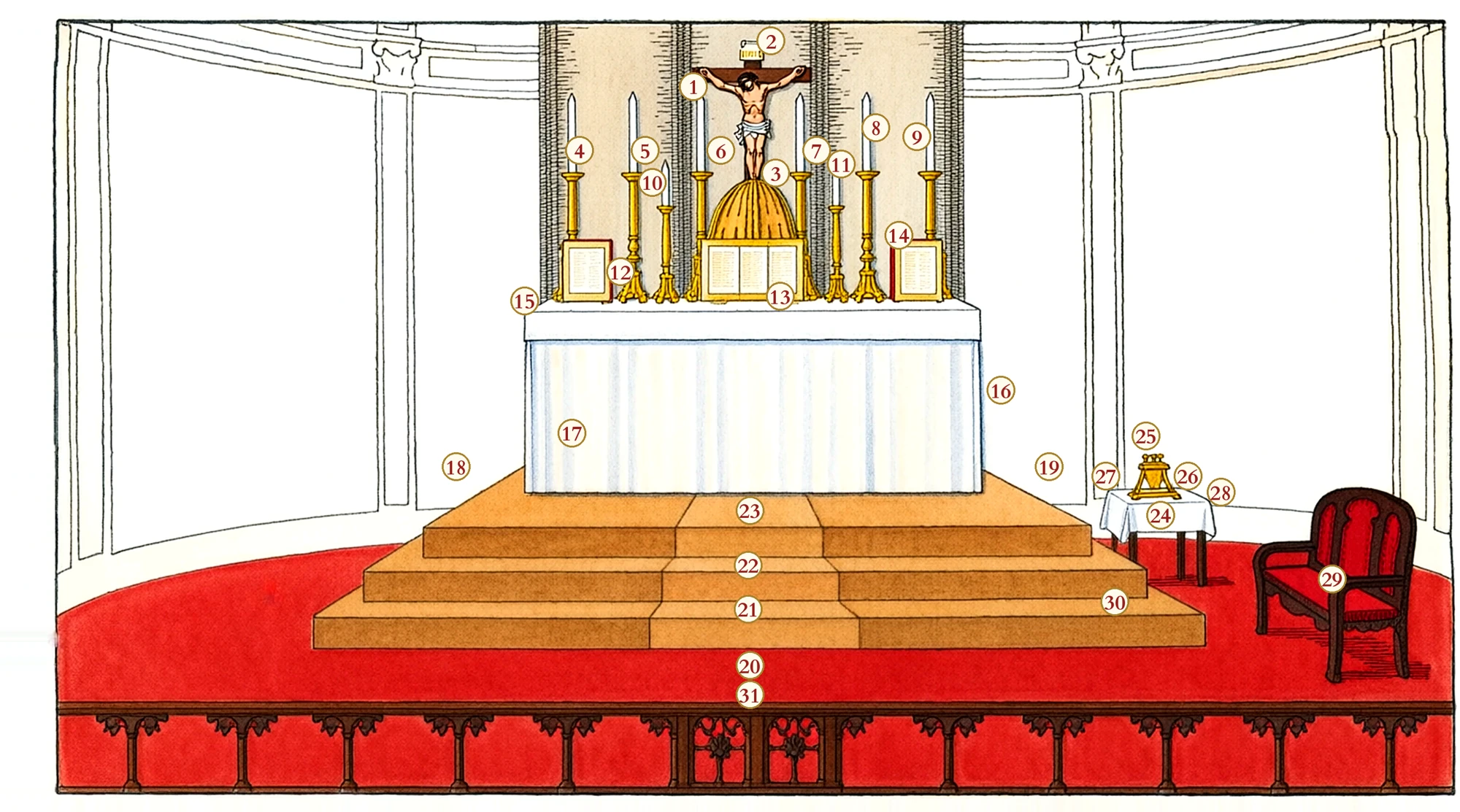
- 1. Crucifix.
- 2. Reredos.
- 3. Tabernacle covered by a veil which is either white or of the color of the vestments worn that day, but at Requiem Masses the veil is purple.
- 4–9. Large Candlesticks for High Mass and Benediction. At a High Mass at least six candles are lighted.
- 10, 11. Small Candlesticks for Low Mass. There are usually two but sometimes four. However, only two candles are lighted for a Low Mass said by a priest, but when a bishop says a low Mass four candles must be lighted.
- 12, 13, 14. Altar Cards. (The larger in the center contains prayers read at the Offertory and Canon. The smaller one on the Epistle side has the prayers which the priest reads when washing his hands. The other smaller one on the Gospel side has the Gospel of St. John, usually read at the end of Mass.)
- 15. Mensa or Altar Table.
- 16. Altar Table Coverings. (One wax and three linen cloths cover the altar table. The fourth or top one of linen hangs down over the side of the altar to the floor.)
- 17. Antependium or Frontal. (A cloth which sometimes hangs down in front of the altar. Like the tabernacle veil, it takes the color of the Vestments.)
- 18. Gospel Side of the Altar.
- 19. Epistle Side of the Altar.
- 20. Sanctuary Floor.
- 21. First Altar Step.
- 22. Second Altar Step.
- 23. Predella or Altar Platform.
- 24. Credence Table.
- 25. Water and Wine Cruets.
- 26. Finger Basin.
- 27. Towel.
- 28. Communion Paten.
- 29. Sedilia or Priests’ Bench.
- 30. Bell.
- 31. Communion Rail.
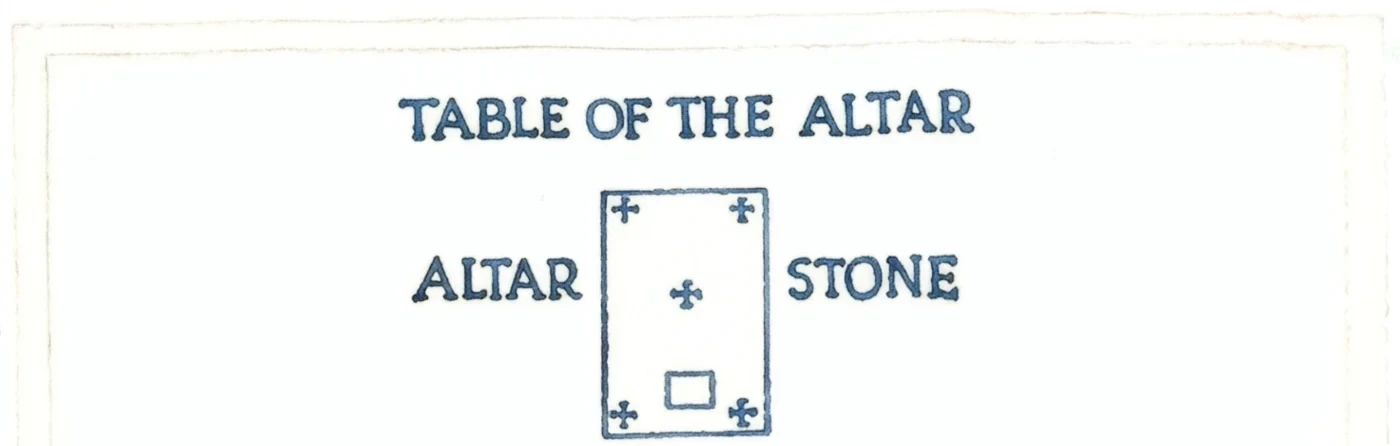
The form of the Catholic altar recalls both a table and a tomb: the table of the Last Supper and the sepulcher of Our Lord. Set into the mensa (altar table) is the altar stone, consecrated by the bishop and containing relics of saints and martyrs. Five crosses are carved into it, signifying the five wounds of Christ. Above the altar stand the crucifix, candlesticks (at a High Mass at least six candles are lighted, at a Low Mass said by a priest only two), and the altar cards bearing the Ordinary prayers. The tabernacle houses the Blessed Sacrament, before which the sanctuary lamp burns perpetually. The chalice (holding the wine to be consecrated) and the paten (holding the large host) are the principal sacred vessels, of gold or silver — if of silver, the chalice gold-plated within and the paten on its upper side.
The Sacred Vessels
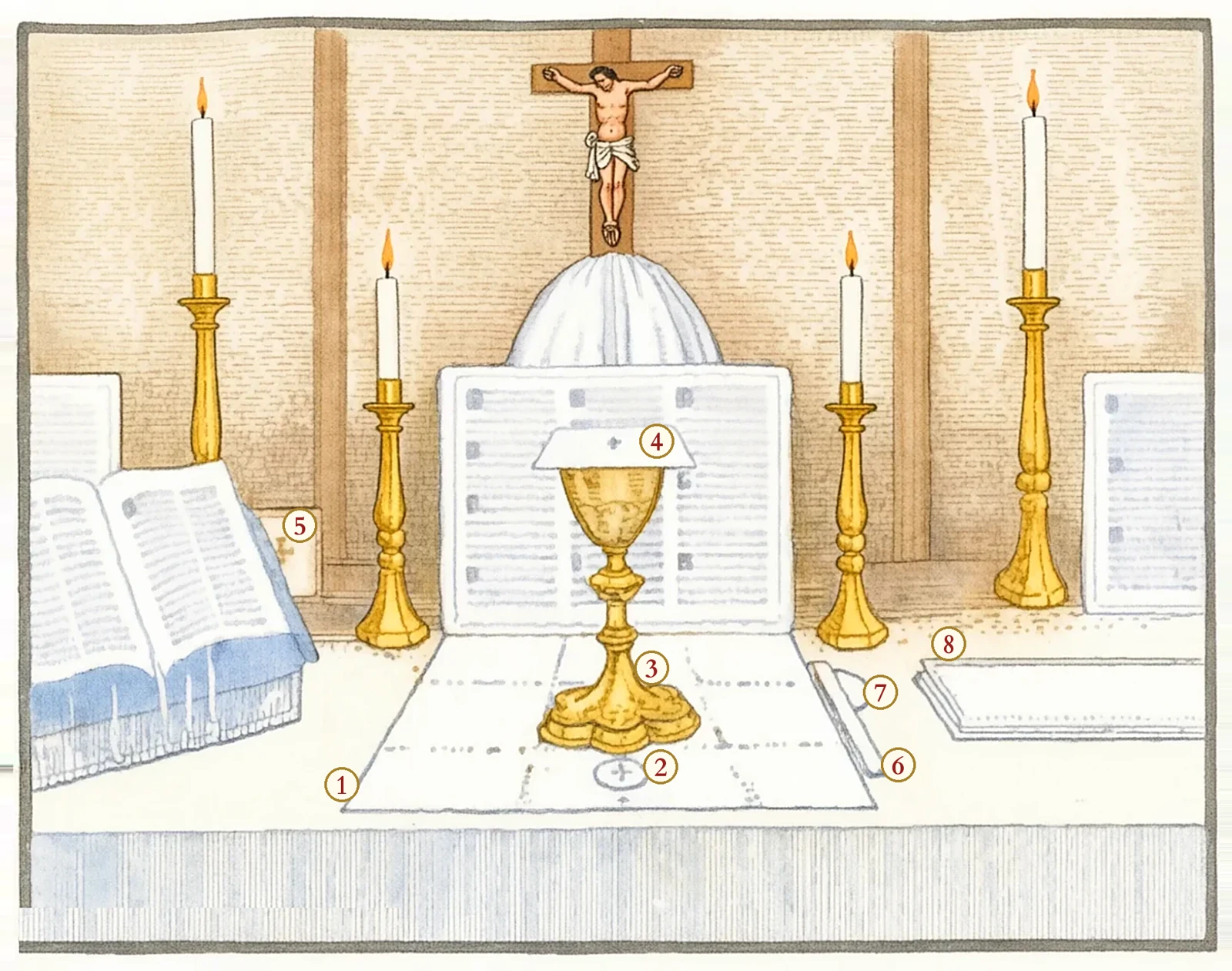
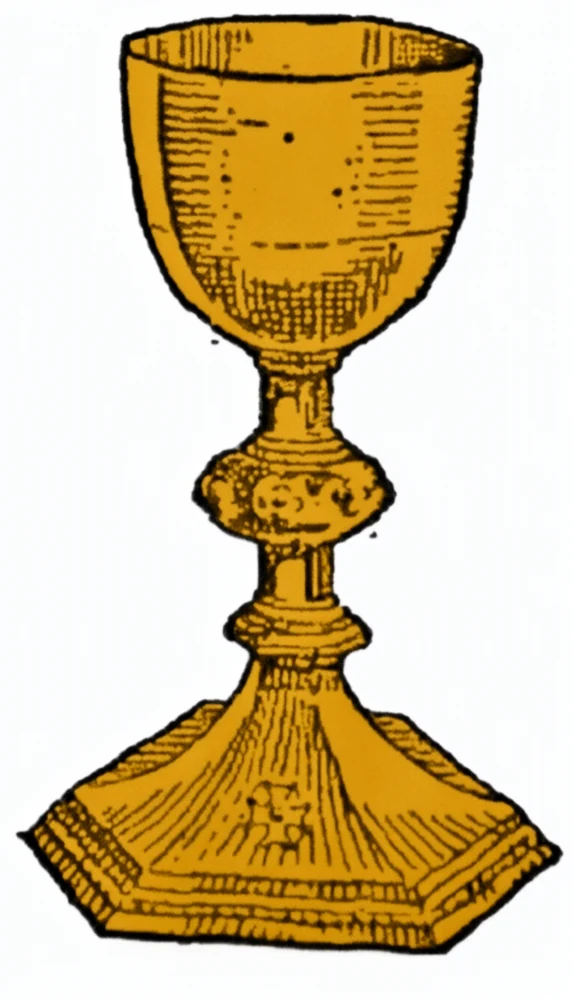
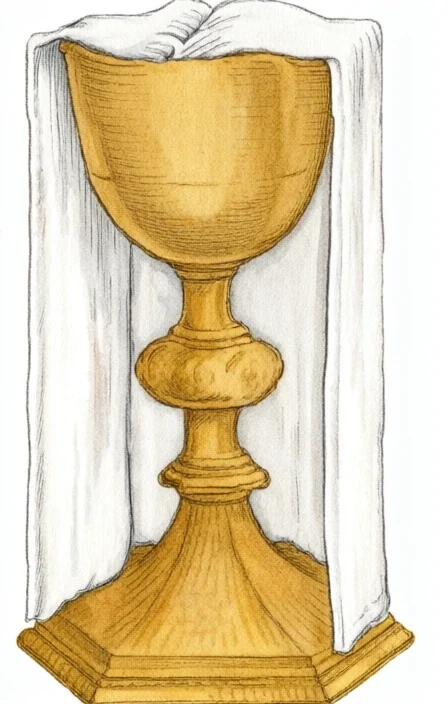
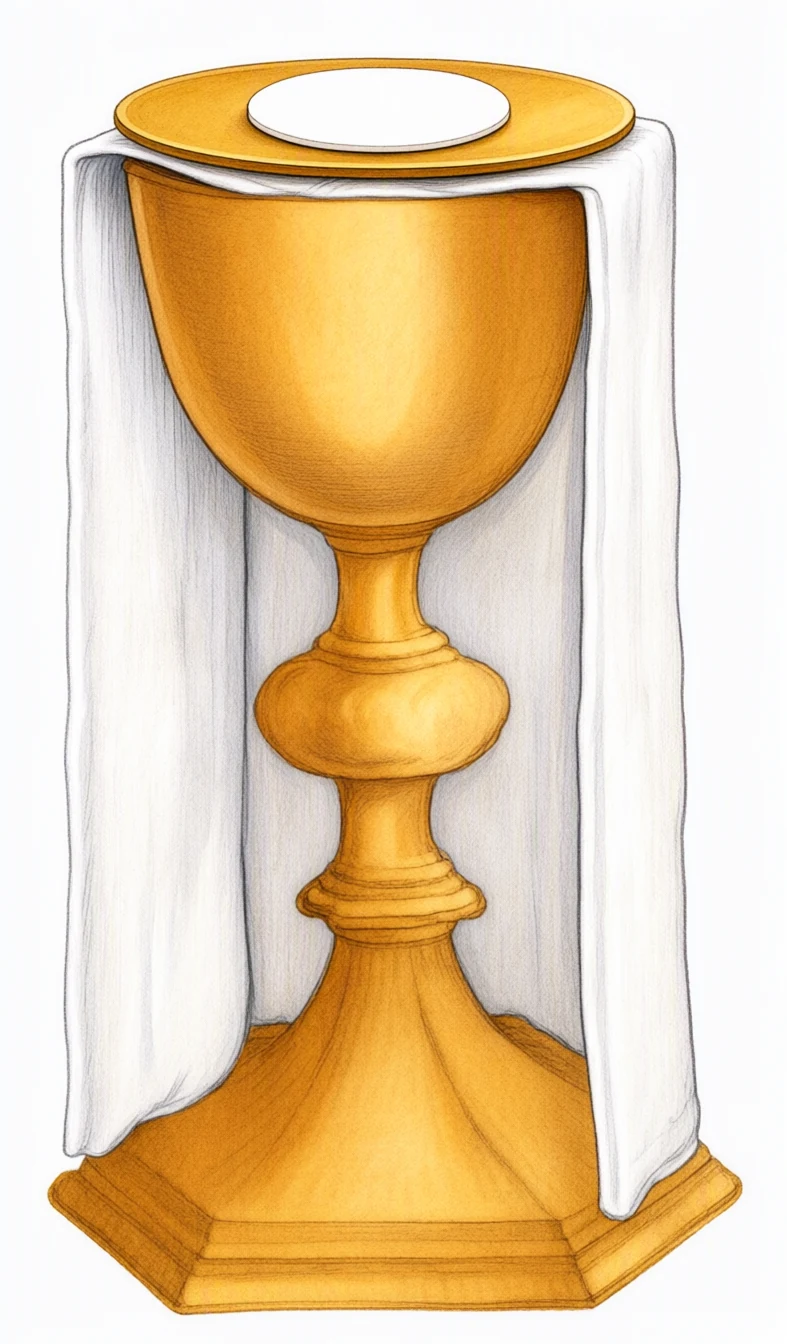
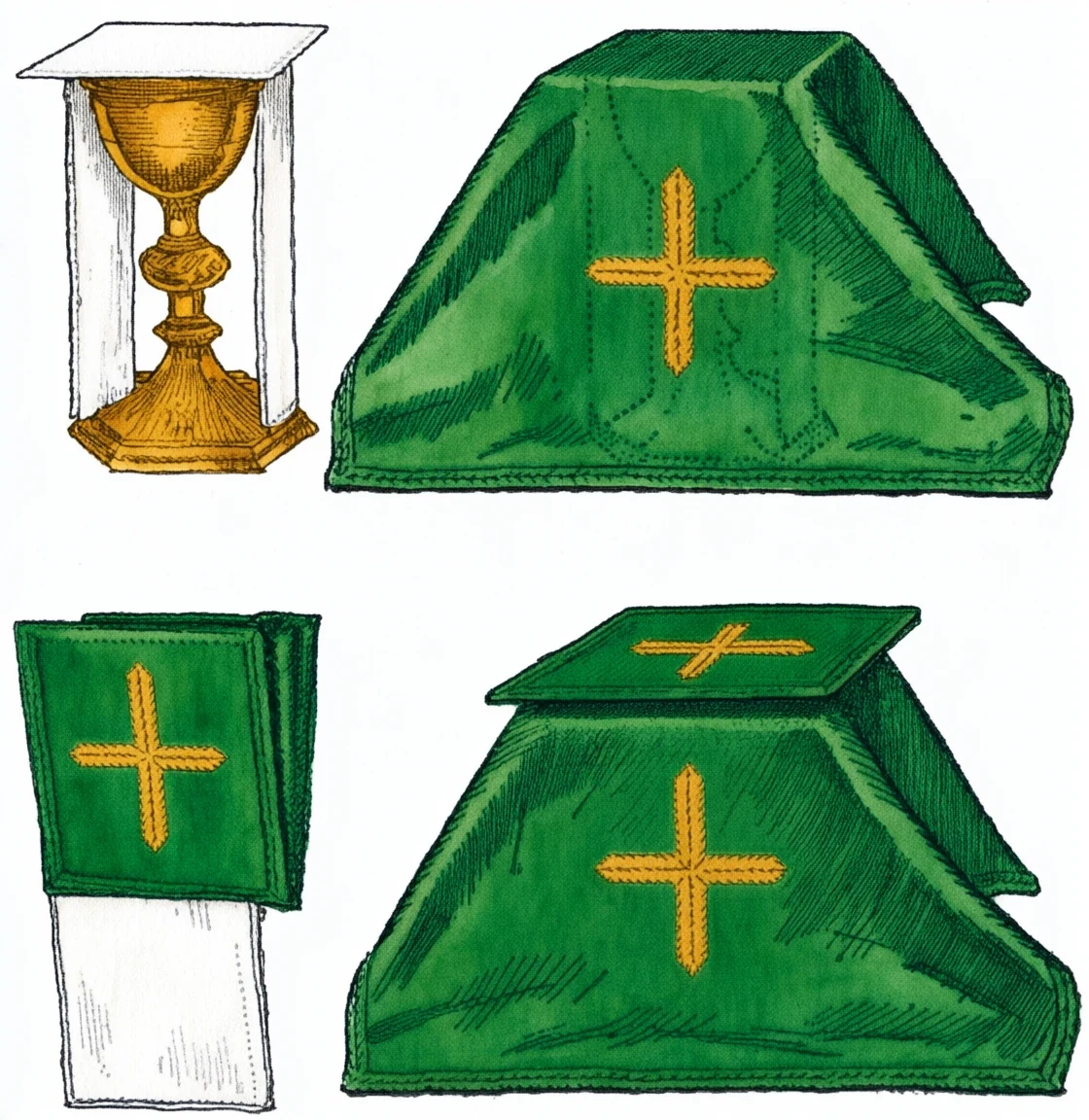
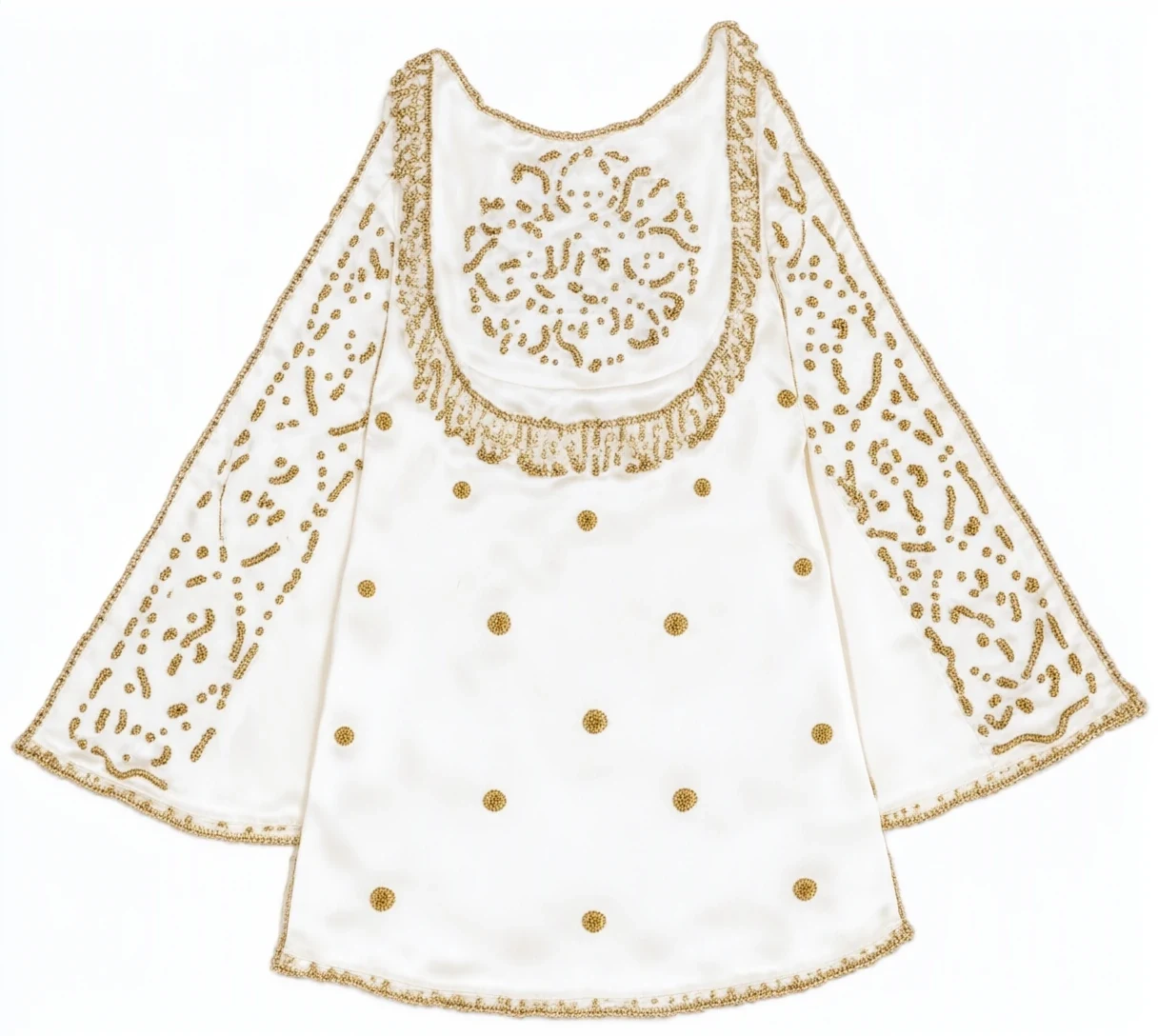
The Chalice is a cup made of gold or silver, but if of silver, the interior must be gold-plated. The Paten is a plate of gold or silver upon which the large bread for consecration rests until the Offertory. The Purificator, a linen cloth, is spread over the cup of the chalice; the Pall, a square of stiffened linen, is placed over it. The Chalice Veil covers the chalice until the Offertory and again after the Communion; the Burse holds the Corporal, the square of linen on which the chalice and the Sacred Host rest. Veil and burse are of the same material and color as the vestments.
The Vestments
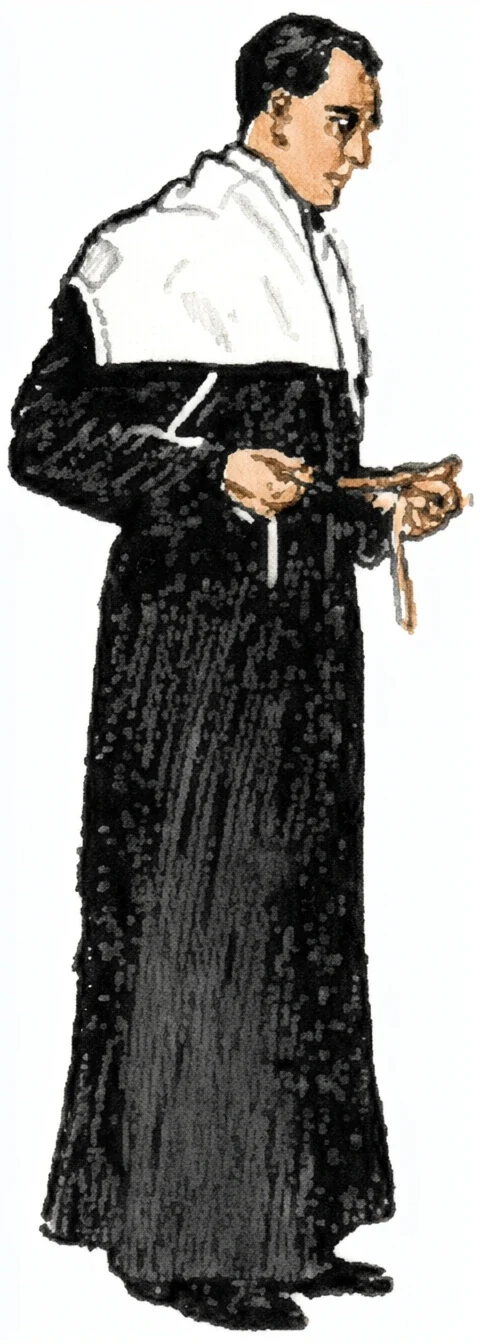
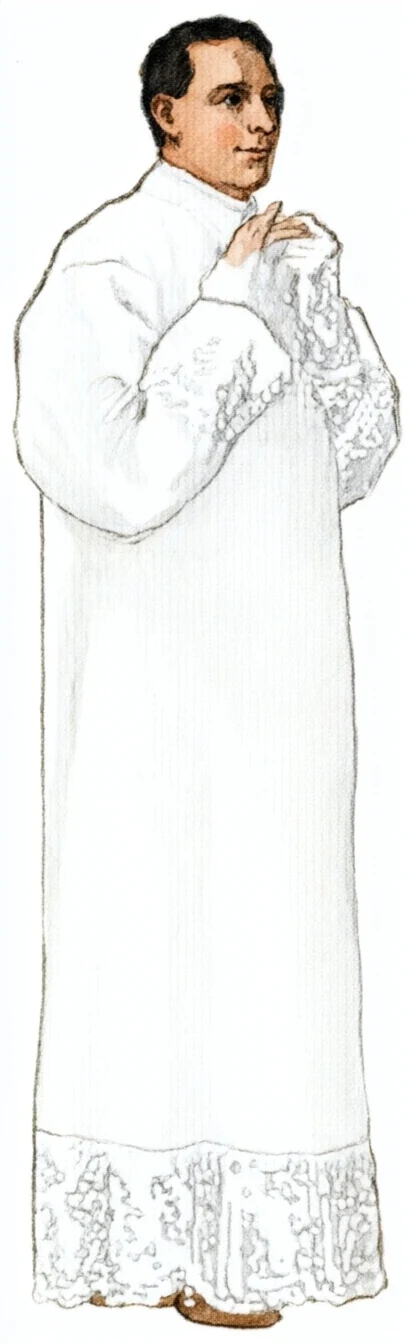
Each vestment is donned with a prayer expressing the interior disposition required for the sacrifice. The amice (linen on the head and shoulders) is the helmet of salvation. The alb (white linen robe) signifies purity and recalls the garment Herod placed on Our Lord. The cincture (cord at the waist) recalls the rope that bound Christ. The maniple (silk strip on the left arm) recalls the rope whereby Our Lord was led and the chains which bound His hands, an emblem of the tears of penance and the fatigue of the priestly office. The stole (long band crossed on the breast) recalls the cords with which Jesus was tied, and the Cross He carried. The chasuble, the chief Mass vestment — once a cloak that wholly enveloped the priest — symbolizes the purple cloak placed on Our Lord before Pilate — the emblem of charity.
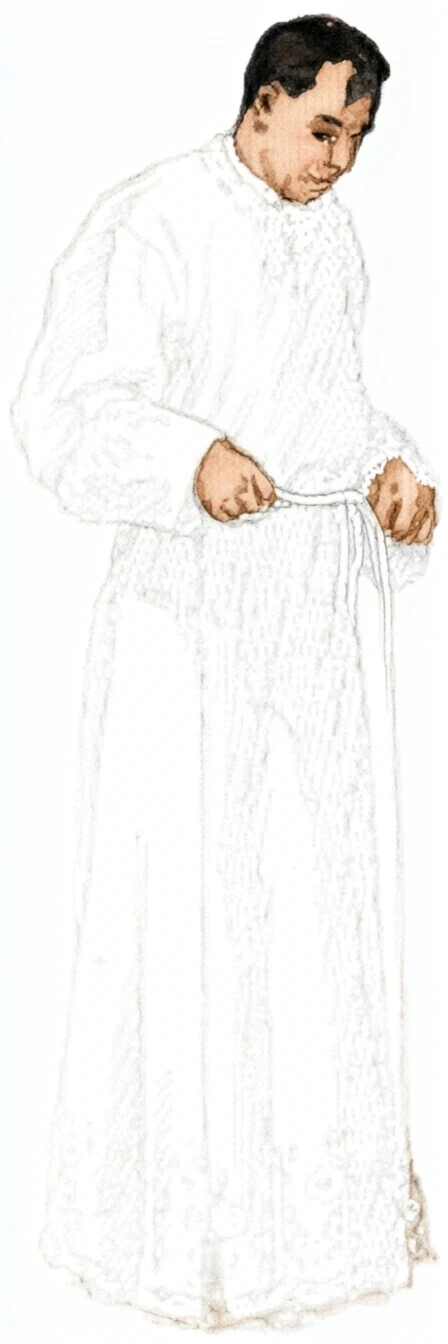
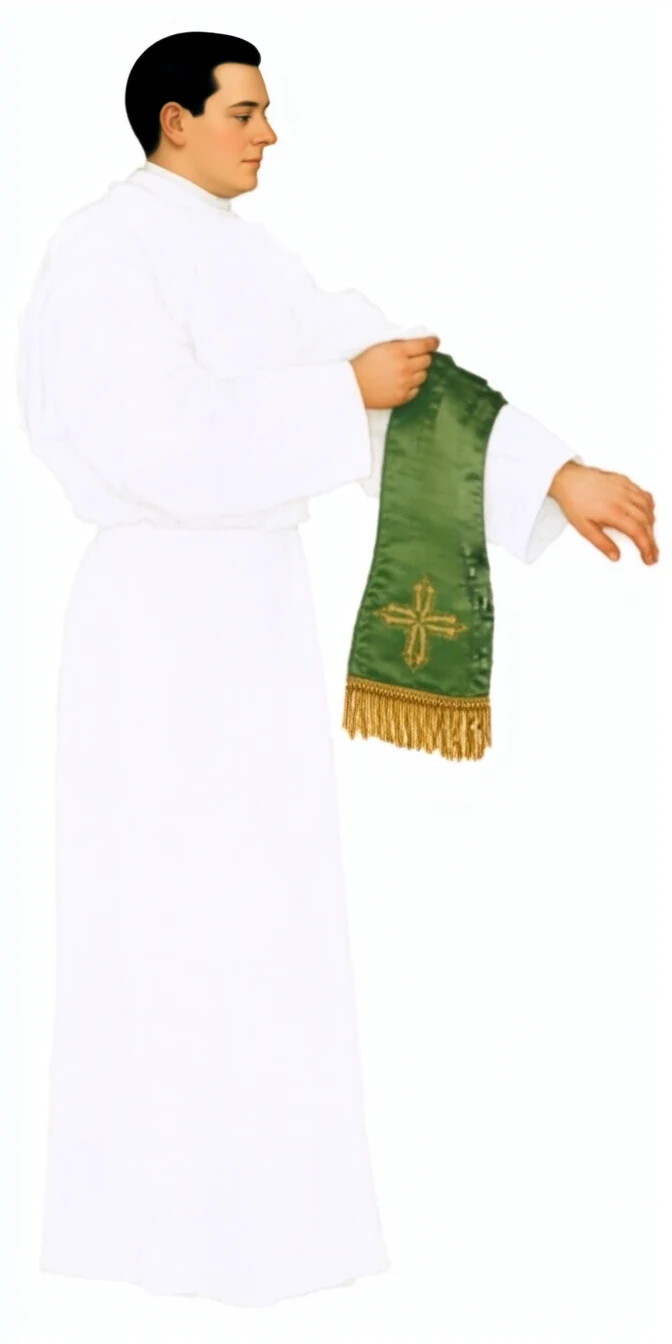
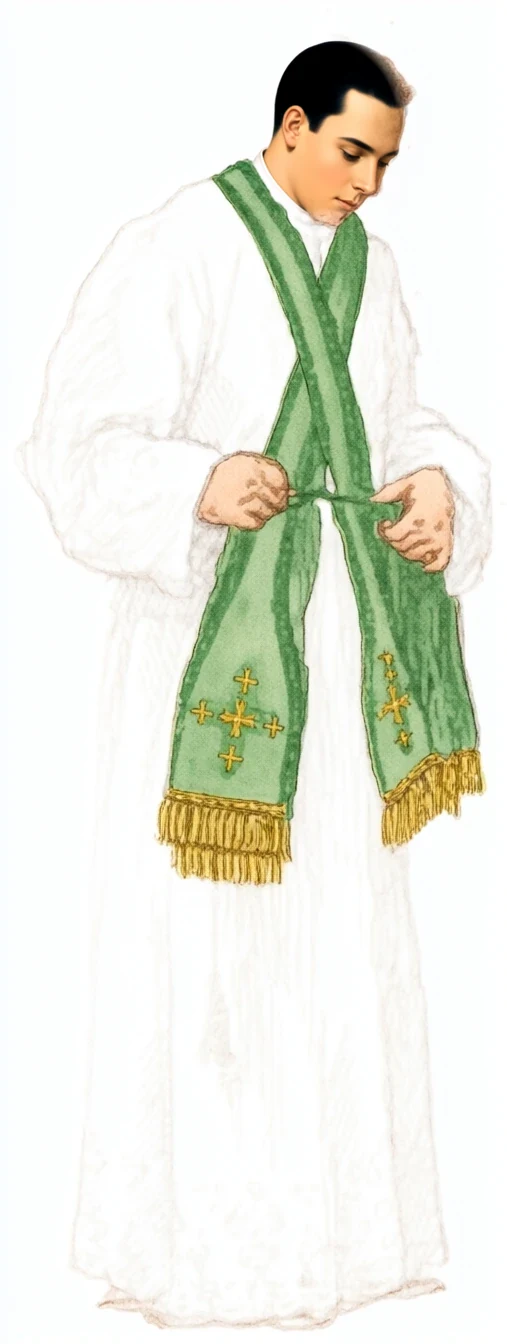
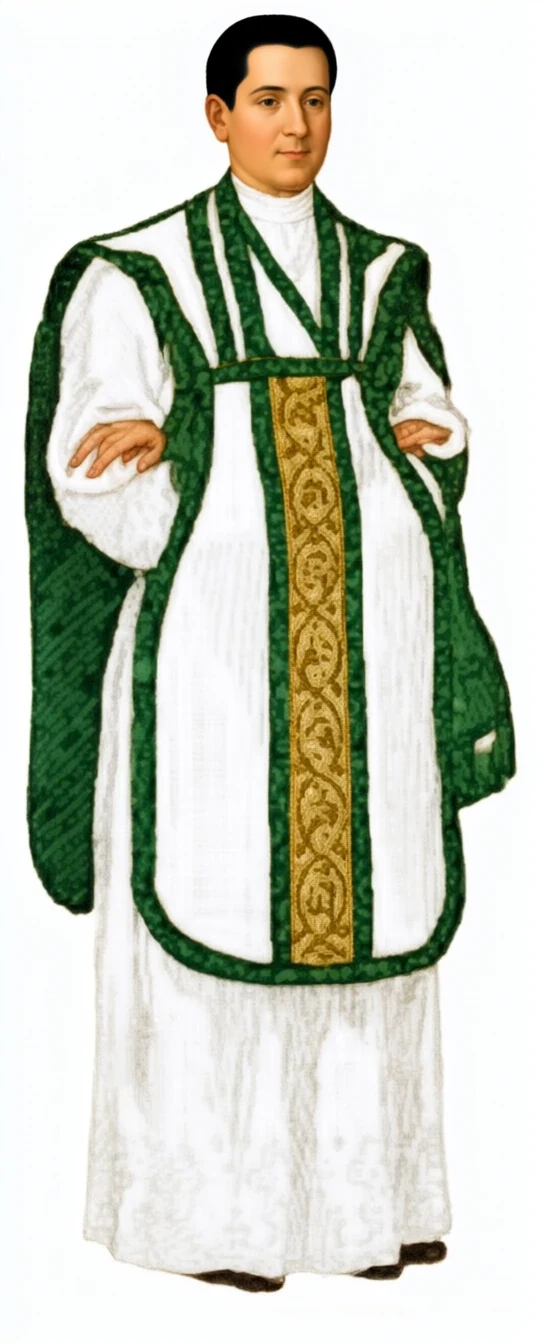
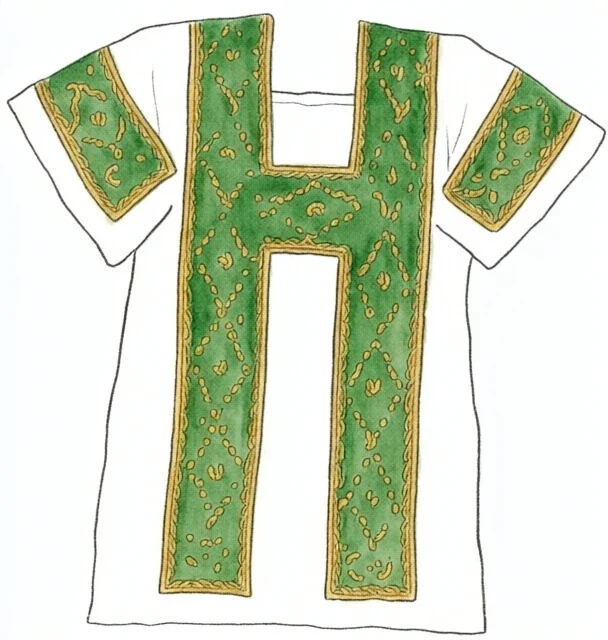
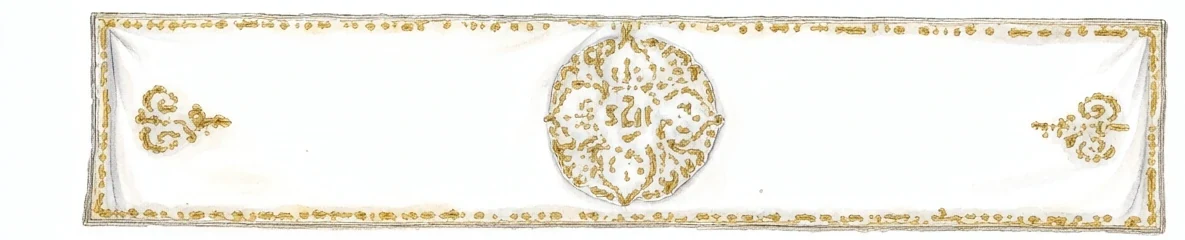
The deacon at Solemn High Mass wears the dalmatic, a long and ample garment with very large but short sleeves, of the same color as the chasuble of the priest. The cope, a large semi-circular cloak reaching to the feet, is worn at Benediction of the Blessed Sacrament, in processions, and at the Asperges; the humeral veil, an oblong piece of silk, is worn over the shoulders — in white when the priest holds the Monstrance to give Benediction.
Mass of the Catechumens
• Prayers at the Foot of the Altar — Psalm 42 and the Confiteor. Psalm 42 is omitted from Passion Sunday till Holy Saturday exclusively, and in Masses for the Dead.
• Introit — Anciently chanted while the priest went in procession to the altar; often, but not always, it sounds the keynote of the Mass.
• Kyrie Eleison — “Lord, have mercy.” Said nine times in Greek, alternately by priest and server: thrice Kyrie, thrice Christe, thrice Kyrie.
• Gloria in Excelsis — The great hymn of praise. Omitted in Advent, Lent, and Masses for the Dead.
• Collect — The prayer of the day. Additional Collects called Commemorations may follow on days of lower rank.
• Epistle or Lesson — A passage from the Bible read after the last prayer, also called the Lectio or lesson.
• Gradual and Alleluia (or Tract) — Psalm verses sung between the readings. The Alleluia is replaced by the Tract in penitential seasons.
• Gospel — Read at the Gospel side of the altar, after the priest prays for purity of heart and lips (the Munda cor meum).
• Creed — The Nicene Creed, said or sung on all Sundays, and on other days whenever indicated.
Mass of the Faithful
• Offertory — The priest offers the bread and wine with prayers of oblation.
• Secret — A variable prayer over the offerings, said inaudibly, completing the preparation before the Preface.
• Preface and Sanctus — The introduction to the Canon, a hymn of thanksgiving and praise, ending with the seraphim’s three-fold “Holy, holy, holy.”
• Canon — The fixed and most solemn part of the Mass, unchanged since St. Gregory the Great. Contains the Consecration, at which bread and wine become the Body and Blood of Christ, and commemorations of the Church, the living, the saints, and the dead.
• Pater Noster — The Our Father, preparing the faithful for Holy Communion.
• Agnus Dei — “Lamb of God, Who takest away the sins of the world,” invoked three times.
• Communion — The priest receives the Body and Blood under both species; the faithful receive the Blessed Sacrament.
• Postcommunion — A variable prayer of thanksgiving.
• Dismissal — Ite, Missa Est (“Go, the Mass is ended”); Benedicamus Domino when the Gloria was omitted; Requiescant in pace in Masses for the Dead.
• Last Gospel — Usually the Prologue of St. John (“In the beginning was the Word”), read at the Gospel side.
Glossary of Liturgical Terms
Abbot, the superior or head of a monastery for men. He is constituted as a blessed person by the ceremonial blessing given by the bishop; he uses mitre and crozier and other episcopal insignia.
Ablution, from the Latin word ablutio meaning washing. Term applied to the purifying of the priest’s fingers after the Communion in the Mass.
Abstinence Days, when meat is not permitted. All Fridays of the year.
Acolyte, highest of the Minor Orders. Office is to light candles and serve wine and water at Mass. Servers at the altar are generally called acolytes.
Acta of St. Marcellus, a record (unauthentic) of the proceedings of the trial and death of the Martyr St. Marcellus. Such records were usually made by notaries, appointed; additions sometimes were made by later hands.
Ad duas lauros on the Via Labicana, at the two laurels on the road to Labicum, a little town between Tusculum and Praeneste; now called Colonna.
Ad lunam, Church ad Lunam “at the place of the moon.” Why so called is not known.
Advent, the Coming of Christ in grace. The penitential season preparatory for His coming at Christmas.
Agape, a feast of Charity in the primitive church at which contributions were made. Originally observed in remembrance of the Last Supper of Our Lord.
Agnus Dei, triple prayer in the Mass, immediately preceding the Communion Prayers; occurs at the end of Litanies.
Alb, a vestment of white linen reaching to the feet, worn at Mass. Symbolical of innocence of life, and of hope for eternity.
Alleluia, a Hebrew word meaning “Praise the Lord.” Used in the Liturgy during joyful seasons. It is sung by angels in Heaven. (Apoc. 19, 1.)
Amen, a Hebrew word meaning “so be it.” Expresses assent to the prayer it follows.
Amice, a rectangular piece of fine linen which the priest wears upon his shoulders during Mass. Helmet of salvation, protection against satan.
Antependium, from the Latin ante—before, pendium—hanging. A rich fabric hanging in front of the altar and varying with the color of the season.
Antiphon, a verse or part of a verse sung or said before and after each psalm or division in the Divine Office. Varies with each feast and season.
Antiphonary, a book containing the Chants for the Mass and Office; used by the chanters.
Apostle, one of the twelve men chosen personally by Jesus to continue His work, and given a special mission.
Apostoleion, Greek name for Church of the Twelve Apostles; one of the famous religious edifices of Rome; completed in 564.
Arch-basilica—a Major Basilica. Title of distinction given to certain churches by the Pope. Cfr. Basilica.
Archipresbyteratus, Basilica “in Archipresbyteratu“ was dedicated to St. Apollinaris, archpriest and patron Saint of Ravenna.
Area Vindiciani, the field (perhaps the burying ground) of Vindicianus, in the village of Vindena (Terni).
Asperges, a verse from Psalm 50, recited by the priest while sprinkling the congregation with holy water before the Mass for the people on Sundays. The entire ceremony is called the Asperges.
Augustus lector de Belabru, means Augustus reader, from the Marshes.
p. 1768Aula, a spacious room or hall.
Aventine, one of seven hills upon which the ancient city of Rome was built.
Baptistery, generally a building—baptistry, a section of church set aside for the baptismal font.
Basilica, from Greek basilike—a palace or royal building. A style of church architecture. Title of distinction given to some churches by the Pope.
Basilica in aedibus sessoriis, originally one of the halls of the Sessorian Palace. St. Helena, mother of Constantine the Great, adapted it as a church to receive the relics of the true cross which she brought from Jerusalem. Hence the names Basilica Heleniana and Sancta Hierusalem (Jerusalem).
Basilica in exsquiliis, the Basilica on the Esquiline Hill, Rome.
Basilica Salvatoris, “Basilica of our Blessed Savior” title given to St. John Lateran by Pope St. Sylvester. Other titles: Lateran Basilica, Basilica of Constantine.
Biretta, originally an Italian term for an official ecclesiastical cap worn by Western clergy. Varies in color according to grades of dignity.
Burse, a square case for the corporal, made of the same material and color as the vestments.
Calvary, hill outside wall of Jerusalem; scene of Christ’s crucifixion.
Campus Martius, place of assembly for the ancient Roman people, near the Tiber.
Canopy, a rectangular framework of rich cloth supported by poles and carried over the Blessed Sacrament in processions. Italians call it the baldacchino.
Canon, the fixed and unchanging part of the Mass, between the Sanctus and the Pater Noster.
Canticle, hymn taken from Holy Scripture, arranged for chanting and so used in Divine Service.
Carcere, St. Nicholas in, “St Nicholas by the Prison;” occupies the site of pagan temples used as prisons under the Byzantine rule (about 550 A. D.).
Catechumen, A person not baptized but taking instructions for Baptism.
Caterina dei Funari, St. Catherine’s of the rope-makers; a church still situated on the piazza dei Mattei, Rome.
Centurion, a military officer who commanded a hundred soldiers in the Roman army.
Chalice, a vessel of precious metal in the form of a cup having a stem with a knob and a base, consecrated by a bishop, to contain the Precious Blood at Mass.
Chalice Veil, a cloth which covers the chalice until the offertory, and after the Communion. It is made of the same material and color as the vestments.
Chasuble, the outer, chief vestment which the priest wears at Mass; a symbol of protection, a “little house.”
Chrism, oil mixed with balm used in Baptism, Confirmation, Holy Orders and other Consecrations.
Ciborium, a vessel of precious metal for containing the consecrated Hosts. Similar to the Chalice, but having a cover surmounted by a cross.
Cincture, a cord of linen worn about the waist to confine the Alb. Symbol of faith and chastity.
Coelian, one of seven hills upon which the ancient city of Rome was founded.
Collect, from Latin collecta—a gathering of people. In early Christian times the faithful met at an appointed church to pray before forming the procession to a Basilica in Rome where the stational Mass was offered. The Bishop present, summed up the petitions and sentiments of the people in a short prayer which came to be called the “Collect.”
Commemoration, the act of calling to remembrance. When two feasts of unequal rank fall on the same day commemoration of the feast of lesser rank is made in the Office and Mass.
p. 1769Common, Masses and Prayers in honor of a particular kind or class of Saints, as Martyrs, Confessors, Virgins, etc., Common of Saints.
Communicantes, opening word of a prayer in the Canon of the Mass asking God to remember the merits and hear the prayers of the Blessed Virgin and the Saints for our help.
Communion, vestige of a chant formerly rendered while Holy Communion was being distributed to the faithful.
Confessor, one who suffered for the faith or who practised virtue in a heroic degree.
Confiteor, “I confess to Almighty God, etc.” The act of contrition said at the foot of the altar before Mass. Dates back to 13th century.
Consecration, the words of the priest which change the bread and wine into the Body and Blood of our Lord; the part of the Mass in which these words are said.
Cope, an ample vestment, varying in color, and reaching to the feet, with a hood hanging from the shoulders. Worn in most Solemn Ceremonies, but not at Mass. Formerly a protection against rain, in outdoor processions.
Corporal, a square linen cloth upon which the chalice and the consecrated Host are placed during Mass.
Corpus Christi, Latin for “Body of Christ.” A feast in honor of the Blessed Sacrament.
Credence, a small table to right of Altar, upon which are placed the cruets, basin, finger-towel and other requisites for Mass and other ceremonies.
Creed, the public and solemn profession of Faith said or sung before the Offertory of the Mass. The Nicene Creed is used in the Mass; the Creed is omitted in some Masses.
Cruets, small vessels of glass or metal for the wine and water used in Holy Mass.
Cubicula, the burial chambers in the ancient catacombs.
Cultus, a Latin word meaning “Worship or veneration.”
Dalmatic, the distinctive vestment of the Deacon at High Mass.
Deacon, the second of the Major Orders. He may baptize, preach and distribute Holy Communion. At High Mass the deacon sings the Gospel and assists the priest.
Deaconry, office of deacon or deaconess; house for use of deacons or deaconesses. Group of Deacons collectively.
Doctor, one singled out for his defense or exposition of the teachings of the Church.
Dominica in albis, from the phrase “in albis depositis“ referring to the ceremony of laying aside the white baptismal robe which the neophytes (recently baptized) wore during the week following Easter Sunday.
Domus, house or home.
Double, term to specify the rank of a feast. Determines the number of commemorations permitted in Mass. On a Double, the Antiphons in the Office are intoned in their entirety.
Double Major, designation of the rank of a feast. See Study Plan, page 50.
Double Minor, designation of the rank of a feast. See Study Plan, page 50.
Doxology, a formula of praise to the Blessed Trinity as: “Glory be to the Father, etc.”
Elevation, raising of the Host and Chalice after Consecration for the adoration of the faithful.
Ember Days, the Wednesday, Friday and Saturday following the first Sunday in Lent, Whitsunday, the Exaltation of the Cross, and the third Sunday in Advent. They are days of fasting and prayer to ask for God’s blessing on the ordination of the clergy, held during these seasons.
Epiphany, Greek for “manifestation.” Feast observed on January sixth to commemorate the finding of our Blessed Lord by the Magi in the stable at Bethlehem.
p. 1770Epistle, the selection of Holy Scriptures, read between the Collect, or Prayer and the Gospel of the Mass.
Esquiline, one of the seven hills upon which the ancient city of Rome was founded.
Eucharistia Lucernaris, a vestige of the Jewish practice of lighting a lamp on the evening of the Sabbath and incorporated into the early Christian Liturgy. Note the incident in the Acts of the Apostles 20, 8, when St. Paul gathered the faithful together towards the end of the day in some wealthy person’s house, where, having lighted the ritual lamp, they preached, prayed and celebrated the eucharistic agape.
Exorcist, one of the Minor Orders. Formerly charged with the office of expelling the devil.
Feria, a week day to which no feast or vigil of a feast is assigned.
Forum olitorium, ancient vegetable market of Rome.
Girdle, see cincture.
Gloria, the Church’s greatest hymn of praise. The first words are from the hymn the Angels sang on the night of Our Divine Saviour’s birth.
Gospel, Latin evangelium means “good news.” The selection from the Holy Gospels read in Mass.
Golgotha, a Hebrew word meaning “skull.” Name for Mount Calvary scene of Christ’s death.
Gradual, select verses of Scripture said or sung after the Epistle at Mass.
Hosanna, Hebrew word from Psalm 118, meaning “God save him.” The acclamation of joy with which the Jews met our Lord as he entered Jerusalem on Palm Sunday.
Host, the unleavened bread which is offered and consecrated at Mass. Christ present under the appearance of bread after the Consecration.
Hyssop, an aromatic plant. Used by Jewish High Priest as an aspergile in certain religious ceremonies.
In aperitione aurium, “the opening of the ears.” Refers to the miracle Christ worked upon the deaf man. The ceremonies of the Wednesday after the fourth Sunday in Lent were called in aperitione aurium.
In Caelio monte, “on the Coelian Hill” one of the seven hills of ancient Rome.
In hoc signo vinces, “in this sign conquer.”
In Macello Liviae, near the meat-market of Livia.
In piscibus, close to the old fish-market within the ancient Portico of Octavia.
Incense, a mixture of spices and gums burned to give off a sweet odor during ceremonies of the Church. Symbolic of prayer ascending to the throne of God.
Introit, from the Latin introit—“he enters.” In the early Church the Introit, usually a selection from Holy Scripture, was chanted while the priest and his attendants were going in procession to the altar; it is the first part of Mass read from the Missal by the priest at the altar.
Kyrie eleison, “Lord have mercy upon us;” the original Greek, still retained in the Mass and in Litanies.
Lateran, Basilica of St. John; scene of five General Councils; cathedral church of Rome.
Lavabo, from the Latin lavabo—“I will wash.” The washing of the priest’s hands before the Secret and Preface in the Mass is called the Lavabo, from the first word of Psalm 25 which he says.
Lectionary, a collection of readings from the Scriptures, the writings of the Fathers, or the lives of the Saints, used in public and in private services. Known among Greek Liturgical books as the Anagnosis.
Lent, the forty days fast before Easter, beginning on Ash Wednesday, Sundays excluded.
p. 1771Lesson, the name given to the extracts from the Scriptures read after the Collect of the Mass.
Levite, a deacon in the early church. In the Old Testament, one of the priestly tribe of Levi.
Limbo, where the Souls of unbaptized infants spend their eternity of natural happiness without seeing God. Souls of saints who died before Christ were detained in Limbo until the Ascension.
Liturgy, from the Greek leiton—public, ergon—work or service. The official public worship of the Church.
Lucernate, see Eucharistia Lucernaris.
Lucernarium, see Eucharistia Lucernaris.
Lucina, St. Lawrence in, Church of ancient origin. Thought to have been the house of a Christian lady Lucina.
Magi, the Wise Men who came from the East to worship the Infant Jesus at Bethlehem. An ancient tradition classes them as kings and puts their number at three. The origin of this tradition, and the names Gaspar, Melchior and Baltassar, are hard to establish.
Magnificat, Canticle of the Blessed Virgin Mary, sung at Vespers. (Luke I, 46-55.)
Maniple, Vestment worn on the left arm of the priest at Mass. Not worn by any one not in the order of the subdeacon. Signifies labor and the fruit thereof.
Martyres, St. Mary ad, the Pantheon, ancient Roman temple built in 27 B. C.; converted into a Christian church in 610 by Pope St. Boniface IV and dedicated to All Saints.
Martyrology, catalogue of Martyrs and Saints arranged in a calendar according to date of feasts. Originated in the early Church.
Maundy Thursday, Thursday in Holy Week. The day on which Our Lord instituted the Holy Eucharist.
Mass, from the words of dismissal at the end of the Mass: Ite missa est—“go the Mass is finished.”
Menology, calendar containing the names and short sketches of the Lives of the Saints.
Mense Decembri, in the month of December.
Missal, a liturgical book containing the Ordinary and Proper parts of the Mass.
Mithras, a pagan divinity, midway between God and man, sun-god, a divinity of fidelity, manliness and bravery who floats midway between upper heaven and the earth, and who protects man. His cult was introduced into Rome after the Roman invasion of Asia Minor (346-395 A. D.).
Mitre, head dress worn by Bishops, Abbots, and some others.
Natalis, the day of death marking one’s entrance into heaven or “birthday” (natalitia) among the Saints. The actual nativity or earthly birth is celebrated only of the Blessed Virgin, St. John the Baptist, and St. Mary Magdalen.
Neophyte, one recently admitted to the Church by the Sacrament of Baptism. A convert, not long in the Church.
Oblation, the act of offering, in a sacrifice. The object offered also called an oblation.
Octave, the continuous celebration of a feast for eight days.
Offertory, the offering of the bread and wine in the Mass, after the Gospel.
Offertory, verse of a Psalm or excerpt from Holy Scripture, said by the priest before the offering, or sung by the choir during the offering of the bread and wine.
Oration, from Latin oratio—meaning a prayer.
Oratory, small chapel or room for prayer or private devotions.
Ordinary, that part of the missal which contains the unchanging parts of the Mass.
Ordines Romani, early Roman ritual prescribing appropriate chants and lessons for, and the order of various liturgical ceremonies.
p. 1772Pall, a square, pocket shaped piece of linen with a cardboard inserted in order to stiffen it. It is placed over the chalice to prevent dust or other matter from falling into it.
Pallacinis, St. Mark in, rich and beautiful Church of St. Mark behind the Venetian Palace, Rome. Dates from the fourth century.
Palm, the emblem of martyrdom and in general of heavenly reward.
Pammachius, Title of, Church of Sts. John and Paul originally the house of these two Saints and scene of their martyrdom. St. Pammachius wealthy senator and friend of St. Jerome, had the old building filled in and built another church over it. This last is known as the Titulus Pammachii or Title of St. Pammachius.
Panisperna, St. Lawrence in, curious name probably derived from Perpenna Quadratus, an officer of Constantine, of whom an inscribed tablet was found in the nearby garden.
Paraclete, Latin paraclitus—consoler. Title of the great Consoler the Holy Spirit.
Parousia, the last coming of Christ to Judge all men.
Paschal Time, that portion of the liturgical year which extends from Easter Sunday to the Octave of Pentecost-Trinity Sunday.
Passion-tide, the time between Passion Sunday and Holy Saturday.
Pastor Ecclesiae, another title for St. Peter’s, Rome; the sheepfold of the Roman flock. Pastor means shepherd—St. Peter was the first shepherd of Christ’s flock—the faithful.
Paten, a plate of gold or silver on which the large altar bread for consecration rests until the Offertory. After the Pater Noster the consecrated host is upon the paten until the Domine, non sum dignus.
Pater Noster, opening words of the Our Father, or Lord’s Prayer, said or sung at the end of the canon, just before the consecrated host is put upon the paten.
Pax, Latin word meaning “Peace.” Name for ceremony in High Mass called “Kiss of Peace.”
Pentecost, the Sunday which marks the 50th day after Easter. A feast of the Church commemorating the Descent of the Holy Ghost upon the Apostles in the form of fiery tongues.
Pons Senatorum, possibly the bridge over which Senators passed one by one to deposit their votes.
Pontifical, relating to Bishops; a book containing the ritual of Episcopal ceremonies. Called in Latin Liber Pontificalis.
Postcommunion, a prayer said immediately after the Communion, in thanksgiving. It invariably begs of God some grace or favor.
Praeconium, officially heralded praise.
Preface, the prayer which introduces the Canon of the Mass, and which terminates with the Sanctus.
Presbyter, Greek word for priest.
Prope Martyribus, title of St. Sylvester who was “nearly one of the martyrs.” One of the first venerated as a saint who had not died as a martyr.
Proper, the changing parts in the Mass which are assigned to a particular Sunday or feast.
Proto-martyr, proto is the Greek for “the first.” St. Stephen was the first Martyr of the Christian Church.
Prototype, an original or model after which something is copied.
Psalm, a sacred song or hymn composed on a divine or sacred theme, having for its object the praise or adoration of God, thanksgiving or petition. Strictly, one of the 150 inspired songs of the Psalter or Old Testament Book of Psalms.
p. 1773Pudentiana, Church of St. Pudentiana was originally the senatorial palace of Pudens, where St. Peter lived and exercised his sacred office for several years. Hence at one time this church was popularly known as the “Cradle of the Western Church.” Pope St. Pius I in 145, converted it into an oratory known as the Titulus Pastoris in memory of the Pope’s brother Hermas, author of the book “Pastor Hermas.”
Purificator, a linen cloth used for wiping the chalice, the fingers and lips of the celebrant after Communion.
Quadragesima, Lent; fortieth day before Easter. Days within this period are said to be in Quadragesima, e.g., first Sunday in Quadragesima.
Quinquagesima, the Sunday before the beginning of Lent; marks the fiftieth day before Easter.
Reader, the second minor order, ranking below Exorcist; called in Latin, lector.
Regio, Latin for vicinity or neighborhood; a district.
Regio ad Montes, in the vicinity of the Viminal Hill.
Repository, a tabernacle. Altar of repose for Sacred Host during hours of Holy Thursday.
Rogation Days, on which solemn penitential processions are held—three days preceding Ascension. Originated in sixth century, France, during public calamities. Rogation Mass points to efficacy of prayer.
Rubrics, directions for the procedure of ceremonies. Found in all liturgical books; called rubrics because printed in red.
Sancta Maria domnae Rosae, original name of Santa Caterina dei Funari, “St. Catherine’s of the Rope-makers.” Named after the foundress of the Church—lady Rose who lived in the 10th century.
Sanctus, at end of Preface; words of the Seraphim: “Holy, Holy, Holy, Lord God,” etc., and the shouts of triumph upon Christ’s entry into Jerusalem, “Hosanna,” etc.
Schola Cantorum, a select body of chanters.
Scrutinies, in Lent examinations of catechumens who were to receive Baptism on Easter.
Secret, oratio super oblata secreta—“secret prayer over the offerings;” this prayer is said silently by the priest. The Latin phrase might be rendered—“prayer over the concealed offerings” (concealed from the eyes of the unbaptized) having reference to the practice of allowing only the faithful to attend the rest of the Mass from the Offertory. All catechumens were dismissed after the Credo. In the early church only the baptized were permitted to remain for the entire Mass.
Semi-double, designation of the rank of a feast. See Study Plan, page 50.
Septuagesima, third Sunday before the beginning of Lent, within the period of seventy days before Easter.
Sequence, measured verse or prose set to simple chant melodies following the Gradual of the Mass. Five remain in our Liturgical year.
Sexagesima, the Sunday which occurs about sixty days before Easter. Sexagesima—“sixtieth.”
Simple, the lowest in rank in the designation of feasts. See Study Plan, page 50.
Speciosa, splendid, beautiful. Basilica of St. Lawrence in Panisperna called the Speciosa by Gregory II because of its splendor and majesty.
Station or statio; Church to which Christians went in procession to join in the Mass celebrated by the bishop. Daily custom during seasons of Advent and Lent.
Stole, originally a sort of cloak, now a long narrow band worn around the neck and crossed on the breast. Made of same material and color as corresponding vestments.
p. 1774Sub-deacon, the lowest of Major Orders. He serves the deacon at the altar, and sings the Epistle.
Synaxis, a term used in the Eastern church to signify an Assembly for Worship.
Tabernacle, from Latin tabernaculum—a tent. Receptacle on center of altar for reservation of Blessed Sacrament; it should be lined with silk and covered with a veil.
Templum Romuli, ancient temple of Romulus the legendary founder and first king of Rome. He was deified by the pagan Romans.
Templum sacrae urbis, temple of the sacred city of pagan Rome where the archives of the Censor, municipal plans and the registration lists were probably kept.
Tenebrae, Latin for “darkness.” The public recitation of Matins and Lauds of the Divine Office on the evenings of Wednesday, Thursday and Friday, in Holy Week.
Thurible, vessel in which incense is burned; used in solemn ceremonies of the Church.
Titular, bearing a name or title related to or arising from a sacred person or thing.
Titulus, an honorable appellation or designation; used to denote the Saint or mystery to which a Church is dedicated, or the right of a Church or its reason for existing; also form of support to which an ecclesiastic is ordained.
Titulus Balbinae, the Church of St. Balbina founded by the matron Balbina who converted her own palace into a church. Originally the title commemorated this matron’s charity.
Titulus Caeciliae, Church dedicated to St. Cecilia, situated across the Tiber river from St. Peter’s.
Titulus Equitii, “Church of Equitius,” a priest on whose property St. Martin’s ad montes (on the Esquiline Hill) was built.
Titulus Caii, the Church of St. Susanna bore this title after Pope St. Caius who performed the dedication.
Titulus Marcelli, one of the oldest parishes of Rome; dates from 308 when Pope St. Marcellus opened an oratory in the house of the devout lady Lucina.
Titulus sancti Pudentis, see Pudentiana.
Tonsure, the crown formed by shaving the upper part of the head; distinctive mark of clerics and religious. Also, the ceremony of cutting the hair by which a bishop admits a candidate to the clerical state.
Tract, verses from the Psalms, sung instead of the Gradual in the ferial Masses from Septuagesima to Easter.
Transpontina, St. Mary in, ancient church of St. Mary across the river Tiber from the principal part of the city, not far from the bridge, on the same side as St. Peter’s. It stood close to the Castel St. Angelo. Demolished by Pope Pius IV in 1514.
Trastevere, St. Mary in, St. Mary’s “across the Tiber River” is one of the most venerable of all Christian Churches. All the region west of the Tiber is called Trastevere.
Trisagion, threefold praise of God, “Holy God, Strong God, Immortal God,” recited and sung in Greek and Latin during the adoration of the Cross on Good Friday.
Tunic, outer vestment worn by the Subdeacon and Deacon at High Mass. A dalmatic, also the ordinary dress of certain religious orders, corresponding to the cassock.
Velabro, St. George in, “St. George in the Marshes.” Velabrum name of a marsh caused by floods of the Tiber before its confining walls were built.
Versicle, an abbreviated Verse. Usually followed by a Response.
Vespers, one of the divisions of the Divine Office; evensong, the “hour of the lamps.”
p. 1775Via Appia, St. Paul walked down the Appian way when he was led prisoner to Rome. Houses of the wealthy Romans stood along this way during the days of the Caesars. Church of Pope St. Sixtus II, once so rich in holy memories, is now bare and forlorn. Its ancient name was Titulus Tigridae after the name of a Roman Lady upon whose property the church was built.
Via Lata, “the broad way.” One of the many ancient Roman roads.
Via Ostiensis, Roman road—Ostian way; the road leading to Ostia where the Tiber flows into the sea.
Via Salaria, the catacomb of St. Priscilla on the Via Salaria Nova; most ancient and important of all early Christian cemeteries. Pope St. Sylvester erected a small basilica over it and had many bodies of Saints transferred into it from catacombs below.
Vidi Aquam, Antiphon substituted, during Eastertide, for the “Asperges.”
Vigil, watching; the eve of a festival.
Vigiles, ancient Roman military guardsmen.
Viminal, one of the seven hills upon which the ancient city of Rome was founded.
Vinculis, St. Peter in, Church of St. Peter in Chains. Built in 442 by Eudoxia Licinia, wife of Valentinian III. She placed here the chain with which St. Peter had been bound in prison at Rome.
Votive, a Mass other than that of the day; in honor of some mystery or Saint.
Wednesday “in Mediana,” has reference to the examinations held in the middle of Lent for the catechumens preparing for Baptism. The ceremony is called in aperitione aurium, “the opening of the ears.”
Whitsunday, same as Pentecost.
Descriptions of Symbolic Representations
Frontispiece—The Crucifixion.
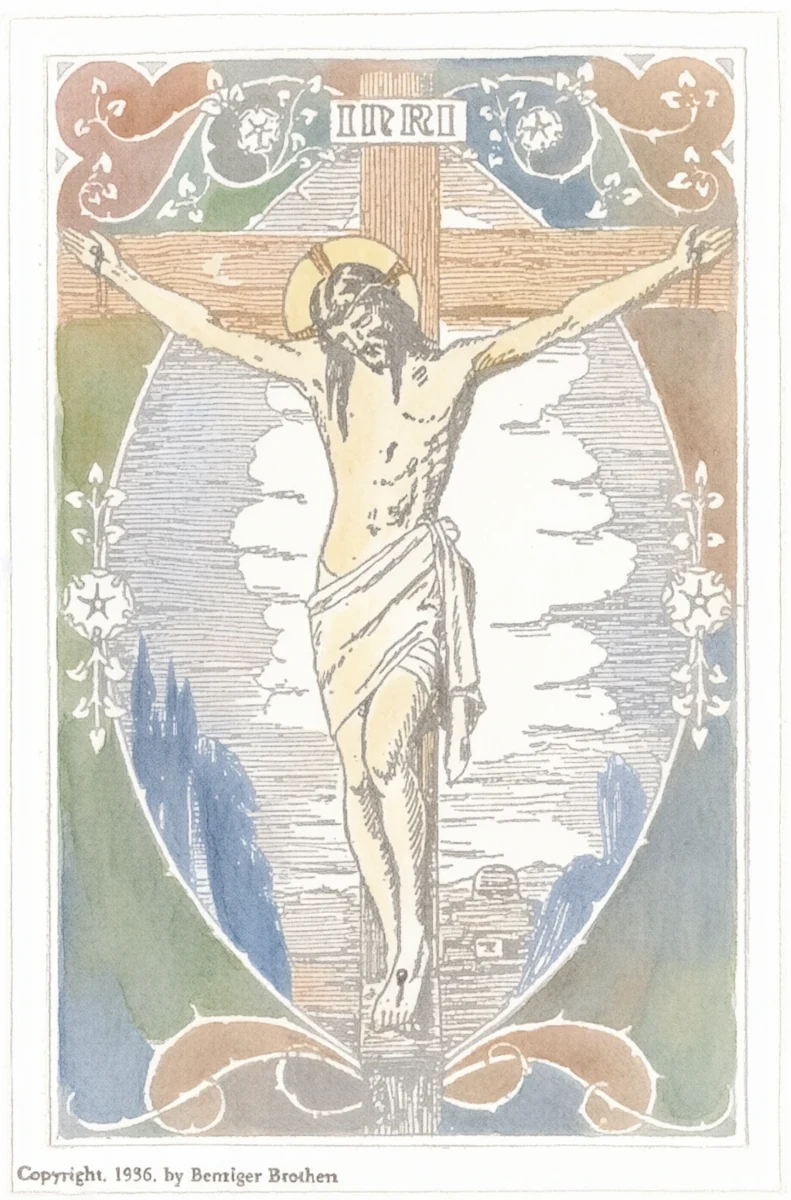
A picture of the crucifixion is most appropriate as a frontispiece for a missal. The Holy Sacrifice of the Mass is the continuation of Calvary. It is the same sacrifice but offered on our altars now in an unbloody manner. The altar bread is changed into the Body and the wine into the Blood of Christ glorified and reigning in heaven.
Page 102 (Picture)—The Root of Jesse.
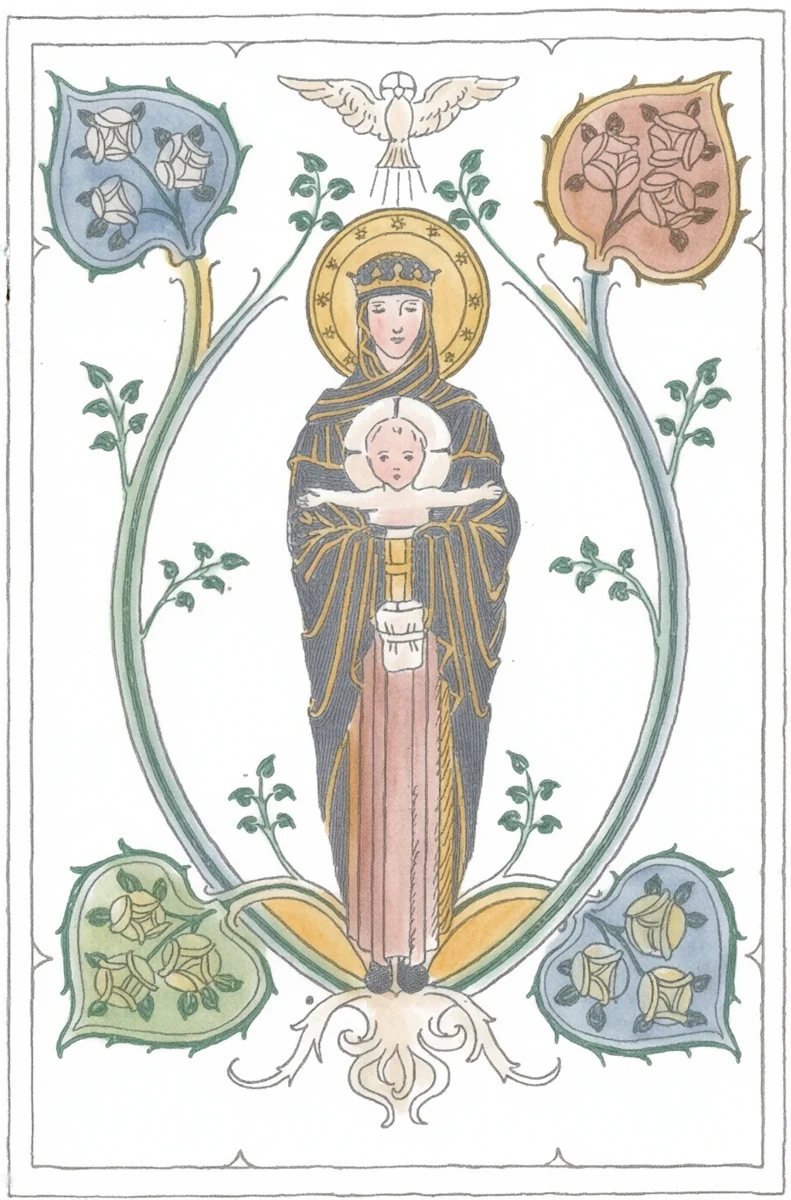
Isaias foretold the lineage of the Messias. The picture for Advent illustrates his prophecy: “And there shall come forth a rod out of the root of Jesse, and a flower shall rise up out of his root, and the spirit of the Lord shall rest upon him: the spirit of wisdom, and of understanding, the spirit of counsel and of fortitude, the spirit of knowledge, and of godliness.” (Mary is the sweet stem which bore that Rose Christ). The root of Jesse was a familiar subject of the artists of the early church.
Page 136 (Picture)—The Nativity of Our Lord.
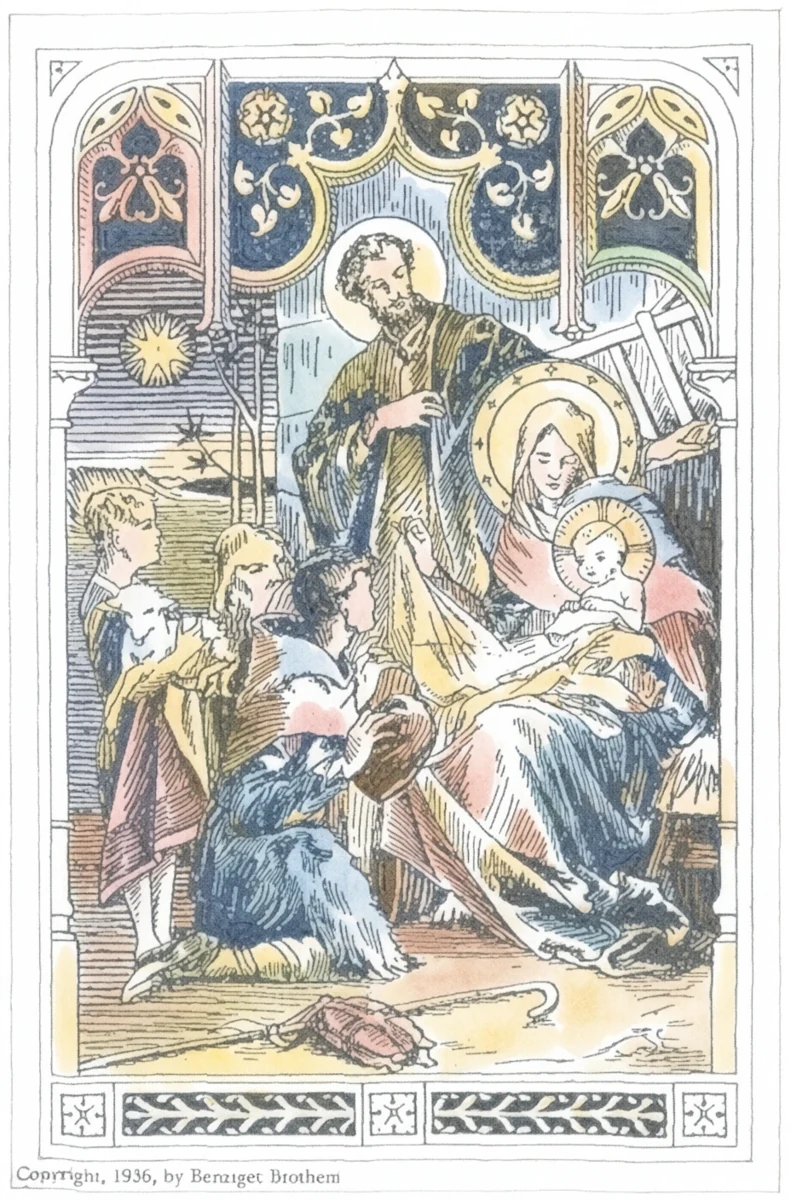
This picture illustrates the Gospel of the first Mass of Christmas. The shepherds were out on the hills of Bethlehem watching their flocks when suddenly a bright Angel stood before them and announced the birth of the promised Redeemer. “And this shall be a sign unto you: you shall find the infant wrapped in swaddling clothes, and laid in a manger.” They went down and saw the word fulfilled. Bowing down they adored their God. A star announced the good news to the Wise Men and to the world.
Page 167 (Headpiece)—The Holy Name of Jesus.
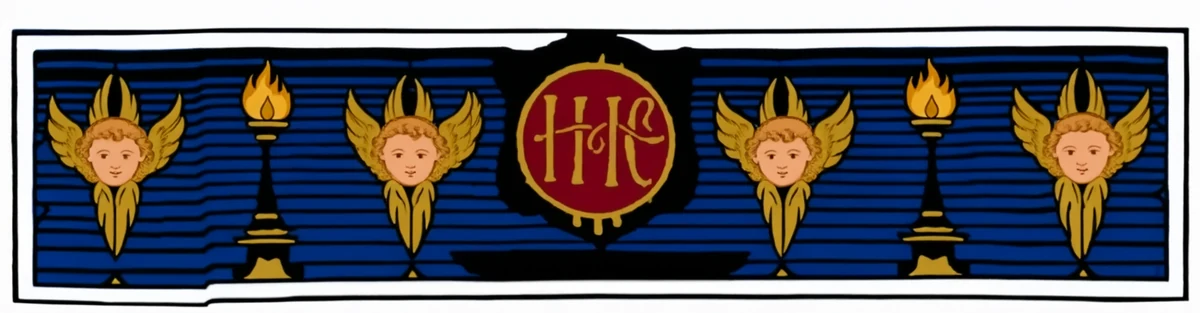
“In the name of Jesus let every knee bow, of those that are in heaven, on earth and under the earth”. The Holy Name of Jesus is formed in Greek by the letters IHCOYC (Jesous) here shortened to IHC. The rays which encircle the monogram signify the glory of that Holy Name. The angels represent the eternal adoration and homage of the Church triumphant in heaven. The flaming torches stand for the ardor and love burning for that Name in the hearts of those who belong to the Church Militant on earth. Our Lord was called Jesus from the day of His circumcision. This, too, was the occasion of the first shedding of His blood for us; it is brought to mind by the drops of blood dripping from the symbolic monogram.
Page 201 (Tailpiece)—Prayer.
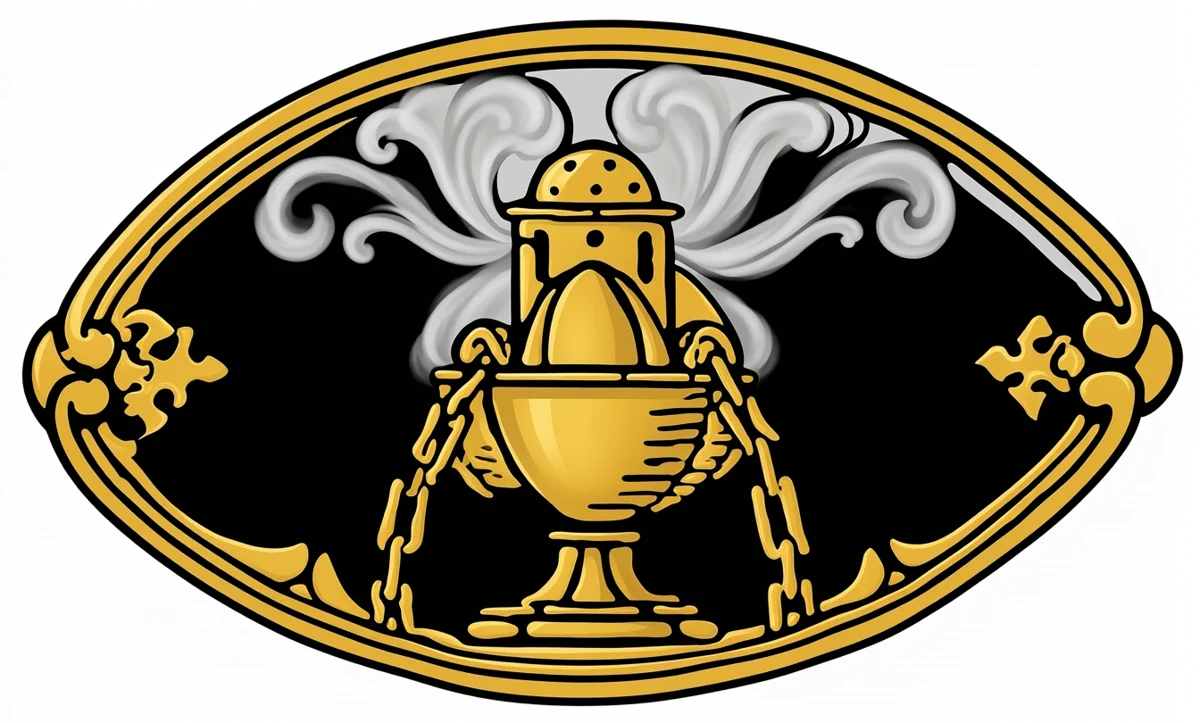
A smoking thurible or censer is a symbol of prayer. The Psalmist of the Old Testament recommends that we pray always. St. Paul does the same in one of his Epistles. And the prayer of the Sixth Sunday after the Epiphany has this phrase: “ut semper rationabilia meditantes” suggesting that we always keep our minds fixed on those things which are pleasing to God. As smoke ascends so ought our prayers rise up to the beautiful throne of God filling our own souls with the sweet odour of sanctity.
p. 1756Page 202 (Headpiece)—“I Am the Resurrection.”
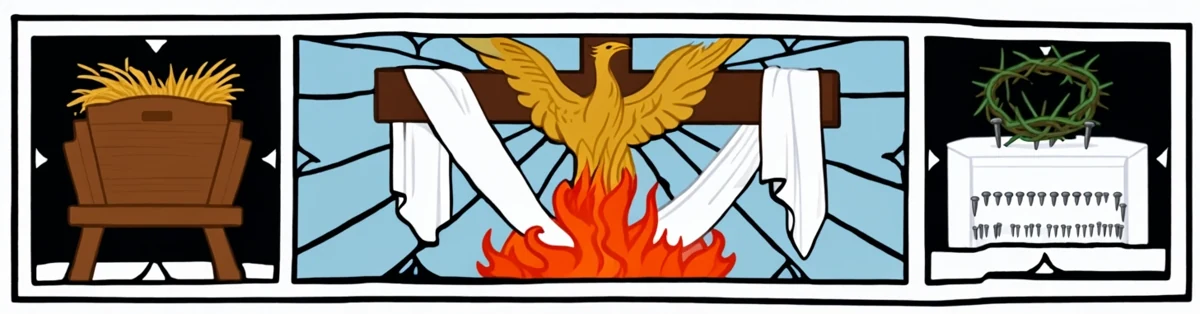
The empty crib, at the left, marks the close of the joyful Christmas cycle. The altar, at the right, attracts our attention towards the drama of suffering and crucifixion to be represented on Good Friday. The nails and crown of sharp thorns tell the story of Christ's bitterest hours. We are approaching the holy cycle of the liturgical year—the period of penance and self-denial. Sincere sympathy with Christ's Passion and Death constrains us to share His sufferings by personal mortification—the daily food of strong Christian souls. Christ suffered and died only to rise all glorious. “I am the resurrection and the life.” The cross and the winding sheet silhouetted against the sky keep the memory of Calvary alive. The phoenix rising from the flames more glorious than before its descent into the fire is an apt figure of Christ's resurrection and glorified body. “It behooves us, also, to suffer and so to enter into glory.”
Page 215 (Headpiece)—“By the Disobedience of One Man.”

The symbolic picture for Ash-Wednesday, illustrates the words of St. Paul: “By the disobedience of one man (Adam) all men are made sinners; but by the obedience of one man (Christ the Redeemer) all men are made just.” The illustration appropriately recalls the scene at the gate of Paradise where an Angel of God and a flaming sword stood against Adam and Eve's return. They had disobeyed God and were expelled. The wages of their sin was announced to them: “Dust thou art and unto dust thou shalt return.” The skull and ashes are opposite the portal of Eden. Christ bore the scourging for sin and by His death upon the cross merited the palm of victory for the children of Adam.
Page 359 (Headpiece)—“O Blest Tree.”
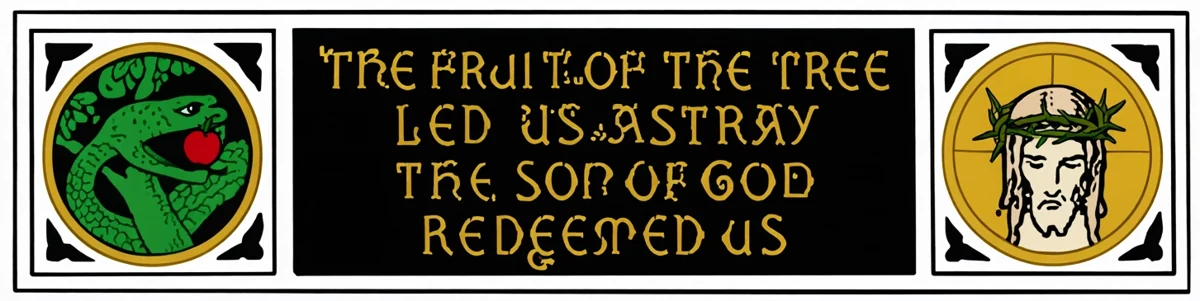
The Divine Office of Passion Sunday is filled with allusions to the wood of the Cross. The Vesper hymn invites us to sing the praises of the “Blest Tree, whose happy branches bore the wealth that died the world to restore.” The symbol is designed to portray the contradiction of the mystery of the “Blest Tree” against that tree which bore the forbidden fruit—and the tempter. It illustrates the second and third verses of the Church's morning song. Christ the Redeemer had designed to defeat the Tempter with his own weapon. He “noted then this Wood, the ruin of the ancient wood to quell. . . . And the multiform deceiver's art by art would overthrow.” The fruit of the tree led us away from God: the “Faithful Cross! . . . one and only noble Tree” led us back again to God.
p. 1757Page 388 (Headpiece)—Palm Sunday.
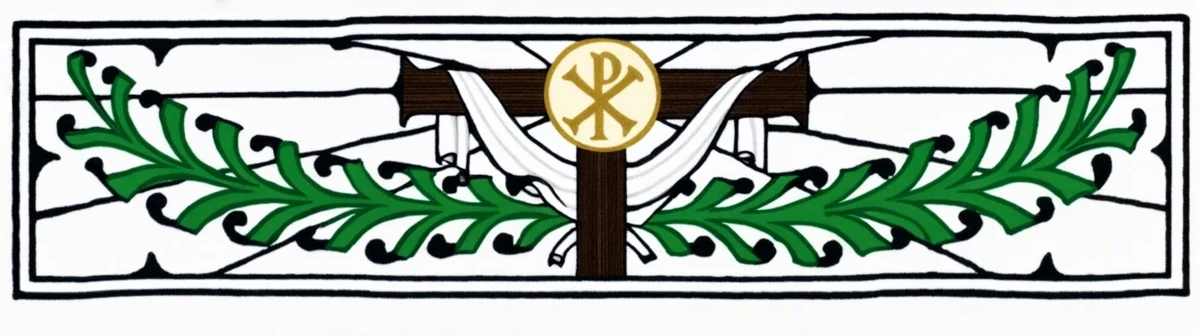
On Palm Sunday the curtain is raised for the drama of Calvary to be represented in every sanctuary of the Catholic Church. Although the Church is in mourning, sorrowful nigh to death, she holds in her hand the palm of victory. She ponders the treachery of Christ's enemies, the agony in Gethsemani, the Betrayal and the Last Words of her Beloved. But not for a moment does she forget the third day—Easter morn when her sorrow will be turned into joy. Hence the cross is draped with the winding sheet. “He is not here. Go and tell His disciples that He is risen from the tomb.” The monogram fixed to the cross is an ancient symbol of Christ formed by the first two letters X P (corresponding to our English alphabet letters C(h)R of the Greek name Christ X P I C T O C (Christos). The palm branches have a significance we ought not easily forget. The Church gives everyone a branch of palm. We hold it in our hand during the singing of the Passion, and pledge our fidelity to Christ. We would rather die than betray Him Who died for us.
Page 446 (Picture)—The Last Supper.
The Apostles are amazed at the great mystery of Christ's love. “And taking bread, he gave thanks and broke; and gave to them, saying: “This is my body, which is given for you. Do this for a commemoration of me.” (Lk. 22, 19). Every Holy Thursday is another anniversary of the event which transformed this cold earth of ours into a better land of pilgrimage.
Page 447 (Headpiece)—The Great Love-Feast of Christ.
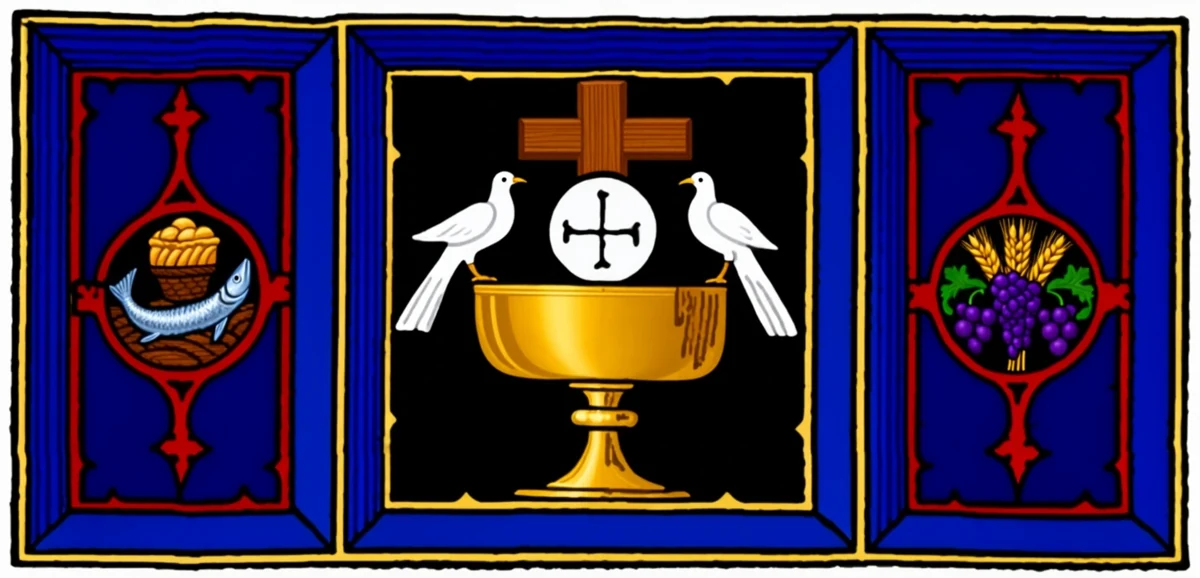
In the Liturgy of Maundy Thursday, the Church relives the great love feast with Christ. On this solemn occasion Christ revealed the infinite love of His heart. “With desire, I have desired to eat this pasch with you before I die.” He fulfilled the ancient law of the synagogue by celebrating the passover, then He instituted the Sacrament of Love—the Holy Eucharist. All this was done under the shadow of the cross. The faithful are symbolized by doves. How significant when we recall the words of Christ: “Be ye simple as doves.” The sheaf of wheat and cluster of grapes is a popular symbol for the Holy Eucharist. But an ancient symbol —the fish and basket of bread has a wealth of meaning few of us realize. The basket of bread obviously reminds us of the miracle of the five loaves in the desert which foreshadowed the institution of the Holy Eucharist. In the Greek language, I X T H U C (Ichthus) means fish and every letter of the word recalled to the minds of the early Christians the mystery of the Incarnate Word and His work of Redemption.
p. 1758| Jesus | Christ, | of God the Son, | Savior. |
|---|---|---|---|
| Iesous | Christos, | Theou uios, | Soter |
Page 469 (Headpiece)—“My People, What Have I Done to Thee!”
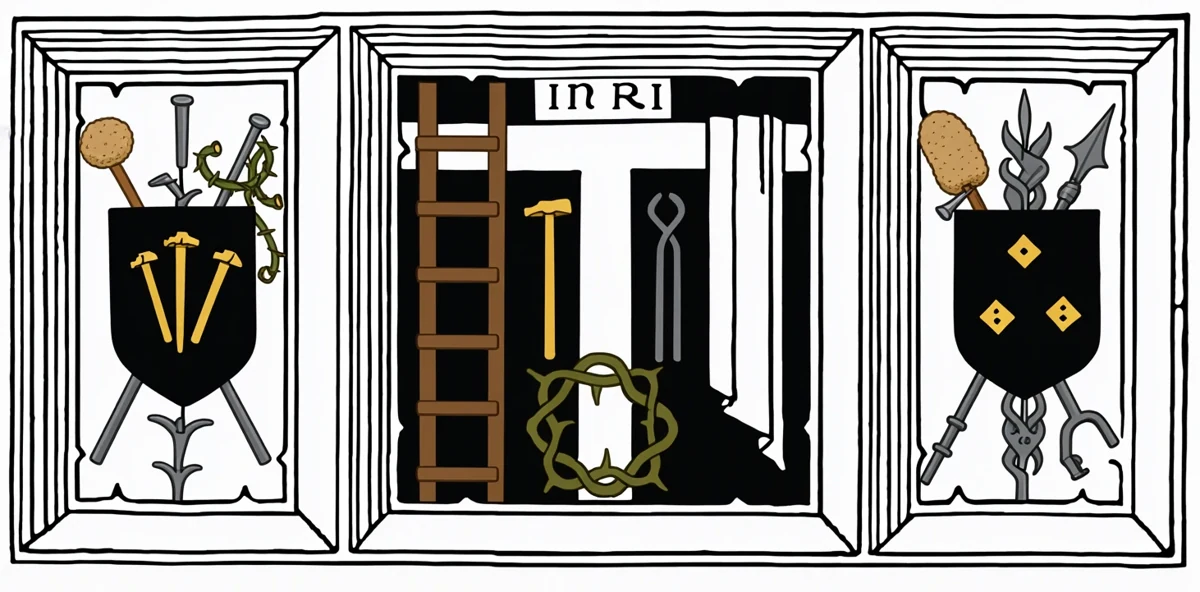
Christ reproaches us in the liturgy of Good Friday for treating Him with such little sympathy and love.
The instruments of His death graphically portray what He suffered for love of us. They recall the prophetic words of Isaias describing the death of Christ: “Despised and the most abject of men, a man of sorrows and acquainted with infirmity: and his look was as it were hidden and despised, whereupon we esteemed him not.” (Is. 53, 3).
Page 537 (Tailpiece)—“Peace Be With You.”
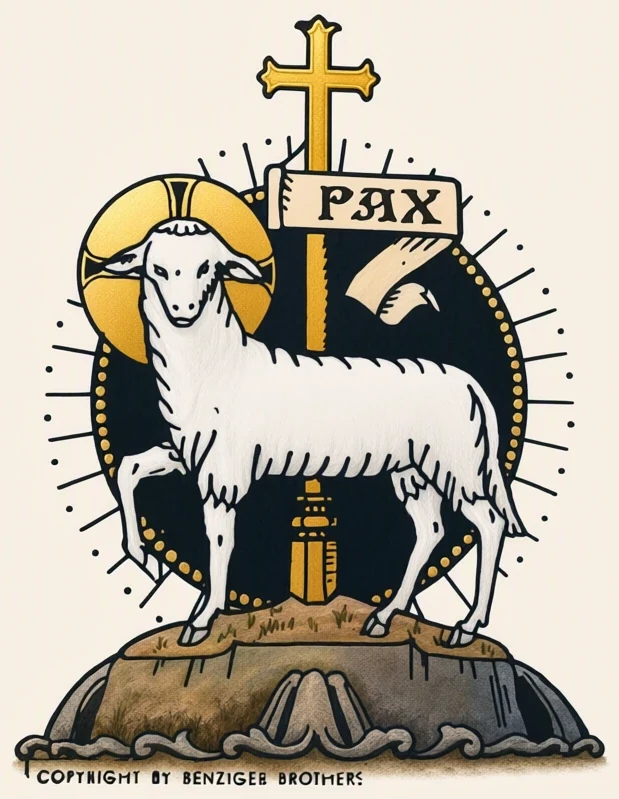
The lamb with cross and banner, bearing “pax”—peace—emblazoned on it, fittingly conveys the thought of the sequence of Easter Sunday.
“To the Paschal Victim, hymns of praise,
Come, ye Christians, joyous raise!
Lamb unstained, unmeasured price hath paid,
Ransom for the sheep that strayed.”
Not only did the Lamb of God restore man to peace with God, but He also opened the flood gates of grace.
Page 538 (Picture)—“Hail, Thou King of Victory.”
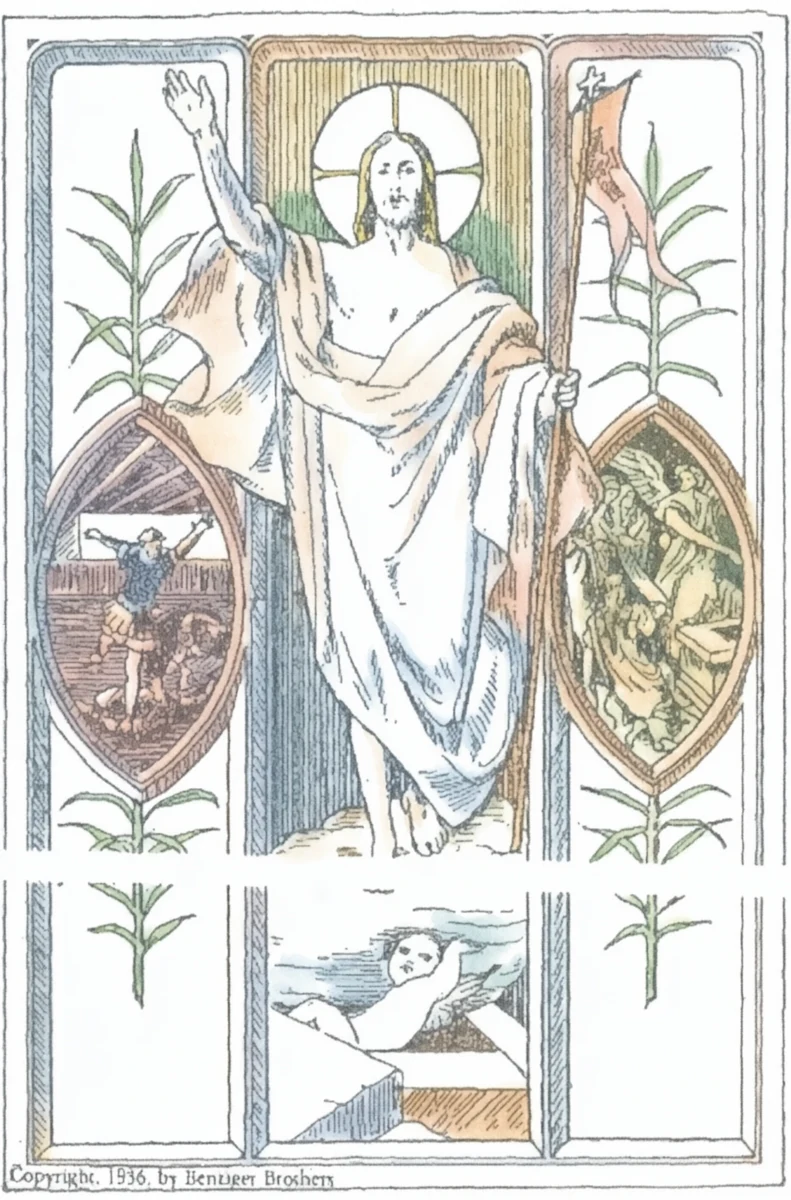
St. Paul wrote that if Christ is not risen from the dead our faith is vain and our preaching and hope a fable. But there need not be any fear of that because Christ had even His enemies' servants tc testify to the resurrection. The terror stricken soldiers ran back into the city and shouted over their shoulders that Christ had risen from the tomb. They had to be bribed into silence by the Chief Priests and Scribes. The holy women visited the empty tomb and were convinced: “We know that Christ indeed has risen from the grave. Hail, thou King of Victory, have mercy, Lord, and save.” (Sequence).
Page 583 (Tailpiece)—The Victory of Christ.
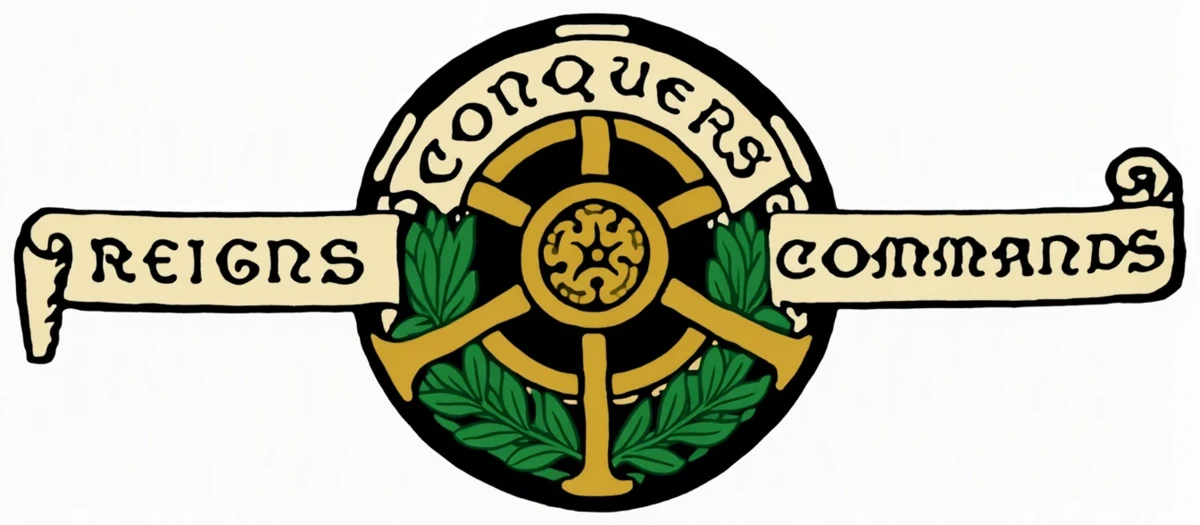
This little symbol illustrates the ancient liturgical acclamation with which the early Christians proclaimed the victory of Christ over sin, the devil and death. Christ reigns in the hearts of the faithful, He conquers the devil and his forces, He commands the powers of life and death. The I and X in the monogram are the Greek initial letters for His name—JESOUS CHRISTOS. The palm announces His absolute victory. It is very appropriate for the eve of the Ascension which is the liturgical feast that re-presents Christ's triumphal entry into Heaven.
p. 1759Page 584 (Picture)—The Ascension of Our Lord.
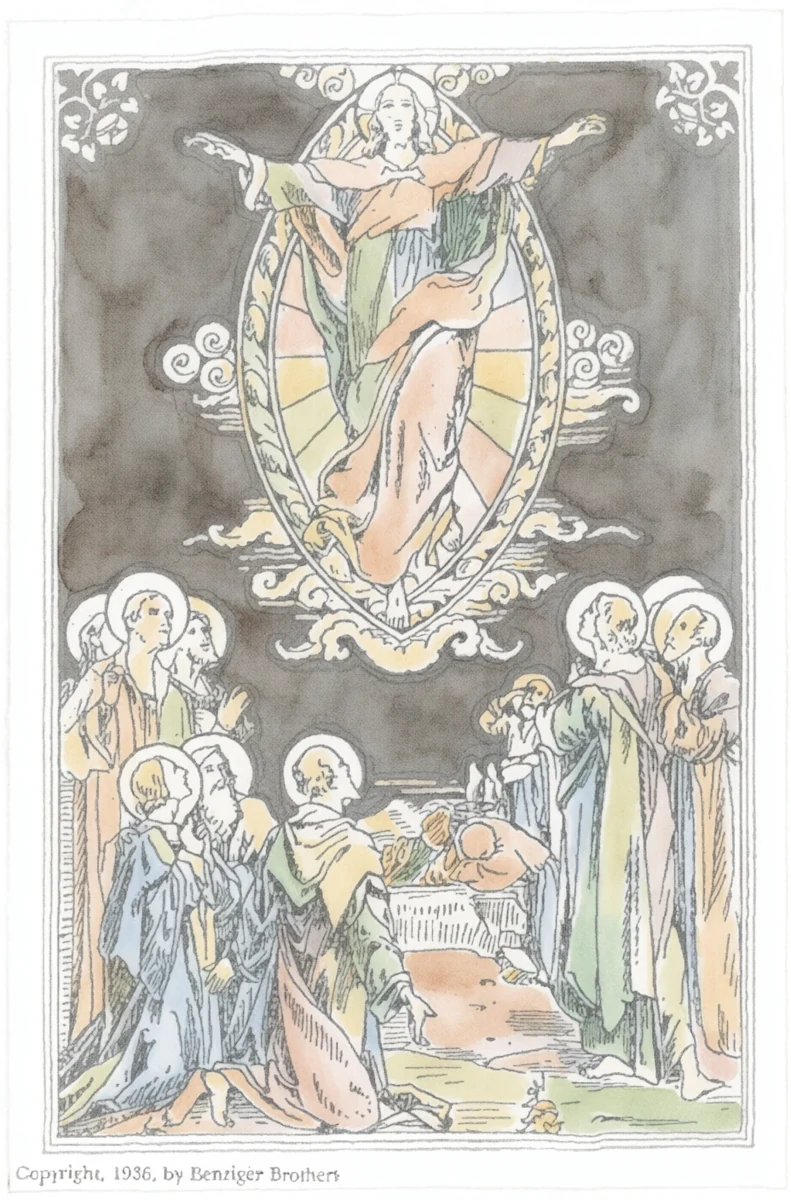
The artist has given us a literal interpretation of the Introit of the Mass. “Ye men of Galilee, why wonder you, looking up to heaven? Alleluia He shall so come as you have seen Him going up into heaven, alleluia, alleluia, alleluia.”
Page 597 (Picture)—Descent of the Holy Ghost.
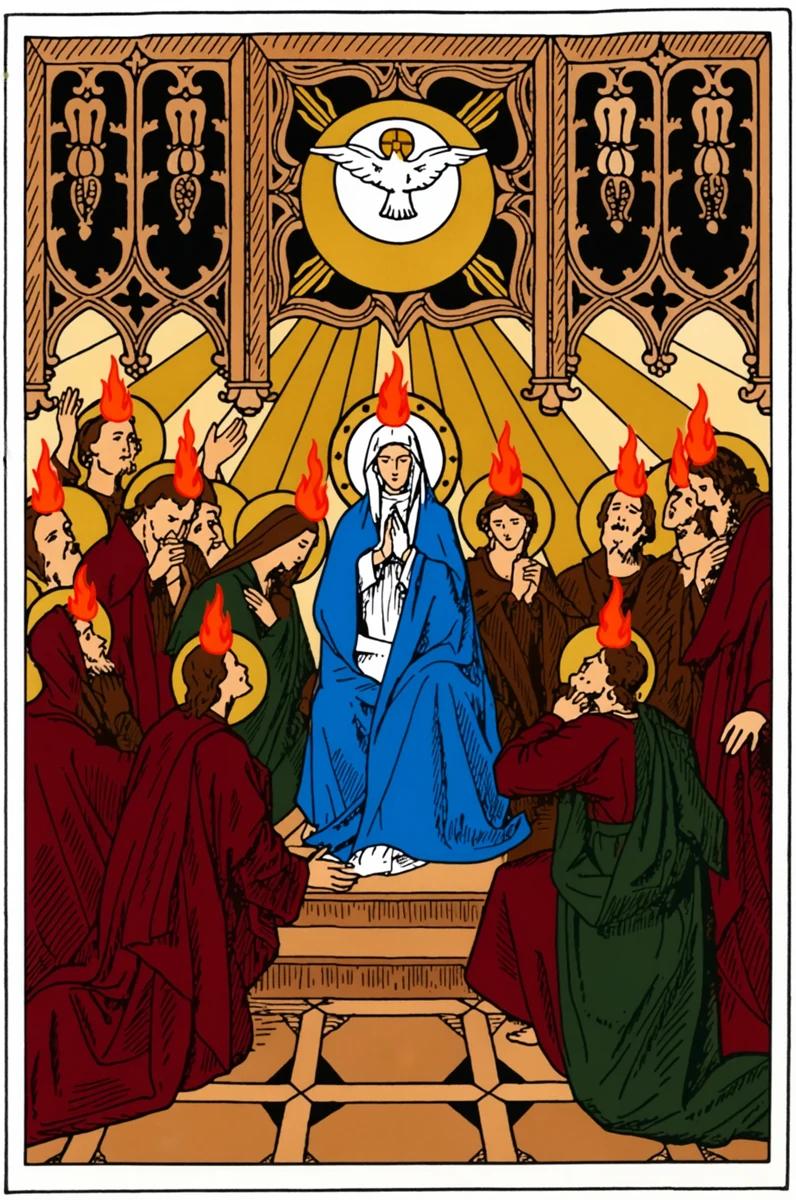
After the Ascension, the Blessed Mother and the Apostles went on a retreat in the Cenacle to prepare for the coming of the Paraclete. Christ had promised to send Him. He would open the minds of the Apostles to the truths He Himself had taught them. The Holy Ghost came with a roaring wind and appeared in twelve fiery flames over each of the twelve. He confirmed their faith, took away all fear, gave them the gift of tongues to go out and preach to all nations.
Page 625 (Tailpiece)—The Seven Gifts.
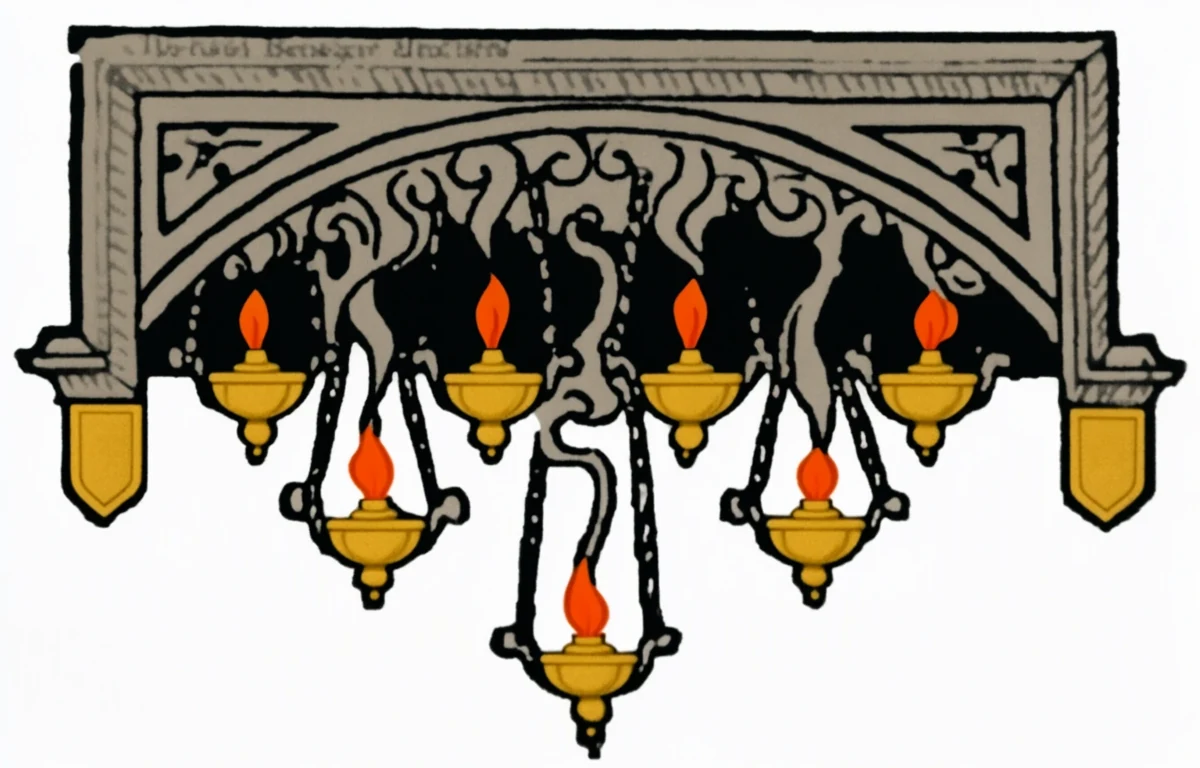
The Holy Ghost began His reign on earth with fire. He descended upon the Apostles in the upper-room in the form of fiery tongues. “He has all the power of the glorious Godhead.” And with what great power His presence was felt on that first Pentecost morning. One is constrained to associate with this event the words of Christ “I have come to cast fire upon the earth”.—During the octave of Pentecost the Church in her liturgy prays for the seven gifts of the Holy Ghost. The symbolism of the seven burning lamps at the end of the octave is a summary of this mighty prayer.
Page 626 (Headpiece)—Trinity Sunday.
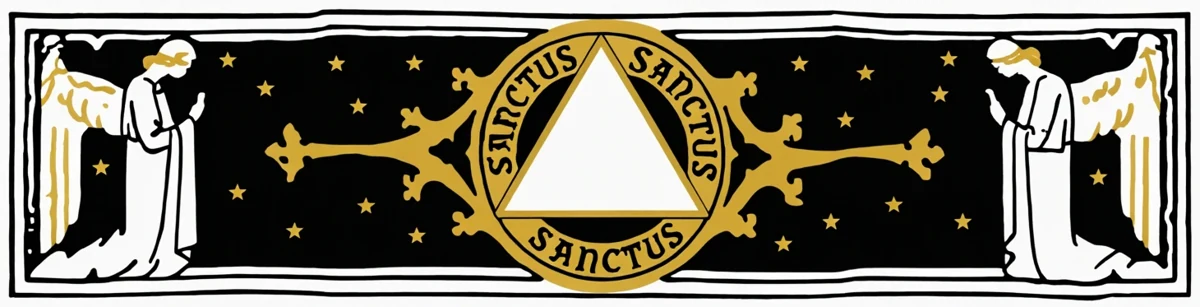
In this illustration, the artist utilizes an ancient symbol of the Holy Trinity. This profound mystery of three Divine Persons in one God can hardly be better symbolized than by a triangle whose sides are all equal. The three equal lines form one perfect triangle. We profess belief in “one God, one Lord, not in the singleness of one Person, but in the Trinity of one substance” (Preface of the Mass). The artist has enclosed the triangle in a circle, a symbol of eternity. The triple sanctus and adoring Seraphim incessantly proclaim that our God is thrice holy, worthy of all honor and glory.
Page 633 (Tailpiece)—Blessed Be the Holy Trinity.
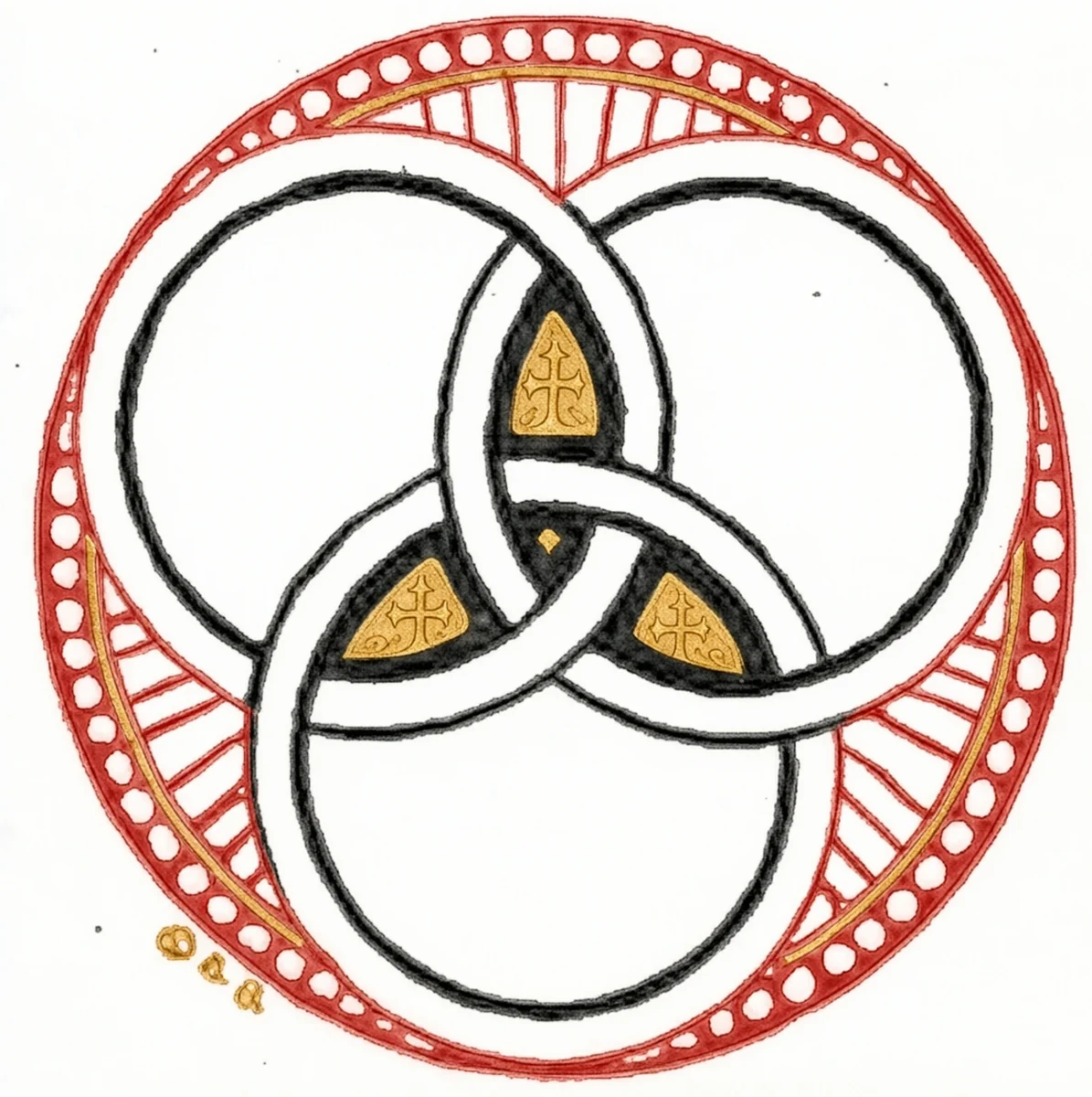
There is one outstanding Mystery of our Faith—The Holy Trinity—which simply overwhelms the human mind. In the strength of our faith in It, we shall be protected from all adversities. And what do we believe? That there are three Persons in One God. The ancient symbol of this faith is brief and most concise. Three equal circles stand for the Three equal Persons, intertwined to show the intimate relation between Them and enclosed in one greater circle to suggest the substantial unity. A perfect illustration of the words of the Introit of the Feast—“Blessed be the Holy Trinity and undivided unity.”
p. 1760Page 634 (Picture)—The Sacrament of the Altar.
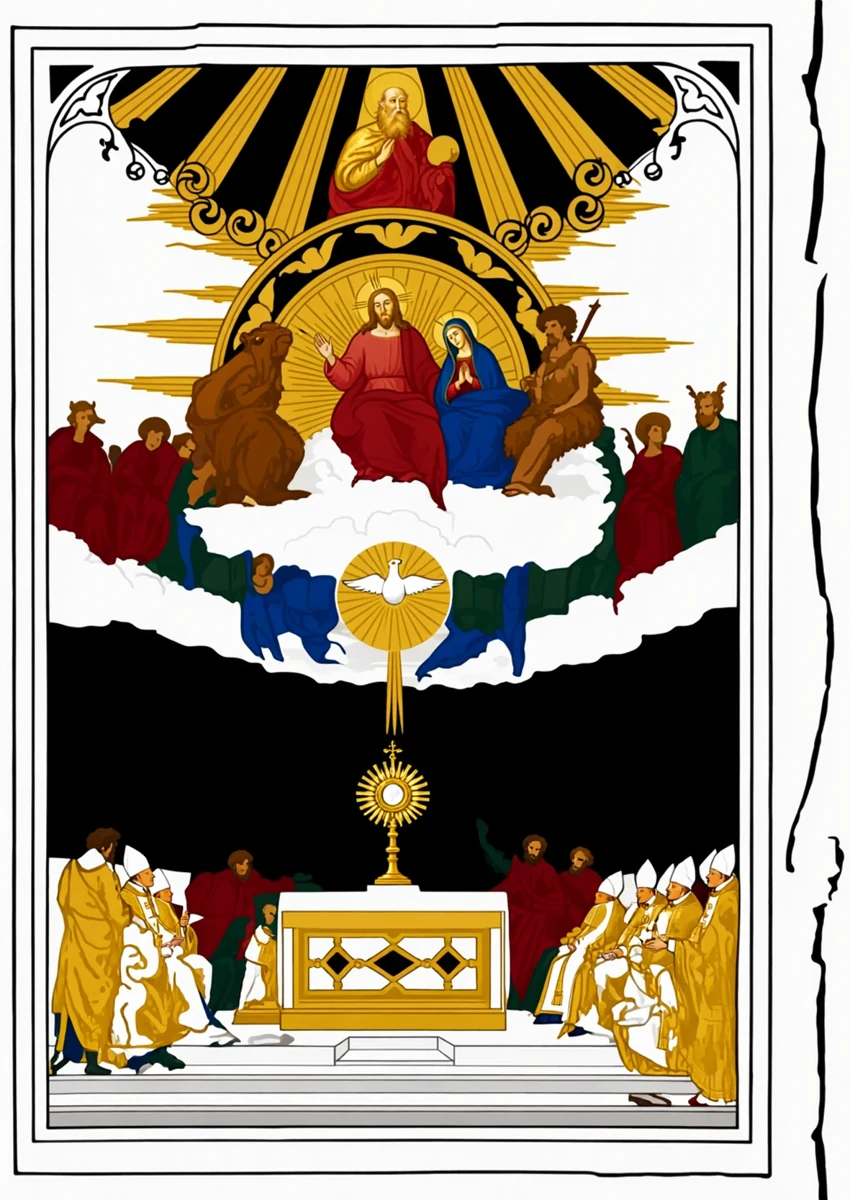
This picture is an excerpt from one of Raphael Santi's greatest frescoes in the Vatican. It illustrates the history of the doctrine of the Holy Eucharist by gathering around the Sacrament of the Altar the representative Doctors of the early Church who taught the great mystery of faith. Christ is the center of the Church Triumphant in heaven, militant on earth and suffering in purgatory. We are in the reign of the Holy Spirit. He appears in the picture as the link between heaven and earth.
Page 644 (Picture)—The Sacred Heart of Jesus.
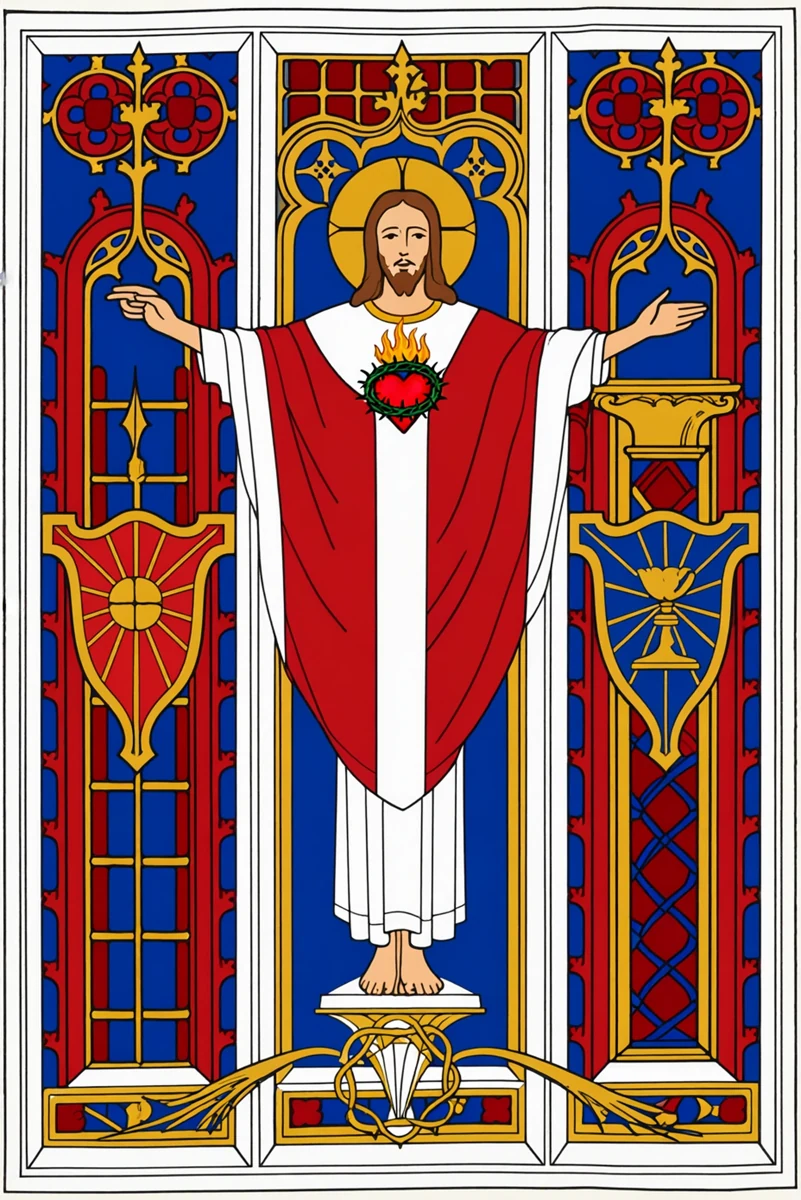
When we look at this picture of the Sacred Heart of Jesus and read the Introit of the Mass, we wonder what profound secrets were revealed to the Beloved Disciple, St. John, when he rested upon our Blessed Lord's breast at the Last Supper. Our Lord surely revealed some of them to St. Margaret Mary Alacoque. The chalice and host—Sacrament and Sacrifice of His Love—are very significant because through the Mass and Holy Communion “the thoughts of His Heart are to all generations” as we read in the Introit. The spear and ladder, the pillar, the crown of thorns and nails recall the bitter hours of Christ's sacrifice on Calvary. But the two palms announce His victory over death and sin.
“Oh shame! to turn to evil deeds,
That rend His loving heart in twain.
In virtue's ways march bravely on,
While burning hearts our love proclaim.”
(Vesper Hymn of the Feast)
Page 753 (Headpiece)—The Asperges Me.
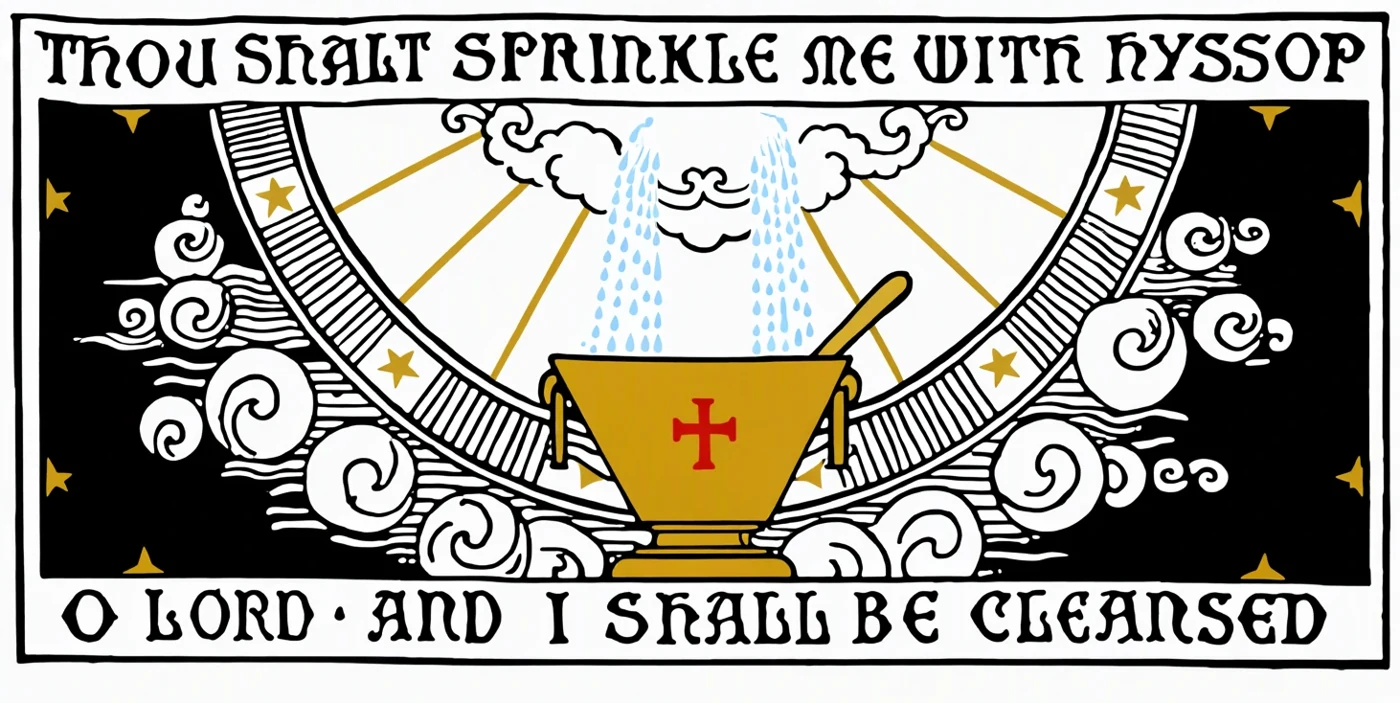
The antiphon, sung at the ceremony of the “Asperges” petitions God to cleanse us in the waters of grace. This is represented by the extended hands of God shedding a dew of benediction upon the faithful, which He effects through the ministration of His priests. This is a sacramental of the Church; it cleanses from venial sin all who assist at it with contrite hearts, and thus prepares them better for the Holy Sacrifice.
p. 1761Page 775 (Tailpiece)—O Praise Ye the Lord.
Every preface is a hymn of thanksgiving and praise. It is the solemn introduction to the Canon of the Mass. The symbol of a harp is very significant at this point. The priest bids the faithful to lift up their hearts—sursum corda. David of the Old Law too, took up his harp and called upon all nations to praise the one true God of Israel.
Page 776 (Picture)—The Eternal Sacrifice.
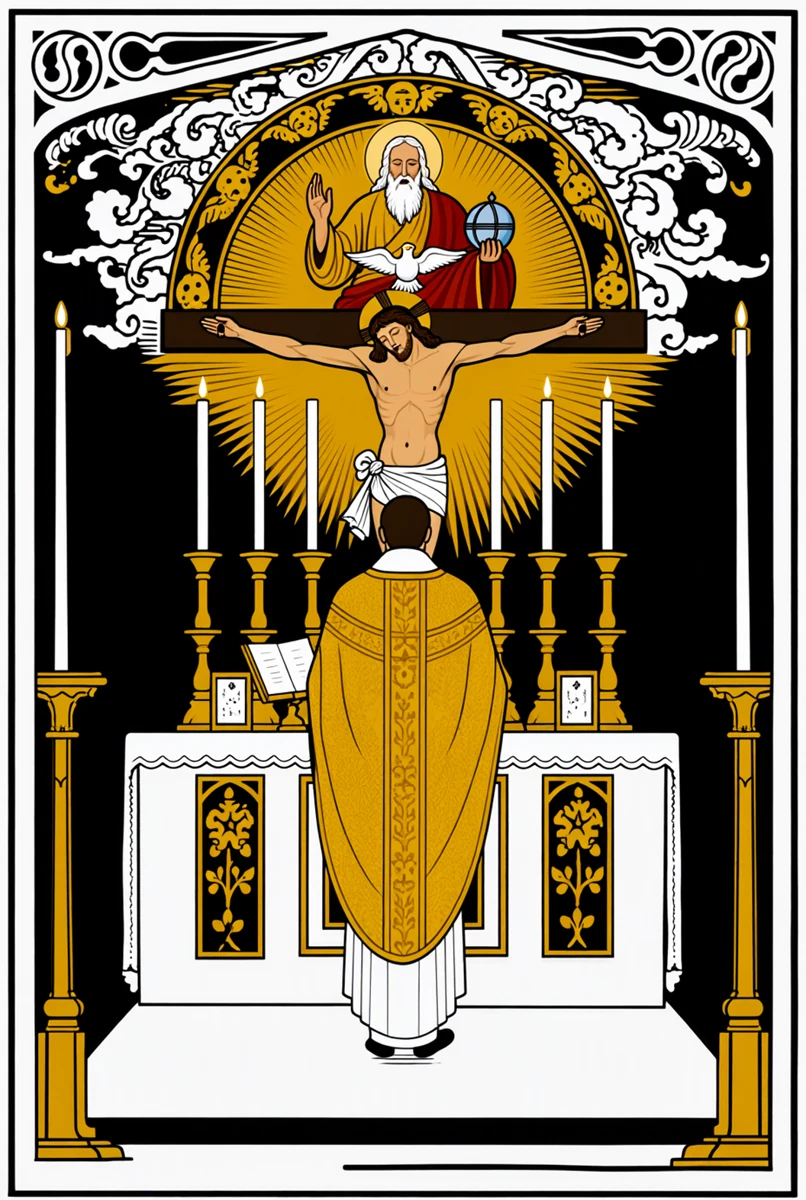
Jesus Christ, since His ascension into heaven, stands glorious before His eternal Father bearing on His Body the wounds which mark Him victim of the Eternal Sacrifice. The Sacrifice of Calvary continues in heaven. And in every mass this Eternal Sacrifice is presented in time; God the Father again accepts the atonement, thanksgiving, petition and adoration of Jesus.
Page 777 (Headpiece)—The Saviour's Fountains.

The Sacrifice of the Mass is the center of the Liturgy. Christ died on the cross for the salvation of the world. The headpiece works out this dogma in a symbolic manner. The monogram on the cross stands for Christ, Who is the beginning and end of all—Creator and Judge. Stags are familiar figures in the Church's symbolism. They always represent the faithful. Here they are drinking from the streams which flow from the foot of the cross. Calvary is the original source of the waters of salvation and sanctifying grace, and through the Mass these waters continue to flow. We see the words of Isaias fulfilled: "You shall draw waters with joy out of the Saviour's fountains." (Isaias 12, 3).
Page 797 (Tailpiece)—I Am the Vine, You the Branches.
Christ called Himself the vine of which the faithful are the branches. By grace we grow more like to Christ, more intimate with Him; we become with the first reception of grace at Baptism members of His Mystical Body. The artist has surrounded the vine with three equal circles—a trefoil suggesting another profound doctrine—the relation of the Mystical Body to the Blessed Trinity. The faithful with Christ are the beloved sons of the Father; the Holy Ghost is the bond of love between that same Father and us the members of Christ.
Page 818 (Tailpiece)—O Praise Ye the Lord.
See explanation above.
Page 850 (Picture)—The Immaculate Conception.
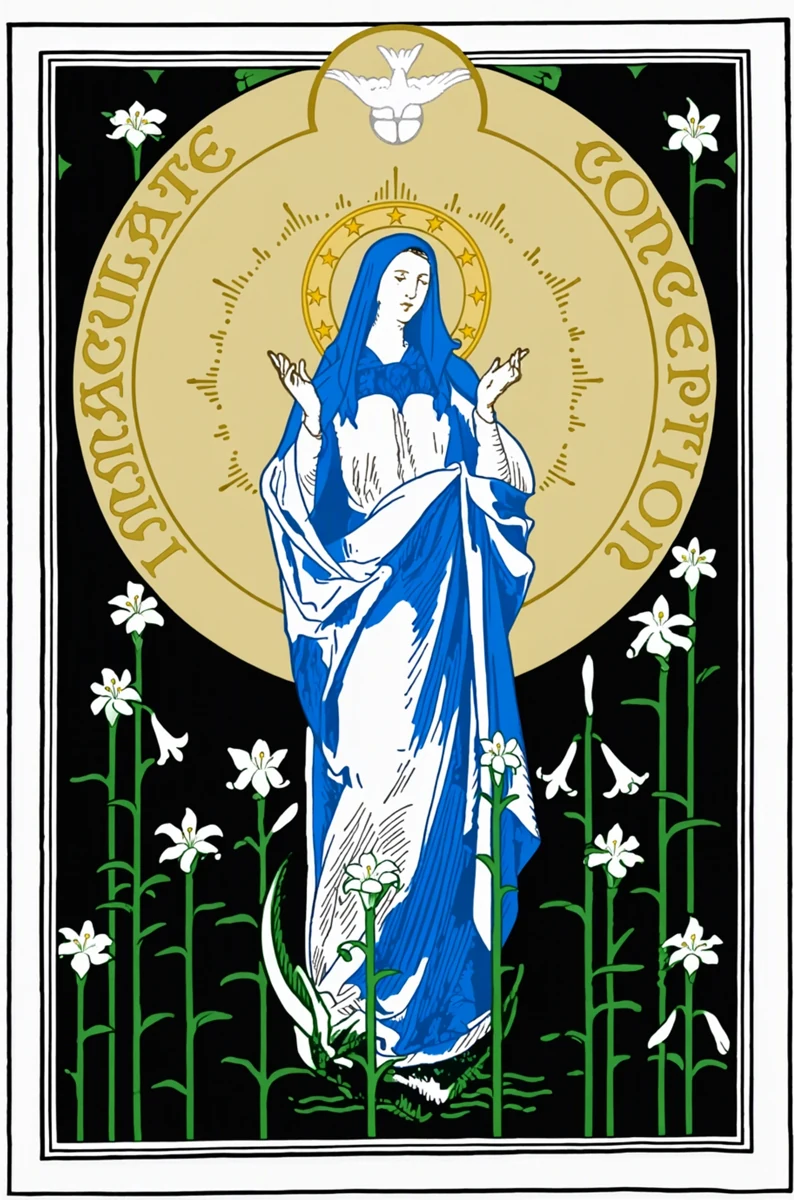
St. John the Evangelist saw a great sign in heaven: "A woman clothed with the sun, and the moon under her feet, and on her head a crown of twelve stars" (Apoc. 12, 1). The church uses this passage from the Apocalypse to describe the Mother of God. She was exempted from the law of inheritance according to which all men are born with the stain of original sin, because she was to be the Mother of God. She is, too, the chosen daughter of the Father, and the Spouse of the Holy Ghost. The symbol of the Holy Spirit hovering over the Immaculate Mother is therefore very significant. Mary, too, is the beloved daughter who "feedeth among the lilies." (Canticle of Canticles.)
p. 1762Page 900 (Headpiece)—The Light of the World.
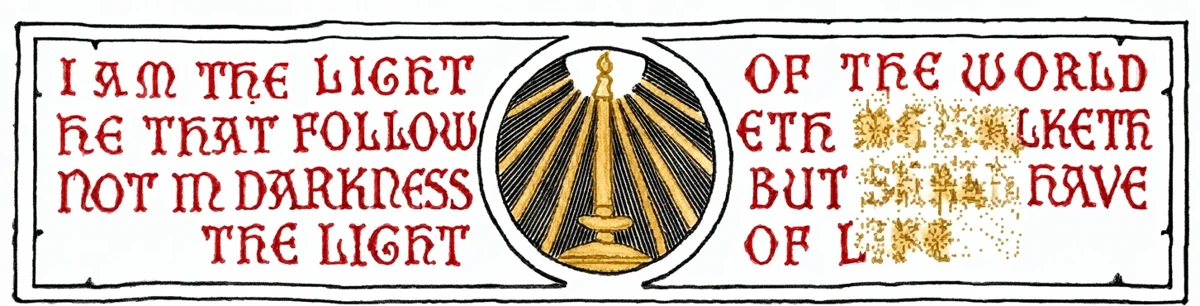
The lighted candle is a traditional symbol of our Blessed Lord, Who called Himself "the Light of the world." The candle flame dispels darkness. Christ dispels the darkness of sin by His grace, the darkness of ignorance by His message of eternal truth. Candle flame gives warmth, Christ ignites souls with love. "I am come to cast fire upon earth." The lighted candle is a most appropriate symbol for the feast of Purification which portrays Christ in its liturgy as "the light to enlighten the nations, the Glory of His people Israel."
Page 945 (Tailpiece)—The Just Man Shall Flourish.
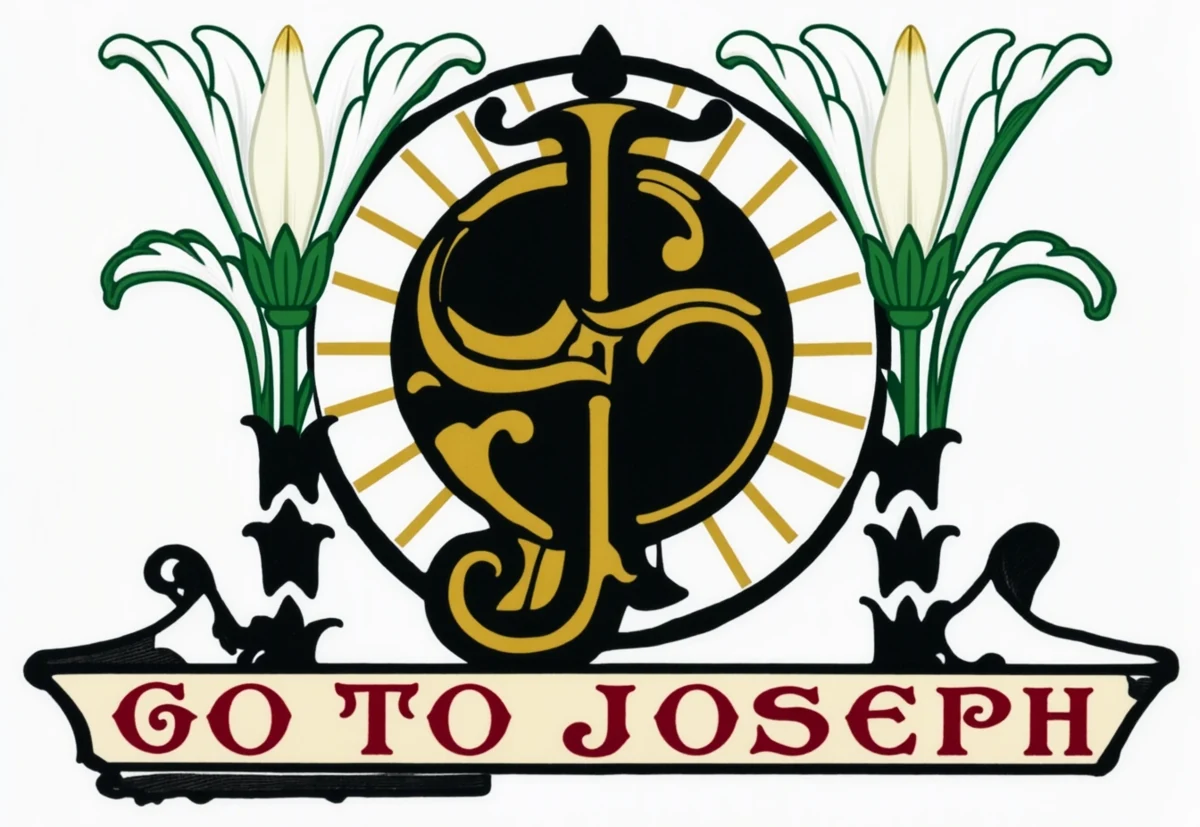
The opening words of today's Introit are translated into a graphic symbol "The just man shall flourish like a palm tree . . . planted in the house of the Lord." (Ps. 91, 13-14.) The monogram is surrounded by a halo significant of the eternal bliss which St. Joseph is now enjoying in heaven. Once a Pharaoh told his people to go to Joseph. The Church today makes those words her own.
(The comparison is Oriental. There is hardly a more beautiful picture in the Orient than a healthy green palm tree standing beside a running stream.)
Page 946 (Picture)—St. Joseph.
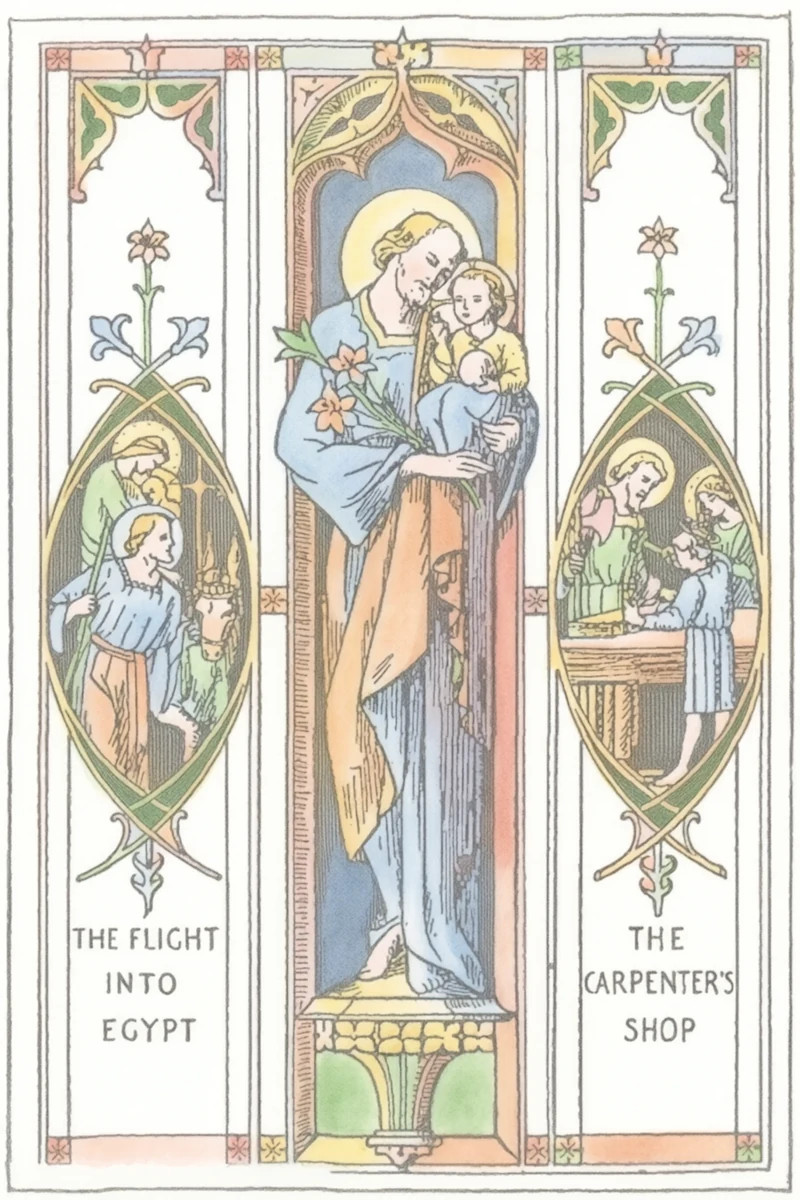
The picture illustrates the exalted dignity of St. Joseph as foster father of the Son of God. And the Gospel of the Mass says: "Jesus Himself was beginning about the age of thirty years: being (as it was supposed) the son of Joseph." (Lk. 3, 23). The two scenes from Joseph's life portray him as the dutiful father of Jesus. St. Joseph is always represented with a lily in his hand because he was "the chaste guardian of the Virgin." (Litany).
Page 954 (Picture)—The Annunciation.
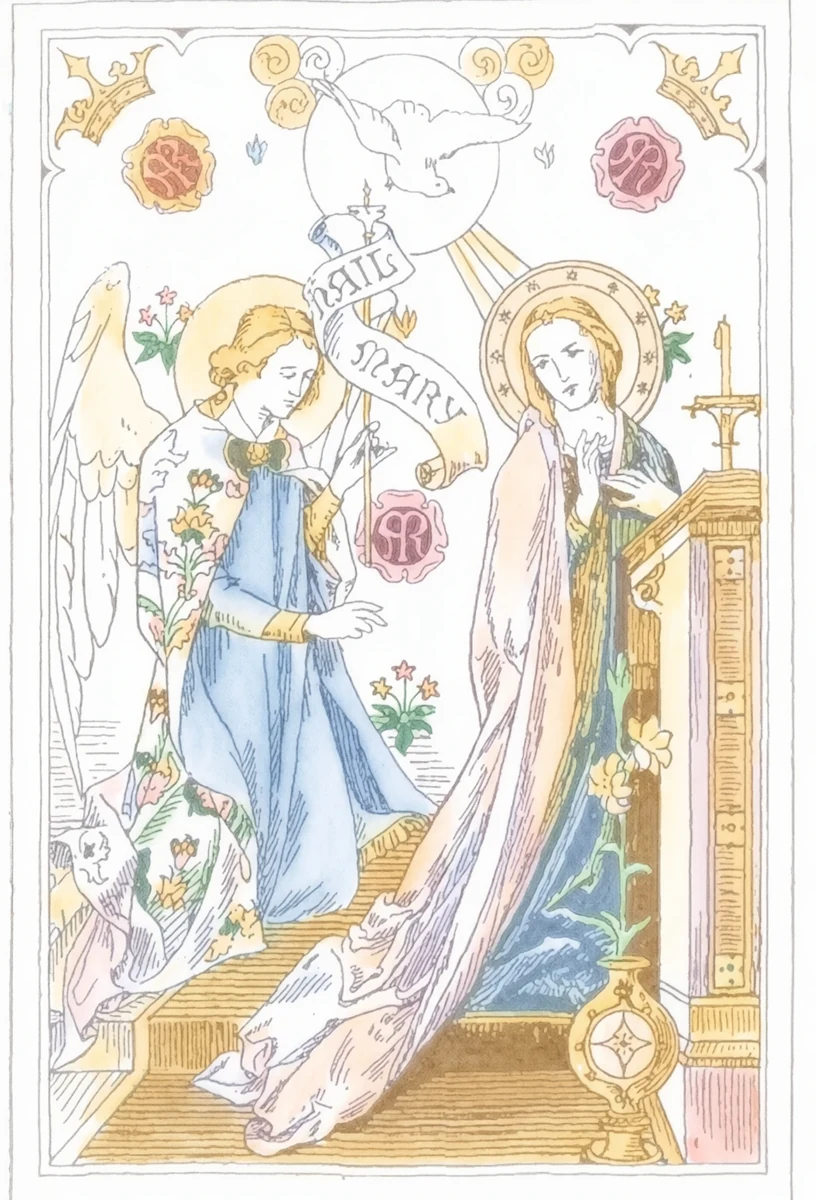
The lily, symbolic of Mary's spotless chastity, is the choicest flower in God's garden. It was to this pure maiden that the Archangel Gabriel brought the message of God: "Hail Mary, full of grace, the Lord is with thee . . . the Holy Ghost shall come upon thee. . . . The Holy which shall be born of thee shall be called the Son of God." (Lk. 1, 35).
p. 1763Page 1064 (Headpiece)—Behold the Lamb of God.
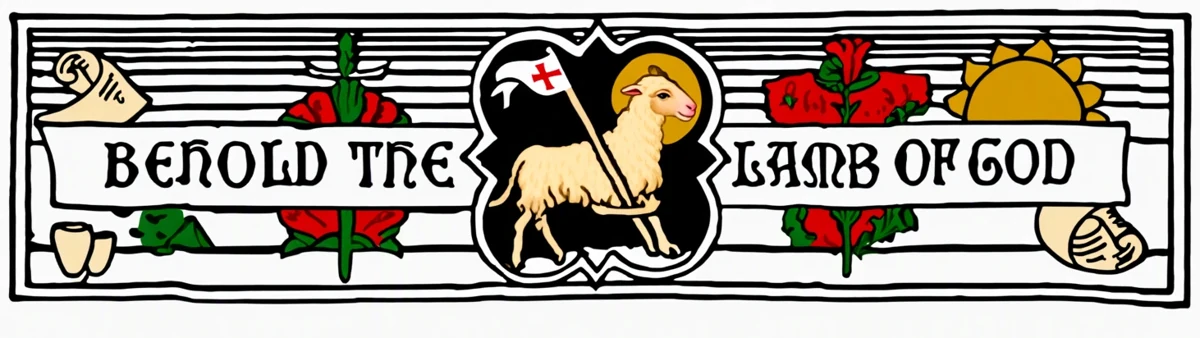
The artist has summarized what we know of St. John the Baptist. He was chosen to prepare the way for Christ's coming. He announced the lamb of God. "Behold the Lamb of God, behold Him, who taketh away the sins of the world" (Jn. 1, 29). Like a morning star John preceded the rising sun—symbol of the Light of the world. Mary was conceived without original sin; the Precursor was born without original sin. The lily reminds us of this privilege, which John preserved by his austere life in the desert clothed in a hair shirt and content with locusts and wild honey. Upon the fulness of time Christ came to be baptized. John raised the shell of water over Christ's brow and a voice came out of a cloud: "This is My Beloved Son . . . hear ye Him." After that St. John's mission was fulfilled. He died a martyr by the executioner's sword.
Page 1077 (Headpiece)—Sts. Peter and Paul.
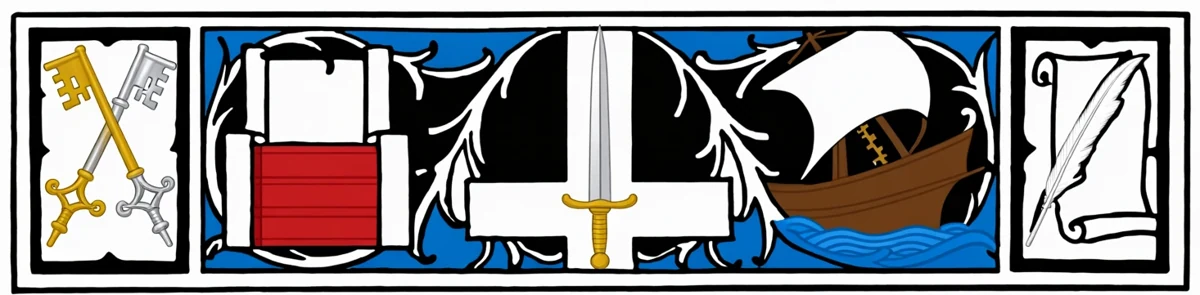
The church for centuries has used symbols to tell the lives of her Saints. In keeping with this tradition the symbolic picture summarizes the respective missions of Sts. Peter and Paul. Our Lord appointed Peter to be His Vicar on earth. He gave him the keys of the kingdom of God on earth, and commissioned him to "feed My lambs and My sheep." The chair is a symbol of Peter as Pope and Vicar of Christ. St. Peter finally proved his great love for his Master by crucifixion with his head towards the ground. St. Paul was beheaded on the same day. That is why the sword is placed against the inverted cross. St. Paul was a missionary who suffered the hardships of the sea, even shipwreck. The quill and papyrus bear testimony to his titles Vessel of Election and Doctor of the Gentiles.
Page 1158 (Picture)—The Assumption of Our Lady.
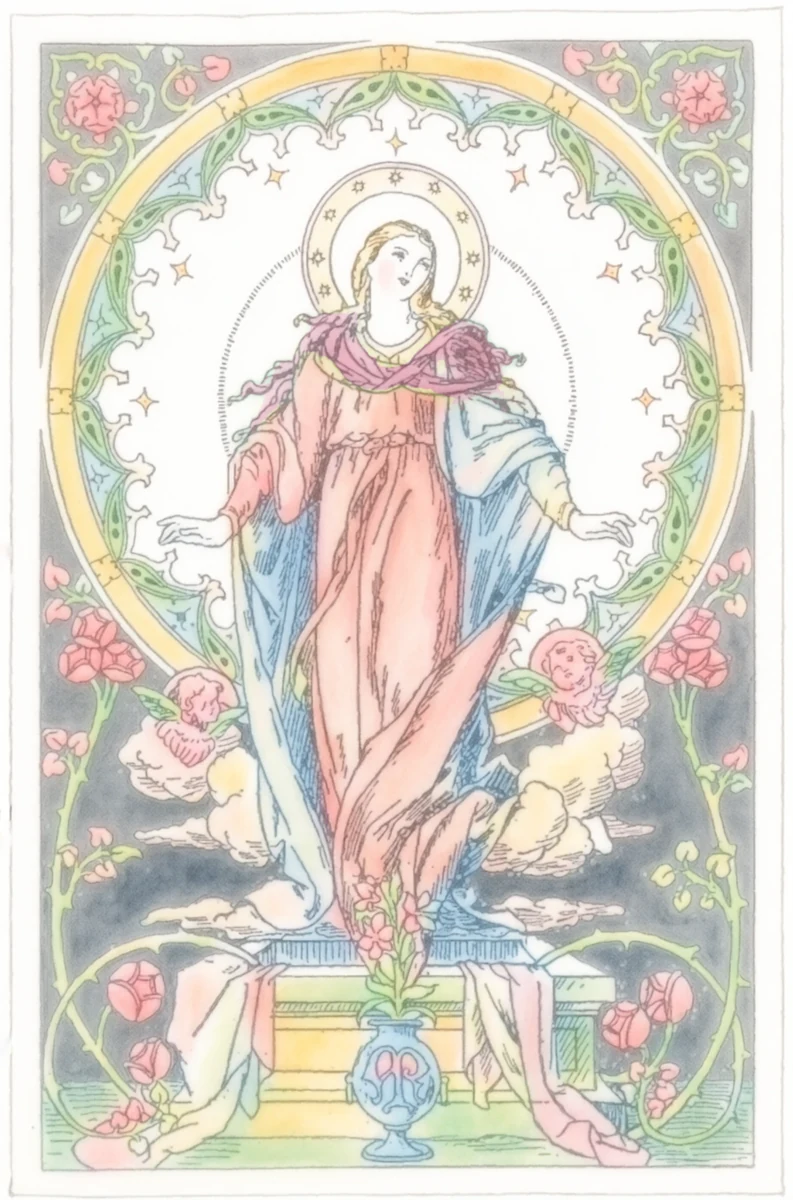
It is the common belief of the faithful that Our Blessed Lady was taken up into heaven before her body was allowed to corrupt in the tomb. Our Lord's Ascension was witnessed by men and angels; Our Lady's Assumption only by angels. The picture can only suggest the beatitude and glory of that scene. The branches of roses and pot of lilies are a beautiful tribute to the Queen of Martyrs and of Virgins.
Page 1186 (Headpiece)—The Nativity of Our Lady.
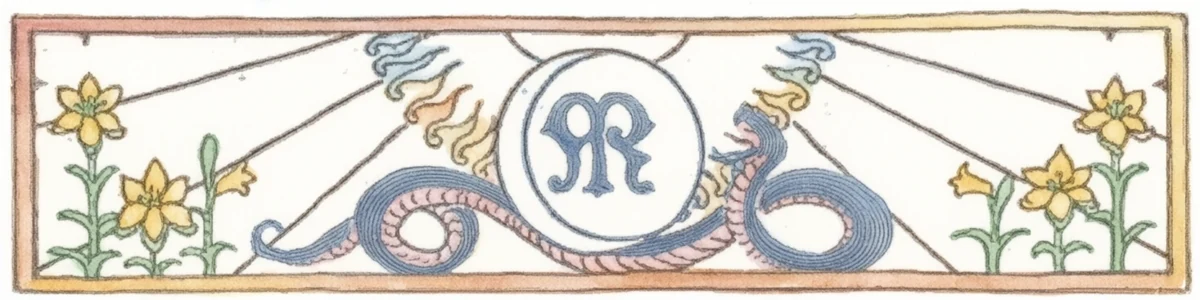
Mary derives her greatest glory from the vocation to be the Mother of God. Mary was destined to this office from her nativity. Our Lady's birth therefore is aptly symbolized by a crescent moon which receives its light from the sun. "Who is she that cometh forth as the morning rising, fair as the moon, bright as the sun" (Cant. 6, 9). Mary was conceived without the stain of original sin. From her conception there was enmity between her and Satan. "I will put enmity between thee and the woman and thy seed and her seed. She shall crush thy head and thou shalt lie in wait for her heel." That was the first promise of a Redeemer. Mary's soul is an enclosed garden where lilies of the greatest purity flourish. "Thou are all fair, O my love, and there is not a spot in thee" (Cant. 4, 7).
p. 1764Page 1198 (Headpiece)—Thy Soul a Sword Shall Pierce.
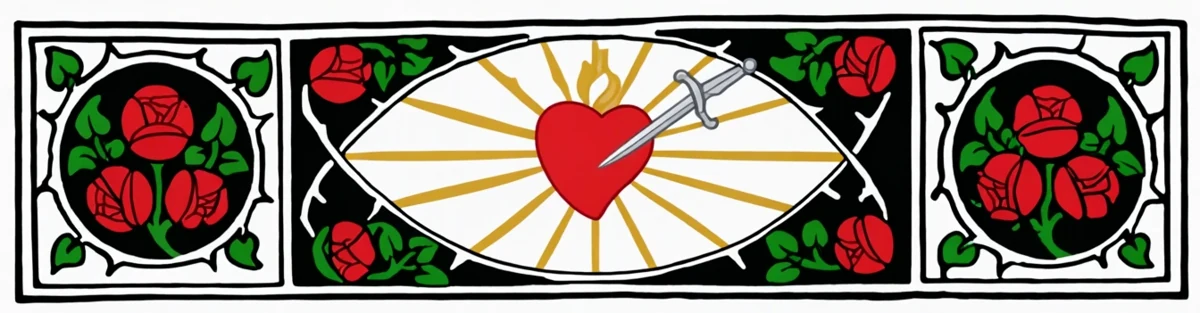
We are accustomed to see the Mother of Sorrows—seven swords piercing her tender heart. But Mary knew only one sorrow, all others are nothing in comparison. "Through her heart, His sorrow sharing, all His bitter anguish bearing, now at length the sword had passed." (Hymn for Vespers). Simeon in the temple had foretold her martyrdom: "And thy soul a sword shall pierce, that out of many hearts, thoughts may be revealed" (Lk. 2, 35). The garland of roses and thorns reminds us of the bitter anguish that pierced the heart of Mary—the Rosa mystica.
Page 1256 (Picture)—Jesus Christ, King.
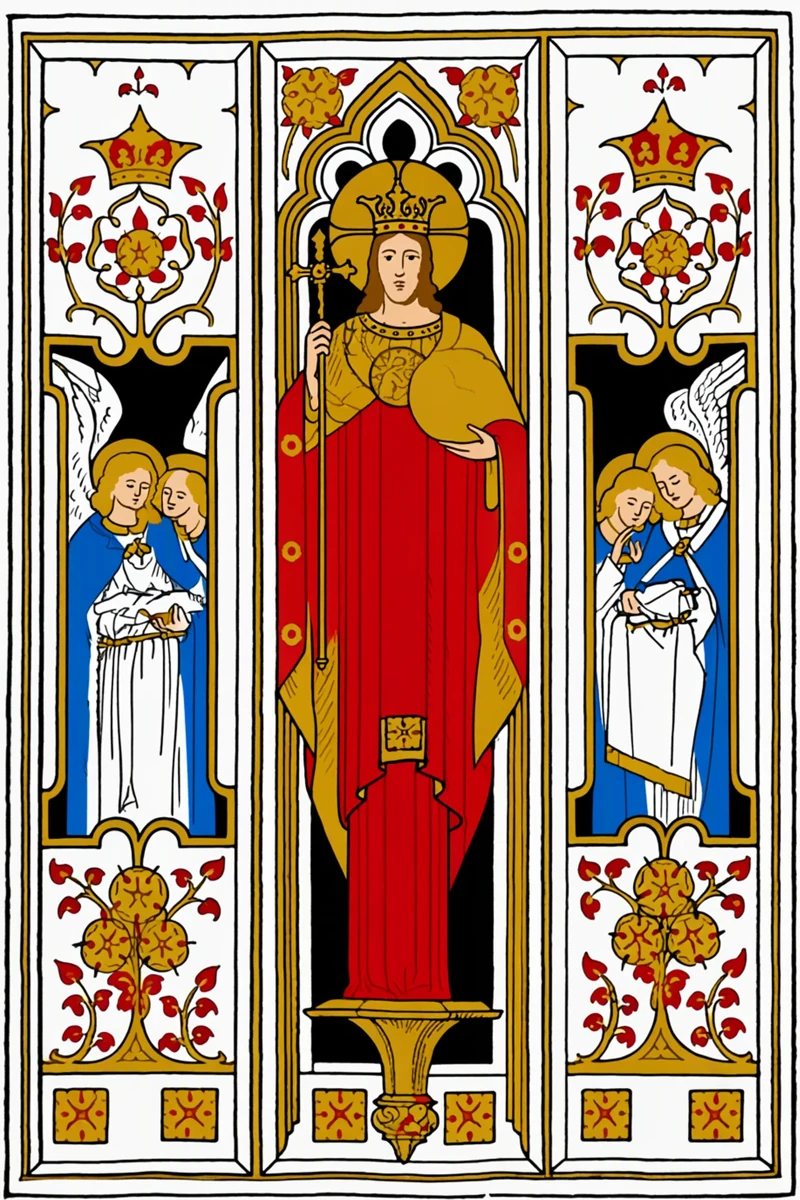
We find an appreciation of this picture in the Gradual of the Mass: "He shall rule from sea to sea, and from the river to the ends of the earth. All kings shall adore Him, all nations shall serve Him." Christ the King, therefore, holds the globe in His palm and in his right hand the cross which is now His scepter and the emblem of His universal dominion. Now He wears a crown not of thorns but of glory. Attending angels carry the nails and crown of thorns—symbols of the sacrifice which won for Him His universal Kingship. Christ is robed in the garments of a priest because He is always the Eternal High Priest.
Page 1263 (Tailpiece)—The Crown of Justice.

There is a crown awaiting the faithful servant of God in heaven. This is a familiar phrase among Catholics. The symbol illustrates our faith. The palm of victory, too, is familiar. The meaning of the stars is clear. They shine only in the heavens. But the full meaning of this symbol is found in the words of St. Paul: "I have fought a good fight, I have finished my course, I have kept the faith. As to the rest, there is laid up for me a crown of justice, which the Lord the just judge will render to me in that day" (2 Tim. 4, 7).
Page 1264 (Picture)—The Saints in Glory.
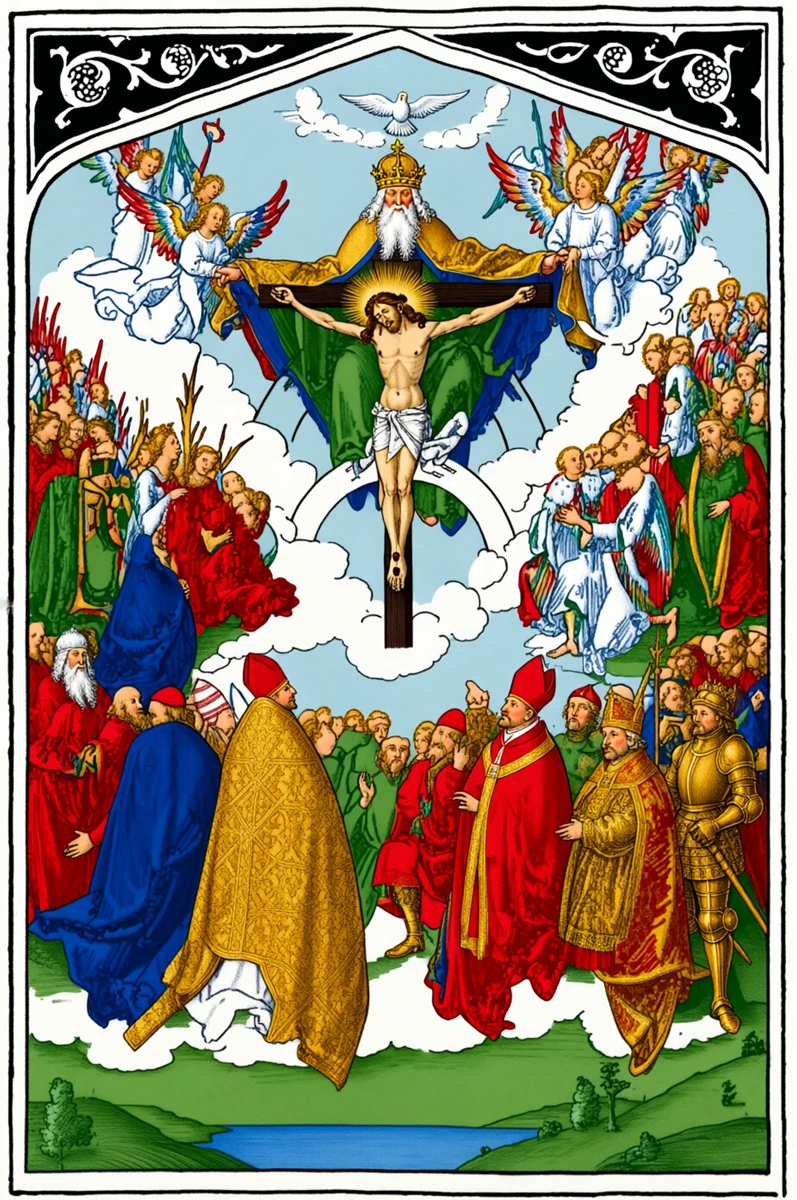
The illustration is taken from a painting of Albrecht Dürer. It shows the Saints in glory. God the Father, His Beloved Son and the Holy Spirit symbolized by the dove, are surrounded by a chorus of Angels. Virgins and Virgin Martyrs, representing those privileged souls who follow the Lamb singing a hymn of praise that only Virgins can sing, occupy the left side of the middle tier. John the Baptist and Precursor, the Patriarchs and Prophets and Saints of the Old Testament are grouped together on the right side of the same tier. Saints of the New Dispensation who lived after Christ's coming and from every walk of life are grouped in the third tier. They are looking up to Christ their Redeemer and beloved Master whom they have served so faithfully on earth.
p. 1765Page 1269 (Headpiece)—Commemoration of All Souls.

There is only one source of salvation—the Sacrifice of Calvary. Behold then the "Lamb of God Who takest away the sins of the world." Out of the depths of Purgatory the souls cry to Christ the Lamb slain yet eternally living—the beginning and end of salvation represented by the symbols Alpha, the first letter and the symbol Omega, the last letter of the Greek alphabet (Apoc. 22, 13).
Page 1270 (Picture)—Forget Me Not at the Daily Sacrifice.
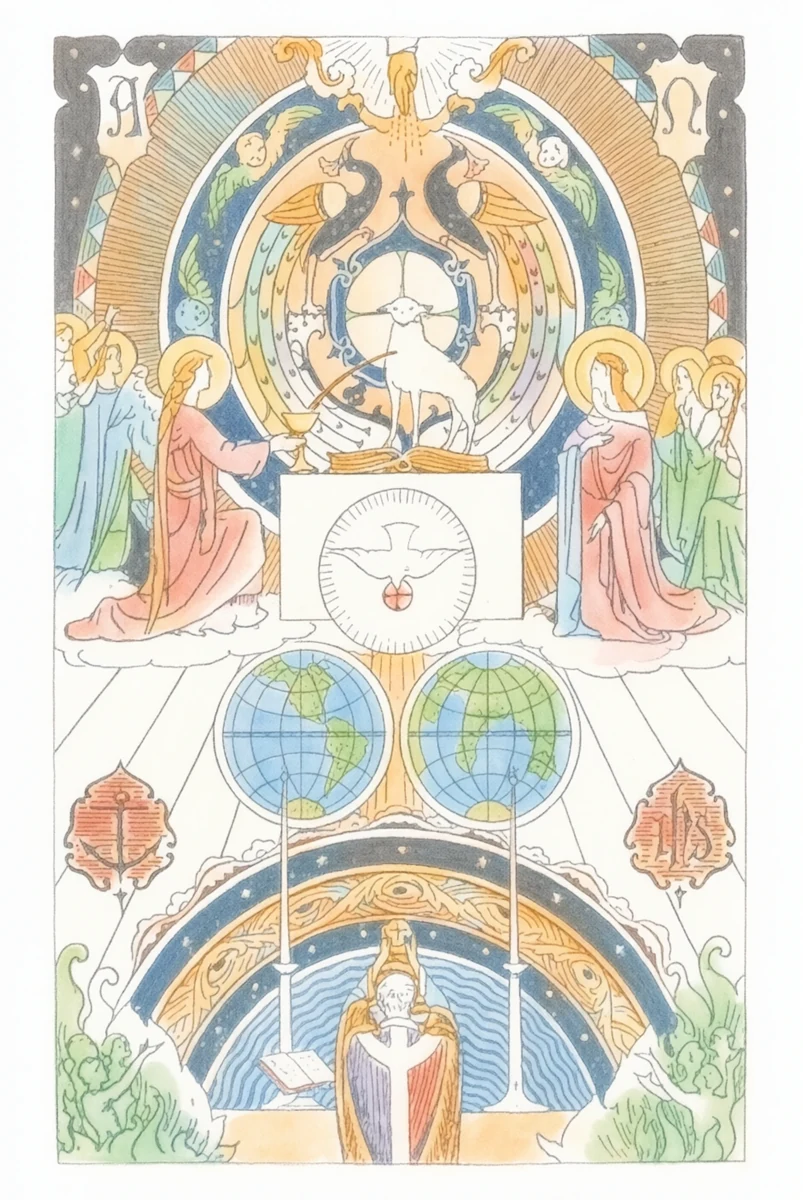
The artist has designed a symbolic picture to teach the universal efficacy of the Mass. At every Mass the heavens are opened not only to pour down benediction upon our earth, but to receive the march of souls liberated from Purgatory. This is happening all over the world "from the rising of the sun to the going down" (Malachias 1, 11). All the poor souls are being saved in the name of Jesus which means savior. That is the meaning of the anchor and the monogram. The two globes portray the fulfillment of Malachias' prophecy. The Father and the Holy Spirit cooperate in the daily Mass, which fact explains the hand from the clouds and the dove in the picture. In the center of the glory of heaven, the Lamb of God, slain but still living and standing upon the book whose seals He alone can loose, is surrounded by the choirs of Angels and Saints. The beautiful peacocks are used as a symbol of Christ's divinity and immortality. Alpha and Omega, the initial and final letters of the Greek alphabet call to mind the truth in which we all sincerely trust—Christ is the beginning and final end of our salvation.
Page 1298 (Tailpiece)—The Security of Our Faith.
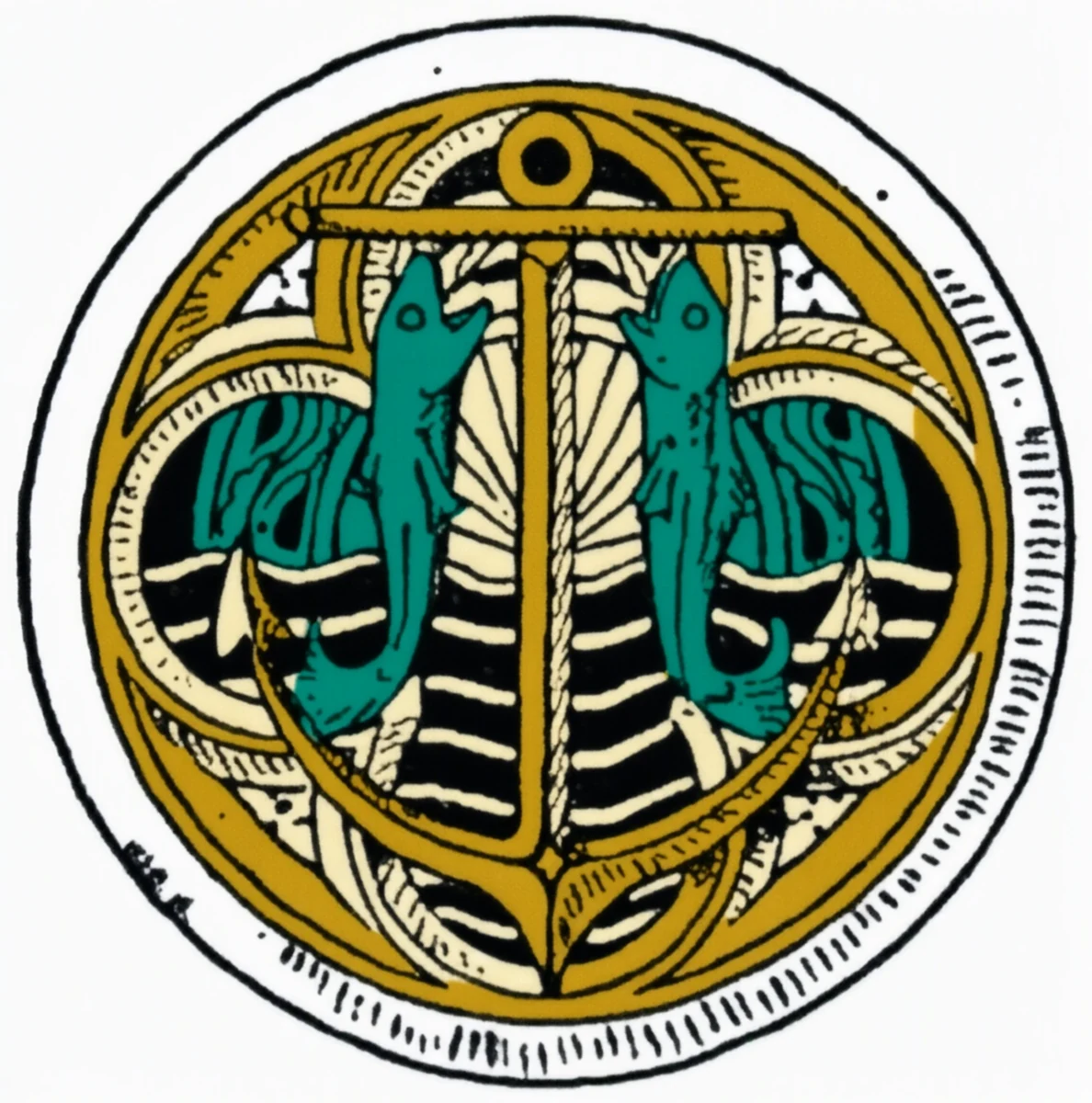
The meaning of the anchor in the church's symbolism is readily understood. It is the symbol of faith. Frequently the fish is used as a symbol of the faithful. The combination of the anchor and the fishes signifies the security of our faith. We are anchored to Christ through faith. Faith is vision for the soul. The vision of eternal realities albeit in a dark manner and through a cloud. Therefore the rising sun in the background. The saints realized the security which faith gives a sincere soul.
p. 1766Page 1398 (Picture)—The Mediatrix of All Graces.
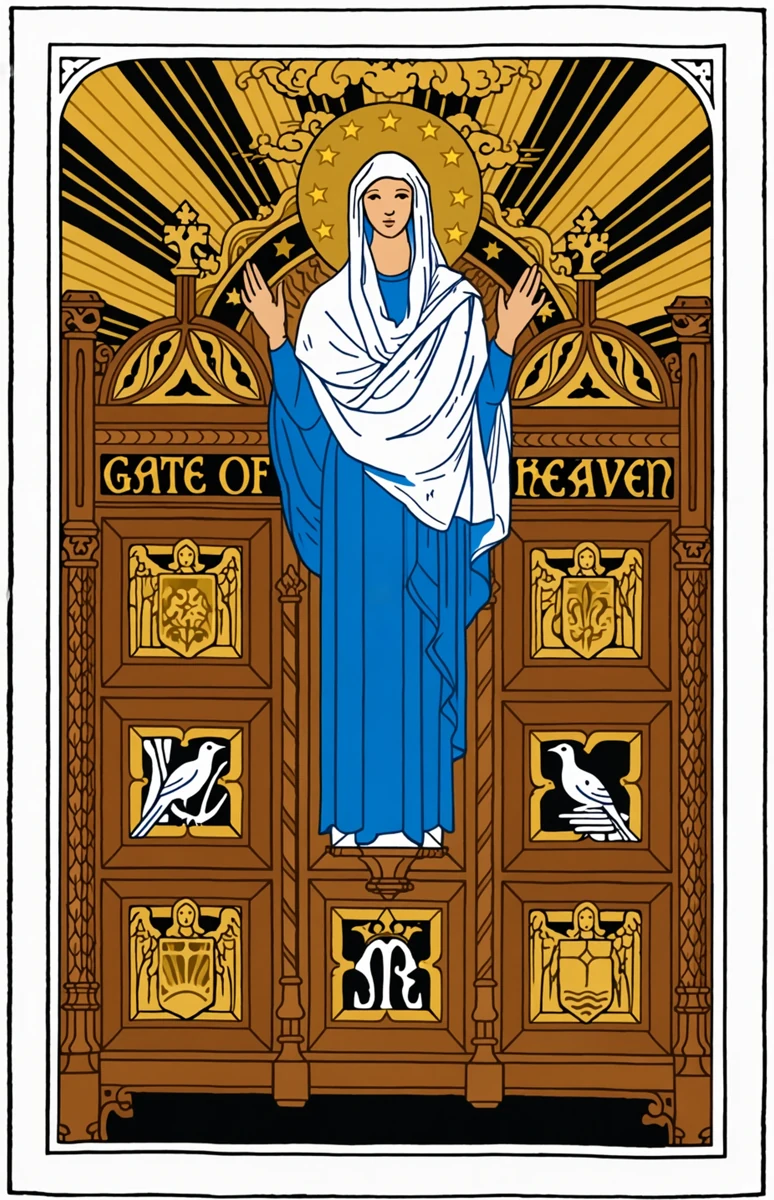
The Blessed Virgin Mary is shown in her place in the mystic Body of Christ. Her title "Gate of Heaven" tells us her work as Mediatrix of All Graces. She stands at the portals of heaven clothed with the sun and the stars in her crown. She is Queen of Heaven (signified by the monogram and crown). The four angels on the panels bear her titles. The mystic rose: she suffered; she was the sorrowful Mother. The Symbolic Lily (fleur-de-lis): she was free from all sin. The Morning Star: her glory in her Divine Child. The Star of the Sea: our guide o'er life's tempestuous way. Her attitude is that of the orantes, as pictured in the catacombs; this is the position of prayer, like to that of the priest during the Canon of the Mass. The prayer of the church unites with her prayer. The dove resting on a pillar (right) develops the thought that Mary prays for all the faithful; the dove on the broken branch (left) proclaims the intention of Our Lady's prayer—that all may enter Paradise. Cardinal Mercier's favorite salutation for the Virgin was Mediatrix of All Graces.
Page 1610 (Picture)—Sts. Isaac Jogues and Companions.
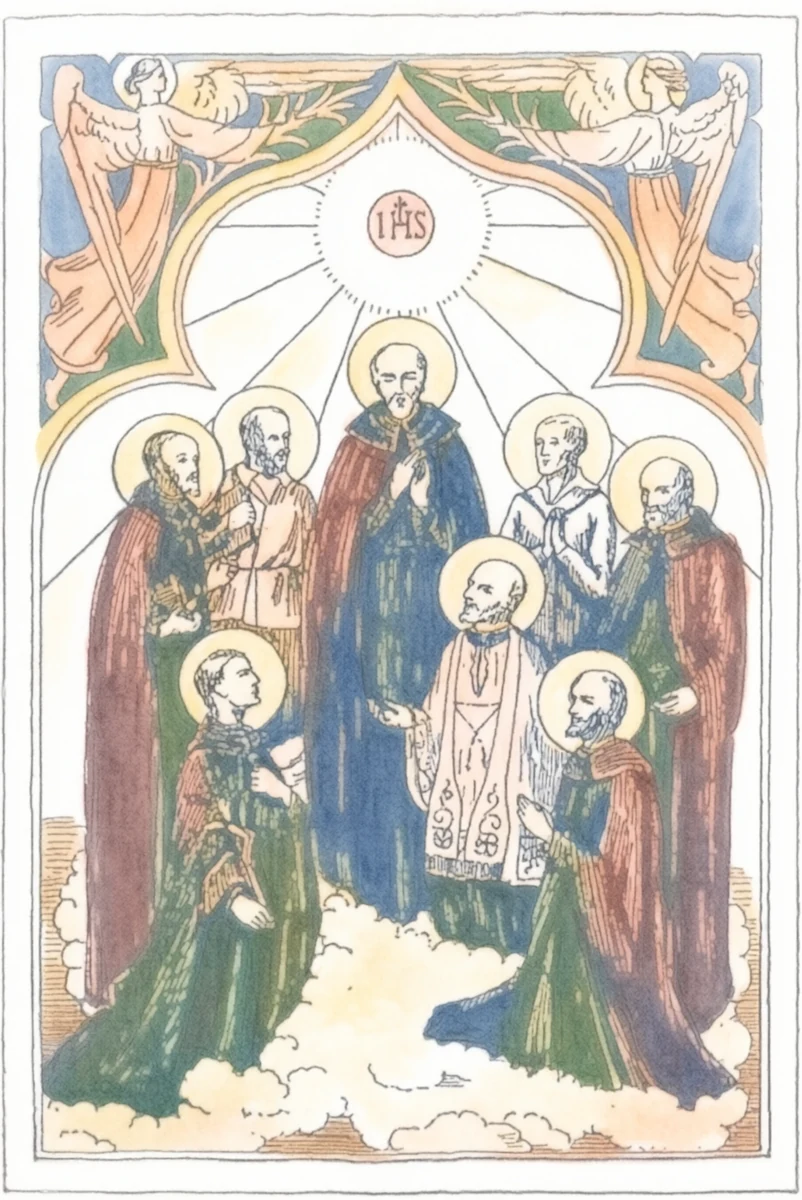
The eight Jesuit martyrs of North America are now enjoying the beatitude of heaven. They are close to Jesus whom they have loved and served even unto martyrdom. The name of Jesus sheds some of its glory upon these valiant men. Two angels with palms proclaim the victory of their fidelity.
Standing, from left to right are: St. Gabriel Lalemant, St. René Goupil, St. Isaac Jogues, St. John Lalande, St. John de Brebeuf. Front row, kneeling, left to right: St. John Garnier, St. Anthony Daniel, St. Noel Chabanel.
Holy Days of Obligation
On which the Faithful are Bound to Hear Mass and to Abstain from servile work
I. Holy Days of Obligation in the United States
| All Sundays of the year. | Nov. 1. All Saints. |
| Jan. 1. The Circumcision. | Dec. 8. The Immaculate Conception. |
| Ascension Day. | Dec. 25. Christmas Day. |
| Aug. 15. The Assumption. |
II. Holy Days of Obligation in Canada
| All Sundays of the year. | Nov. 1. All Saints. |
| Jan. 1. The Circumcision | Dec. 8. The Immaculate Conception. |
| Jan. 6. The Epiphany | Dec. 25. Christmas Day. |
| Ascension Day. |
The Church Law of Abstinence and Fast1
1. The Law of Abstinence forbids the use of flesh meat and the juice thereof (soup, etc.). Eggs, cheese, butter and seasonings of food are permitted. The Law of Fasting forbids more than one full meal a day, but does not forbid a small amount of food in the morning and in the evening.
2. All Catholics seven years old and over are obliged to abstain. All Catholics from the completion of their twenty-first to the beginning of their sixtieth year, unless lawfully excused, are bound to fast.
3. Abstinence is prescribed every Friday, unless a holyday falls thereon. Fasting and abstinence are prescribed in the United States on the Fridays of Lent, Holy Saturday forenoon (on all other days of Lent except Sundays fasting is prescribed and meat is allowed once a day) the Ember days, viz: the Wednesday, Friday and Saturday following the first Sunday of Lent, Pentecost or Whitsunday, the 14th of September, and the third Sunday of Advent; the vigils of Pentecost, All Saints’, Immaculate Conception and Christmas. There is no fast or abstinence if a vigil falls on a Sunday. Whenever meat is permitted, fish may be taken at the same meal. A dispensation is granted to the laboring classes and their families on all days of fast and abstinence except Fridays, Ash Wednesday, Wednesday in Holy Week, Holy Saturday forenoon and the vigil of Christmas. When any member of such a family lawfully uses this privilege all the other members may avail themselves of it also; but those who fast may not eat meat more than once a day.
1 In general the Faithful should pay close attention to the Lenten regulations read out each year so as to learn the modifications made for their particular diocese.
Forms of the Mass
The missal distinguishes the forms of the Mass by their solemnity and the number of sacred ministers (p. 68); its table of when to kneel, stand or sit (p. 72) adds the sung Requiem.
Low Mass (Missa Lecta)
Low Mass “is said by a priest alone, with one or two servers, and is a shortened or simplified form of the High Mass” (p. 68). The priest reads every part himself, including the Introit, Gradual, Offertory and Communion.
Sung Mass (Missa Cantata)
“The so-called sung Mass, or Missa Cantata, is a modern compromise between a Low and a High Mass. At a Missa Cantata the ceremonies are somewhat abbreviated because of the absence of the sacred ministers; incense is not permitted, and the celebrant himself sings the Gospel in the deacon’s stead” (p. 68). The missal’s table calls it “High Mass sung by one priest” (p. 72).
Solemn High Mass (Missa Solemnis)
High Mass in the full sense is “celebrated by a priest, assisted by deacon and subdeacon, with all the solemnity of chant, incense and full ceremonial” (p. 68). The subdeacon sings the Epistle and the deacon the Gospel (pp. 78–79); the altar is incensed before the Introit and again at the Offertory, and the celebrant before the Gospel (pp. 77–84).
Requiem Mass (Missa pro Defunctis)
Not a further form but the Mass for the Dead, said or sung. Black is “the sign of mourning, … used on Good Friday, and in Masses of the Dead” (p. 68). Psalm 42 at the foot of the altar is omitted (p. 75), and the Gloria (p. 77); the Tract follows the Gradual in place of the Alleluia, and then the Sequence Dies iræ, which in the Daily Mass for the Dead “may be recited or omitted at the choice of the celebrant” (pp. 1501–1503). In place of Ite, missa est is said “May they rest in peace (Requiescant in pace)” (p. 100).
Votive Masses
A votive Mass is “a Mass other than that of the day; in honor of some mystery or Saint” (Glossary). “It is permissible to say a Votive Mass only on a Simple or on a Semi-Double. For the Marriage ceremony … and on certain special occasions, e.g., the First Friday of the month …, the Church permits a Votive Mass on feasts even higher than a Semi-Double, but this is by way of exception” (p. 52).
Two Kinds
• By order of the Pope or bishop — in times of public need, to implore God's help. The Creed is said, and the Gloria if the occasion is not penitential. All commemorations or additional prayers are omitted.
• By individual priests — to satisfy their own devotion or that of others, offered "in moderation."
When Individual Votive Masses Are Permitted
A Votive Mass of devotion may not be said on: feasts of double rite; all Sundays; during the Octaves of Christmas, Epiphany, Easter, Ascension, Pentecost, and Corpus Christi; during Lent; on Rogation Monday; on all Vigils; or on days when a Sunday Mass is anticipated or postponed (p. 1410).
Rubrics for Votive Masses
• The Credo is omitted.
• The Gloria is omitted, except in the Votive Mass of the Holy Angels and the Saturday Votive Masses of Our Blessed Lady.
• A commemoration is made of the Mass of the day.
• Additional occasional prayers are added; the total number of prayers, secrets, and postcommunions may never be fewer than three.
• Whenever a Votive Mass is allowed, a Mass for the Dead in black vestments may also be said.
Votive Mass Assigned to Each Day
• Monday — The Most Holy Trinity (white)
• Tuesday — The Holy Angels
• Wednesday — St. Joseph, or the Holy Apostles
• Thursday — The Holy Ghost, or the Blessed Sacrament
• Friday — The Holy Cross (red), or the Passion of Our Lord (purple)
• Saturday — Our Blessed Lady (white)
Votive Masses in the Missal
• Our Lord Jesus Christ, Most High and Eternal Priest (white) — on the first Thursday of the month (or instead the first Saturday) in churches and oratories where, by consent of the Ordinary, special devotions for the sanctification of the clergy are held in the morning; not on doubles of the first or second class, feasts, vigils or octaves of Our Lord, or All Souls (p. 1410).
• The Most Holy Trinity (white)
• The Holy Angels
• St. Joseph (white)
• Sts. Peter and Paul (red); All Holy Apostles (red); an Apostle not having a special Mass
• The Holy Ghost (red)
• The Blessed Sacrament (white)
• The Holy Cross (red)
• The Passion of Our Lord (purple)
• Our Blessed Lady (white) — the Masses after the Common of her feasts: Rorate Cœli in Advent; Vultum tuum from Christmas to the Purification; Salve, sancta parens from the Purification to Advent, with its proper parts from Septuagesima to Easter, in Paschal-time, and from Pentecost to Advent (pp. 1399–1409).
• Also permitted as votive Masses: the Holy Name, the Precious Blood, the Holy Family, the Immaculate Conception, and the Seven Dolors (p. 1438).
Votive Masses for Various Occasions
• Election of a Pope (red); consecration of a bishop and its anniversary (red); anniversary of the election and consecration of a bishop (white)
• The Bridegroom and Bride — the Nuptial Mass
• Propagation of the Faith; against the Heathen; for the healing of Schism; in time of War; for Peace; in time of Pestilence (purple)
• To obtain the grace of the Holy Ghost (red)
• For the remission of sins; for the Sick; for Pilgrims and Travelers; for a Happy Death; for Any Need (purple)
• Of Thanksgiving
Masses for the Dead
“Then there is a Mass for the Day of Death or Burial, another for the third, seventh and thirtieth day after burial, one for the Anniversary of the Day of Death, and lastly one called the Common or Daily Mass for the Dead” (p. 52). “Pope Benedict XV granted priests permission to say three Masses on All Souls’ Day” (p. 52). Black vestments are worn, and the rubrics are those of the Requiem above.